Last updated November 18, 2026






Free written scope consultation - allowances, timeline, and change-order rules on paper before a single trade is scheduled
Bathroom Remodeling Warning Signs Every Homeowner Should Know
A contractor who won’t show you the waterproofing membrane behind your tile before it’s closed up has something to hide, or nothing to show. That single moment, before backer board and thinset disappear behind finished tile, tells you more about a crew than any glossy bid packet ever will. Most bathroom remodeling disasters don’t announce themselves with a collapse or a flood. They whisper first: a soft spot near the shower curb, a grout line that cracks at month two, a subcontractor who keeps pushing the schedule. We’ve walked into plenty of North Las Vegas bathrooms mid-renovation and spotted the trouble in minutes. This guide teaches you to read your own job site the way a seasoned contractor does, so you can catch a problem while it’s still cheap to fix.
Quick Answer
The biggest bathroom remodeling red flags fall into three buckets: construction shortcuts you can spot on site (missing waterproofing, skipped backer board, dry-fit tile with thin mortar coverage), contract red flags before work starts (vague scope language, no permit line, cash-only demands), and post-completion symptoms within 90 days (cracking grout, separating caulk, doors that stop closing). Any one of them is worth a documented conversation. Two or more together usually mean the job is drifting toward a rebuild.
Styles & brands we work with
- Kitchen remodeling
- Bathroom remodeling
- Home additions & ADU
- Roofing
- Windows & doors
- Driveway & pavers
- Fence
Table of Contents
- Contract Red Flags Before the First Hammer Swings
- On-Site Warning Sign 1: Waterproofing Shortcuts
- On-Site Warning Sign 2: Skipped or Wrong Backer Board
- On-Site Warning Sign 3: Dry-Fit Tile and Poor Mortar Coverage
- Post-Completion Warning Signs in the First 90 Days
- What to Do If You Spot a Warning Sign Mid-Project
- North Las Vegas-Specific Risks: Hard Water, Heat, and Caliche
- When to Call a Professional
Contract Red Flags Before the First Hammer Swings
The cheapest place to catch a bad bathroom remodel is before it begins, in the paperwork. Vague scope language is the number one tell. A bid that reads “demo and rebuild bathroom, standard finishes” is not a scope; it’s an opening for change-order surprises. A real scope names the fixtures (Kohler, for example, or a brand you can look up), the tile format, the waterproofing system, the number of outlets and GFCI locations, and who is hauling the debris. If the bid doesn’t specify, you’re agreeing to whatever shows up on the truck.
Then there’s the permit line. A bathroom remodel that moves plumbing, adds a vent, or changes electrical layout requires a permit in North Las Vegas, and a contractor who skips the permit line is either cutting a corner or hiding from inspection. Ask directly: “Is the permit fee in this bid, and who pulls it?” A legitimate answer comes with a number.
Watch for these contract-level warnings:
- No line-item pricing. A single lump-sum number hides where the money goes and makes it impossible to audit change orders.
- Cash-only payment demands. Insured, licensed contractors take checks or cards and issue receipts; cash-only usually means no paper trail.
- Large deposits up front. Deposits above roughly a third of the project cost, before any material is delivered, are a warning sign in any market.
- No written warranty. If the workmanship guarantee isn’t spelled out with a duration, you don’t have one.
- Pressure to sign today. “This price is only good until Friday” is a sales tactic, not a construction reality.
Groundwork Construction Co. runs every bathroom project on no-hassle upfront pricing: the number you see is the number you pay, with change orders only when you request a scope change. That’s the accountability standard to hold any contractor to, whether you hire us or not. If you want to see how the same rigor applies to other parts of the home, our Groundwork Construction Co. of North Las Vegas home page covers the full scope of what we build.
On-Site Warning Sign 1: Waterproofing Shortcuts
Waterproofing is the single most important step in any shower or wet-area build, and it’s also the easiest thing to fake because it’s invisible once the tile is up. In a properly built shower, there is a continuous barrier between the framing and the tile: a sheet membrane like Schluter Kerdi or a liquid-applied membrane rolled on in multiple coats, tied into a pre-sloped pan and a curb that sheds water toward the drain. If your contractor can’t show you that membrane installed and inspected before tile goes on, stop the job and ask for photos or a walkthrough.
Here’s how to read the waterproofing stage like a contractor:
- Ask for a pre-tile walkthrough. Before any tile is set, the membrane should be visible, cured, and continuous. You should see it wrapping up the walls at least a few inches past the showerhead height and overlapping every seam.
- Look for the pre-slope. Water has to flow to the drain from the very first layer. A flat pan under the membrane holds water and eventually rots the subfloor.
- Check the corners and curb. Those are the failure points. Proper installers use pre-formed corner pieces; shortcuts use folded membrane or, worse, a smear of silicone.
- Confirm flood-testing. A quality shower pan gets filled with water and left overnight to confirm no leaks before the tile crew touches it.
We’ve torn out North Las Vegas showers where the membrane stopped six inches short of the curb and the entire pan was dry-set over bare concrete. Those showers looked perfect on the surface for about eighteen months. If you want to see how we handle full-scope remodels with documented stages, our Home Additions & ADU in North Las Vegas page walks through the same rigorous inspection sequence on larger builds.
On-Site Warning Sign 2: Skipped or Wrong Backer Board
Tile needs a rigid, moisture-resistant substrate. In a wet area, that’s a cement backer board or a foam board system like Schluter Kerdi-Board or Wedi, installed with the manufacturer’s specified fasteners and seams. What you never want to see is drywall behind shower tile, or green drywall (“moisture-resistant” board) used as a substitute. Green board is fine behind paint in a humid bathroom; it is not fine behind tile in a shower.
Warning signs to watch for during the rough-in and board stage:
- Standard white or green drywall installed in a shower or tub surround.
- Backer board screwed only at the edges, sagging between studs, or with visible gaps along seams.
- No mesh tape and thinset at the seams. Untaped seams let water wick behind the board.
- Fasteners set below the surface without proper sealing, leaving pinholes for moisture.
- Foam board installed with the wrong adhesive, or with nails instead of the specified washers.
If you’re in a home built before the 1990s in North Las Vegas, pull a wall panel back during demo and look at what’s behind the old tile. Original drywall or lath with no moisture barrier is common in older builds, and it means the new build has to include a continuous vapor barrier from the studs out. A contractor who skips that step because “the old one lasted thirty years” is skipping the exact step that makes the new one last even longer. That’s the standard we hold materials to, from backer board up to the Kohler fixtures that go on top.
On-Site Warning Sign 3: Dry-Fit Tile and Poor Mortar Coverage
Tile mortar coverage is the invisible variable most homeowners never check. The industry standard for wet-area floor tile is 95% coverage; for walls, 80% minimum, with full coverage at the edges and corners. What you often get from a rushed crew is spot-bonding: a few dollops of thinset in the corners of the tile and the rest hollow. You can test this yourself with a tap of a rubber mallet or a knuckle; a hollow, drummy sound over a large area tells you the tile isn’t bonded.
Other telltale signs of a poor tile job:
- Lippage, where one tile sits noticeably higher than its neighbor. A good setter uses a leveling system; a rushed one eyeballs it.
- Mortar oozing into the grout joints. Thinset squeezed into the joints means the setter used too much and too wet a mix, or rushed the placement.
- Visible dry-fit marks: pencil lines and layout jigs left on the backer board after tile has been set. That means the setter dry-fit and then didn’t lift the tile properly to apply mortar.
- Grout that looks uneven in the first week. Uneven grout depth is often a symptom of uneven tile setting behind it.
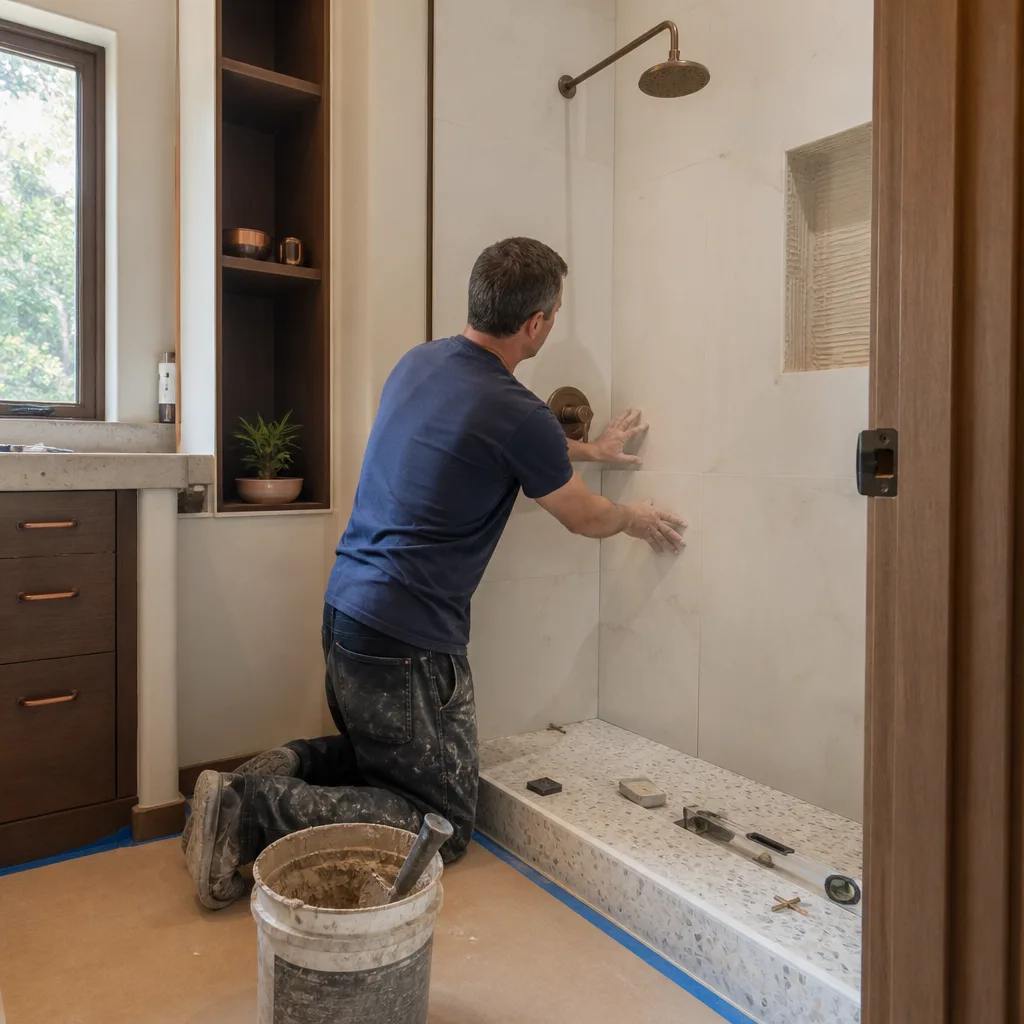
The correct sequence is: set the tile in fresh thinset with a notched trowel and back-butter, press it firmly, then confirm coverage. Ask your contractor to pull one tile during install and show you the back. A properly set tile leaves thinset covering the whole back surface. If they can’t or won’t, that’s your answer. Our technicians have up to 12 years of experience setting tile, and every wet-area install gets documented coverage checks before grout goes down.
Post-Completion Warning Signs in the First 90 Days
The three-month mark is where a bathroom remodel either proves itself or starts to fail. Cracks that show up in week two are usually cosmetic; cracks that reappear after repair are usually structural. Here’s the sequence we watch in our own projects, and what each symptom means.
Grout cracking in a new shower is rarely just bad grout. It usually means movement behind the tile: a subfloor that flexes, a curb that wasn’t properly attached to the floor framing, or a backer board that was nailed to a stud that wasn’t blocked. A crack that runs straight across a whole grout line is the classic sign. A crack isolated to one corner is more likely settling or a minor thermal shift.
Caulk separating at the tub line within the first 90 days is one of the most common North Las Vegas bathroom complaints, and it’s often a symptom of two things at once. First, improper caulk selection or application (you want silicone or a high-flex sealant, not painter’s caulk). Second, heat cycling. Desert temperature swings expand and contract the tub, the wall, and the tile at slightly different rates, and a rigid seal fails fast. A good crew plans for that movement with the right sealant and a proper gap.
Doors that no longer close properly, or that suddenly stick, are the symptom homeowners miss most often. In a bathroom, a door that won’t latch within three months can mean framing shifted during the remodel, a door jamb was installed out of square, or the wall itself is moving because a load point was changed. In North Las Vegas homes built on slab, subfloor movement is less common than in cold-climate crawl spaces, but it does happen when a heavy tub is set on a compromised floor.
What to do: photograph every symptom, date it, and email your contractor. A firm with a real workmanship guarantee will schedule a walkthrough. Groundwork Construction Co. backs every bathroom with the 730-Day Done Right Promise: if it’s not done right, we make it right. If your current contractor’s answer is “that’s normal, wait and see,” ask for that in writing. It’s not normal, and it won’t fix itself.
What to Do If You Spot a Warning Sign Mid-Project
Finding a problem in the middle of a remodel is stressful, but it’s manageable if you follow a sequence. The key is to stop the momentum without escalating into a legal fight over what may be a fixable issue. Here’s the playbook we recommend.
- Document everything. Take dated photos and video. Capture the site as it is right now, including any bad workmanship, the state of the materials, and the overall condition of the room. Note the date and time.
- Write it down, don’t just call. Send an email to your contractor summarizing the issue and asking for a written response. A phone call is too easy to forget; a written trail is your protection.
- Ask for a walkthrough, in person. The written request should include a specific time window. “I noticed the membrane is missing at the curb; I’d like to walk through with you before the tile crew comes back.”
- Understand your state’s stop-payment rules. In Nevada, the rules for withholding progress payments are governed by your contract and state law; you cannot simply stop paying without notice. The safe path is to send a written notice of the concern and hold the next scheduled payment until the issue is resolved in writing. If the amount is significant, a short consultation with a construction attorney is cheap insurance.
- Get a second opinion. A licensed contractor who doesn’t have a stake in the job can assess the work in twenty minutes and tell you whether it’s a fixable issue or a rebuild.
- Don’t let the crew keep working on the affected area. A verbal “we’ll fix it later” is common; the moment the tile is set, the evidence is gone. Pause that part of the scope, not the whole project.
In our experience, most mid-project disputes fall into two categories: an honest crew that made a mistake and will fix it, and a crew cutting corners who will argue the point. The first is solvable in a week. The second is where documentation pays off. If you’re in the middle of a North Las Vegas bathroom right now and want an independent read, call (844) 797-5026. We’ll give you straight answers even if you don’t hire us for the fix.
North Las Vegas-Specific Risks: Hard Water, Heat, and Caliche
Bathroom remodeling in North Las Vegas carries risks that don’t show up on a national warning-signs checklist. Three stand out, and each has a specific signature.
Hard water damage to fixtures and grout
North Las Vegas tap water runs hard, in the range that scales up fixtures in months rather than years. That means the quality of your fixtures and the sealing of your grout matter more here than in soft-water markets. A cheap faucet with a thin chrome finish will pit within a year; a Kohler fixture with a proper finish will hold up. Grout needs to be sealed at install and resealed annually, because the same minerals that attack a showerhead attack grout lines. If your contractor doesn’t mention water hardness or recommend a water softener loop during the build, that’s a tell.
Heat expansion and caulk joint failure
Summer temperatures in North Las Vegas routinely push past 110°F, and interior bathroom temperatures swing widely between a cool morning shower and a closed-up room in the afternoon. That cycling is brutal on caulk joints, especially at the tub and shower pan. The fix is the right caulk (100% silicone or a high-flex polyurethane sealant, never painter’s caulk) applied with a proper expansion gap, and installed by someone who knows the climate. If you see caulk peeling in a North Las Vegas bathroom within the first year, that’s often the reason.
Caliche surprises in the subfloor
Much of the North Las Vegas Valley sits on caliche, a cemented layer of calcium carbonate that can turn a simple subfloor prep into a demolition project. In slab-on-grade homes, caliche inclusions under the slab sometimes force the plumber to reroute a drain, which is why a bathroom remodel here needs a slab investigation before the tile stage, not after. A contractor who quotes a bathroom remodel in North Las Vegas without looking at what’s under the floor is guessing. If your walkthrough conversation includes “we’ll find out when we open it up,” you’re about to meet a change order. A thorough bid includes an allowance for slab surprises and a clear process for addressing them.
None of these risks are reasons to avoid a bathroom remodel. They’re reasons to vet your contractor on local conditions. Groundwork Construction Co. has worked on enough North Las Vegas slab-on-grade homes to plan around caliche and hard water from the bid forward, and our Driveway & Pavers in North Las Vegas page shows the same local-knowledge approach applied to outdoor projects.
See the difference
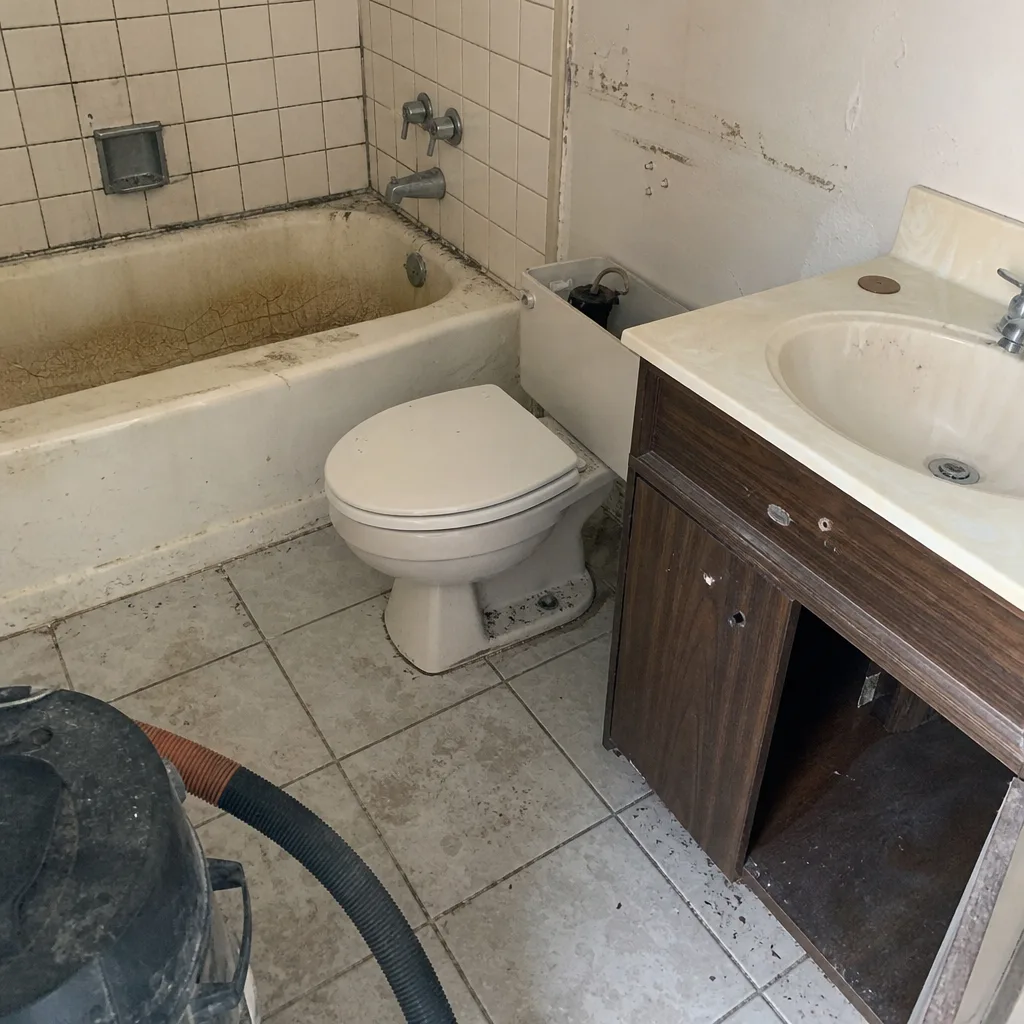 Before
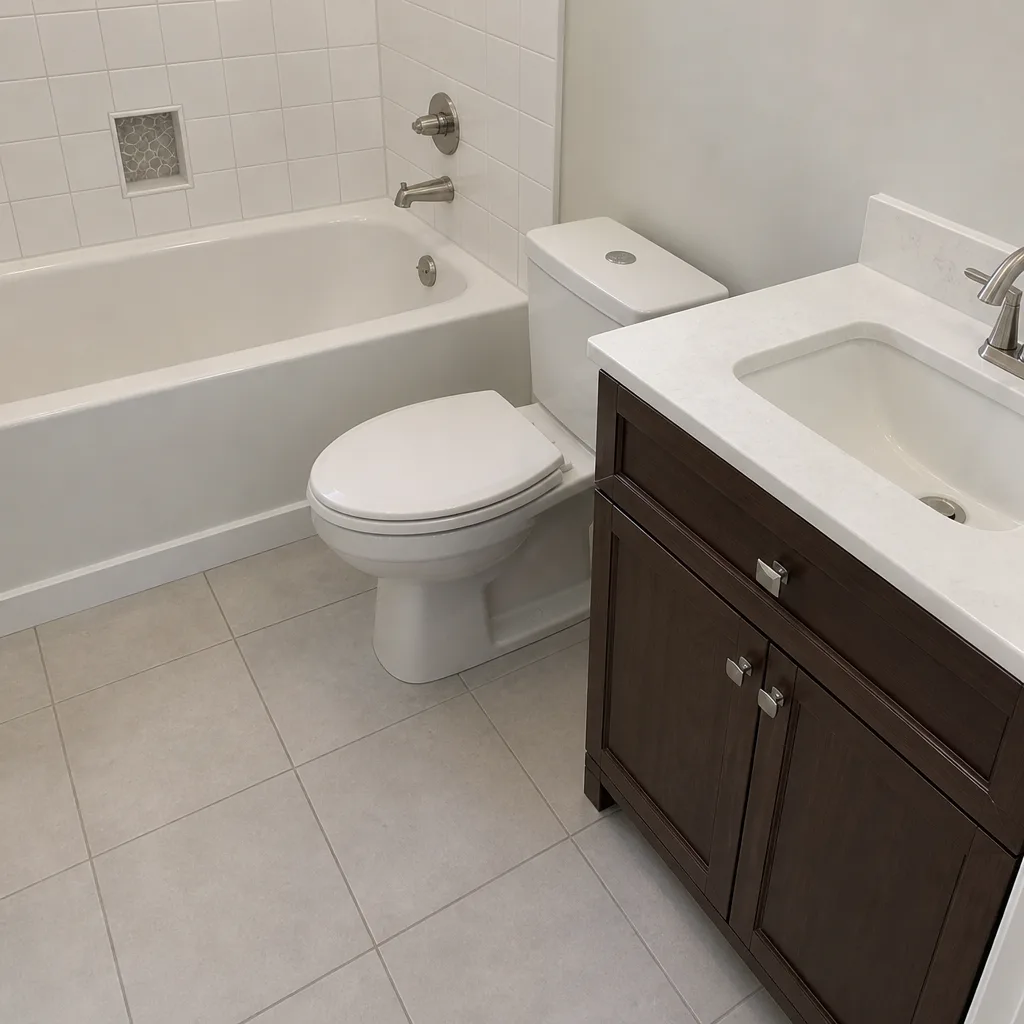 After
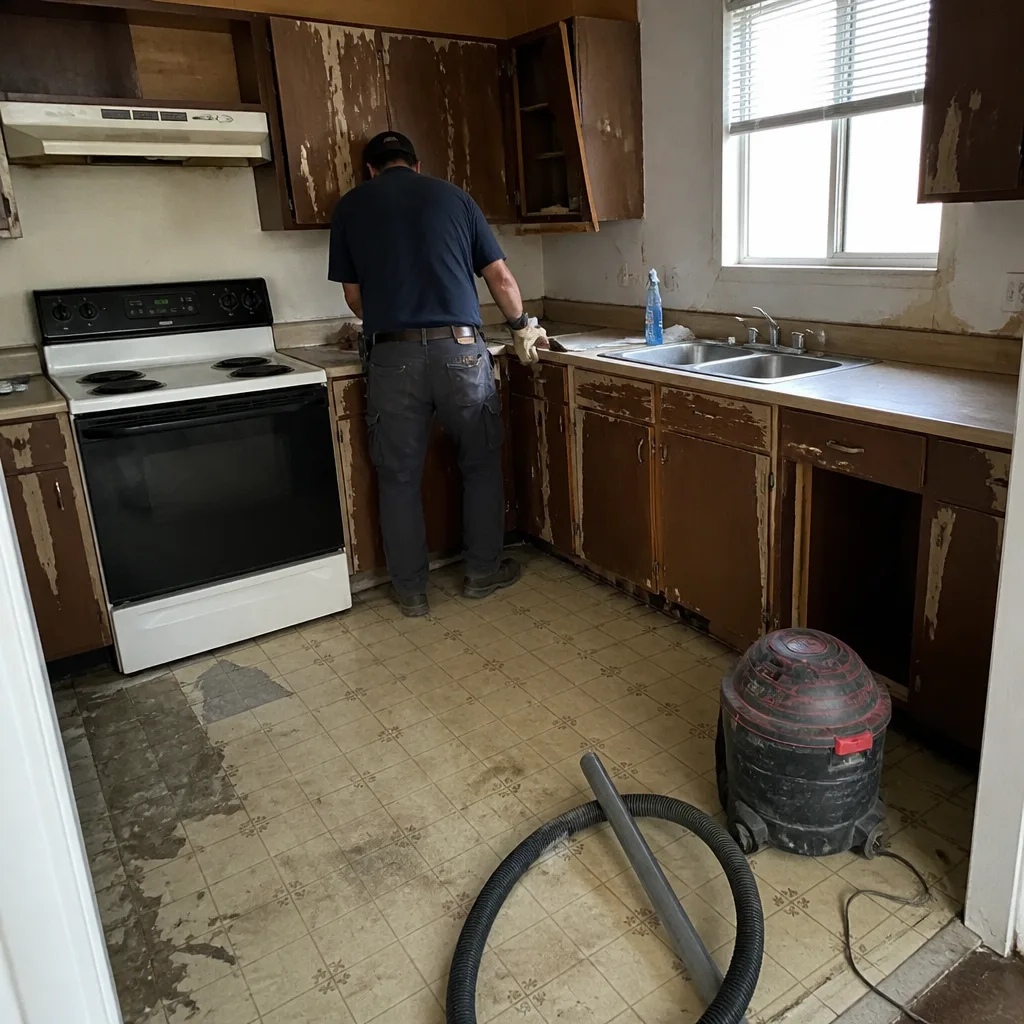 Before
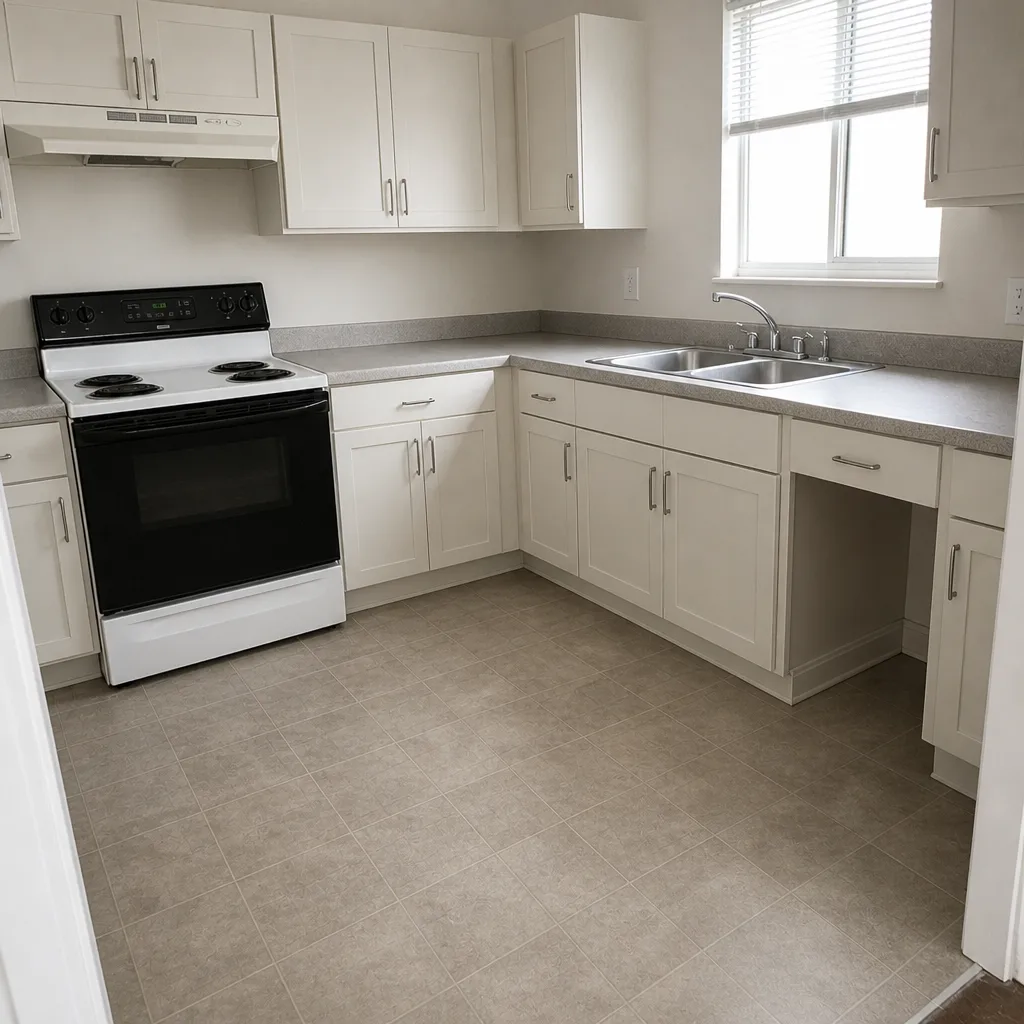 After
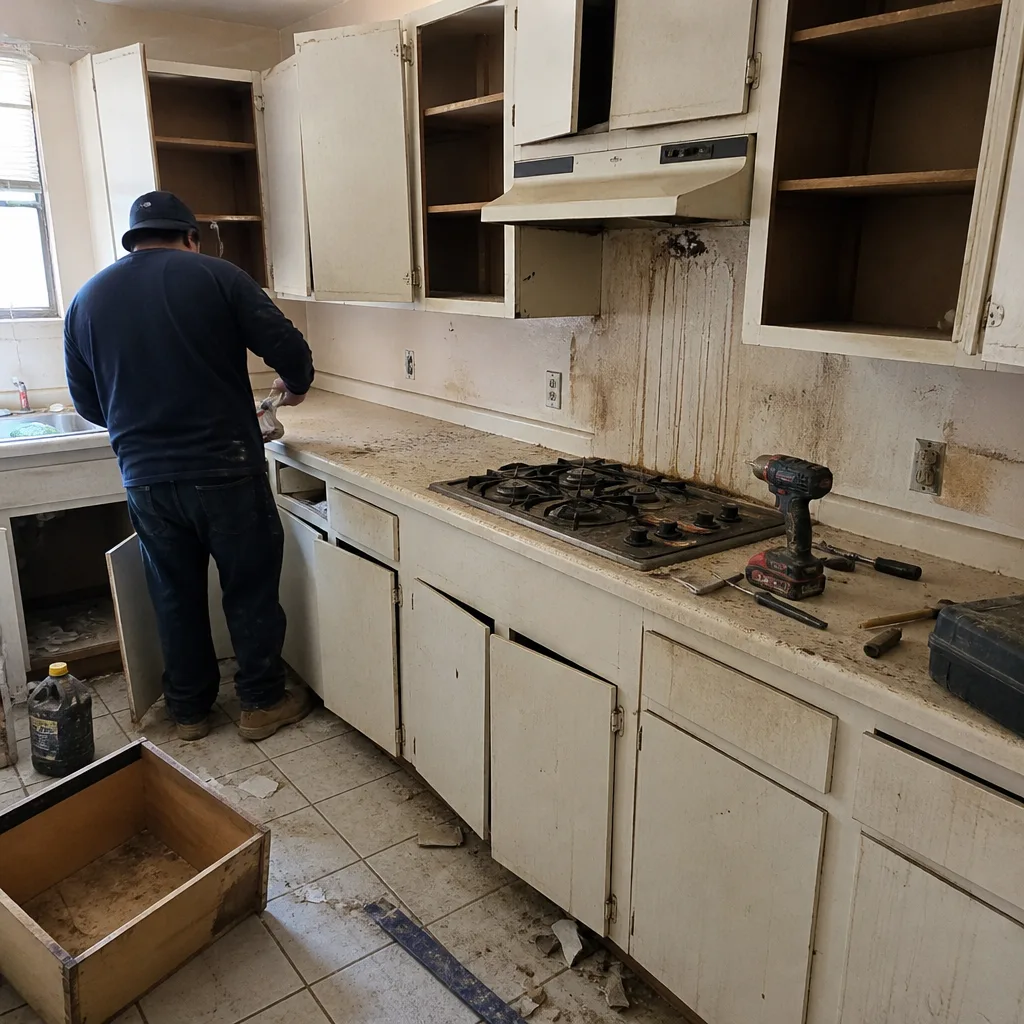 Before
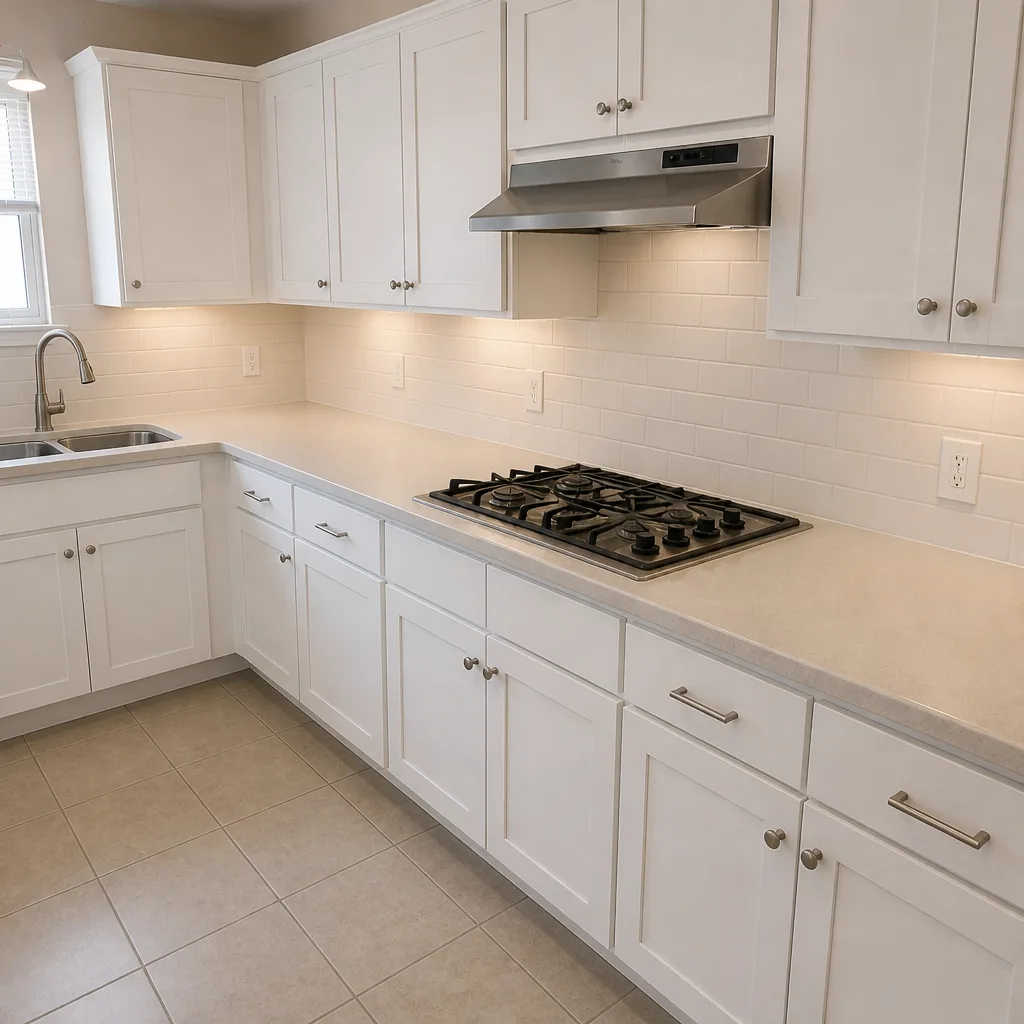 After
Common Mistakes to Avoid
- Hiring on price alone. A bid that comes in 30% below the others is either cutting scope or planning change orders. Get line-item bids from three contractors and compare what’s included, not just the bottom line.
- Skipping the pre-tile walkthrough. The single most valuable moment to inspect a bathroom is before tile goes on. Make it a contract term, not a favor.
- Letting the contractor pull permits “later.” In North Las Vegas, permits are pulled before work starts. If the permit is “coming,” the work is unpermitted.
- Ignoring the first crack. A grout crack that gets patched without diagnosing the cause comes back, usually worse. The first symptom is the cheapest one to fix.
- Not accounting for water hardness. In North Las Vegas, choose fixtures and sealants for the water, not just the look. A cheap fixture fails in months here.
- Paying in cash without receipts. Paper trail is your only protection if a dispute goes sideways. Every payment should have an invoice and a receipt.
- Assuming a warranty is a warranty. Read the fine print on the workmanship guarantee. A 90-day warranty is not a 730-Day Done Right Promise; a 730-day commitment tells you a contractor expects the work to last.
When to Call a Professional
Some warning signs resolve with a phone call and a patch; others are the first symptom of a rebuild. Call a professional immediately if you find: water pooling under a new shower pan, missing waterproofing at a curb or corner, tile with hollow coverage over a large area, grout cracks that reappear after repair, a permit that wasn’t pulled, or a contractor who won’t answer questions in writing. Smaller issues, like a single separating caulk line or a squeaking door, are worth documenting but don’t require emergency action. The line between “watch it” and “stop the job” is documentation: if the symptom is getting worse over a week, it’s a professional’s problem.
Groundwork Construction Co. of North Las Vegas offers free estimates in North Las Vegas. Call (844) 797-5026. Our live team answers 24/7, so you’re not leaving a message and waiting until Monday. If you’re mid-project and need a second opinion, we’ll walk the job with you and put our read in writing.
Frequently Asked Questions
The biggest warning sign is a contractor who won’t show you the waterproofing membrane before tile goes up. Waterproofing is the step that determines whether a shower lasts months or decades, and it’s the step most often rushed. If your contractor has no photos, no walkthrough, and no explanation for how the shower was sealed, assume it wasn’t done properly until proven otherwise. Call (844) 797-5026 for a free inspection and we’ll tell you what we see.
A typical full bathroom remodel in North Las Vegas runs in the mid-five figures for a standard hall bath and higher for a primary bath with a custom shower and upgraded fixtures. Kitchen and bath costs here track material choice heavily: tile, fixtures, and slab work drive the range more than labor. Groundwork Construction Co. gives line-item upfront pricing so you see exactly where every dollar goes. Call (844) 797-5026 for a free estimate and design consult.
Not with an honest, line-item bid. With Groundwork, the number you see is the number you pay; change orders happen only when you request a scope change. The classic reason a bathroom bid changes mid-project is a hidden condition (caliche under the slab, old plumbing, or a wall that’s out of square) that should have been anticipated in the bid. A thorough contractor plans for those surprises. Call (844) 797-5026 to schedule a firm quote.
Yes, permits are included in the scope for any work that requires them in North Las Vegas, and inspections are held before the job is closed. A bathroom that moves plumbing or electrical needs a permit; the inspection is your protection against hidden shortcuts. Ask any contractor to name the permit fee in the bid and who pulls it. Groundwork includes both. Call (844) 797-5026 for a free estimate.
A standard bathroom remodel takes roughly two to four weeks in North Las Vegas from demo to punch list, depending on tile complexity and fixture lead times. Primary bathrooms with custom showers can run longer. What matters is documented stages: demo, rough-in and inspection, waterproofing walkthrough, tile, then finishes. A contractor who can’t give you a stage-by-stage schedule before work starts is planning to improvise. Call (844) 797-5026 to get a schedule in writing.
Check three things: a current Nevada contractor license number you can verify, proof of insurance and bonding, and a written workmanship warranty with a stated duration. A legitimate contractor will hand all three over without a prompt. Then ask specific questions about caliche, hard water, and heat cycling; a local contractor answers from experience, and a transplant answers from a script. Groundwork Construction Co. has been in business since 2014 and stands behind every project with the 730-Day Done Right Promise. Call (844) 797-5026 to talk to a live person any time.
The Bottom Line
Bathroom remodeling warning signs usually appear long before the disaster. A vague bid, a missing permit line, and a contractor who won’t show you the waterproofing before tile goes up are all things you can catch early. After the work, watch grout, caulk, and doors for the first 90 days; those symptoms tell you what’s happening behind the finishes. In North Las Vegas, add hard water, heat cycling, and caliche to the checklist. Documentation is your leverage if something goes wrong, and a written workmanship guarantee is your best protection before it starts. Built to last, backed in writing is the standard to hold any contractor to. Reach out for a free estimate and we’ll walk your project from foundation to finish line.
Ready to remodel a bathroom in North Las Vegas with a crew that documents every stage and stands behind the work? Call (844) 797-5026 for a free estimate and design consult. We answer 24/7 with a live person, and every project carries the 730-Day Done Right Promise. You can also explore our Fence Installation in North Las Vegas services if you’re tackling the exterior at the same time.
Written by the team at Groundwork Construction Co. of North Las Vegas.