Last updated November 18, 2026
Free written scope consultation - allowances, timeline, and change-order rules on paper before a single trade is scheduled
DIY vs Professional Driveway & Pavers: What’s Safe to Do Yourself
YouTube has tens of thousands of paver installation videos. Almost none of them show the base compaction step in enough detail to actually replicate it. That’s not an accident. Proper plate compaction requires equipment that costs a few hundred dollars a day to rent and technique that takes repetition to develop, and it happens to be the one step that decides whether your driveway looks perfect in year one or heaves and settles by year three. The honest answer to “can I install pavers myself” isn’t yes or no. It’s a line, drawn at base preparation. This guide draws that line clearly, walks through which steps in North Las Vegas are genuinely homeowner-accessible, and shows you where the DIY math stops working.
Quick Answer
You can safely handle the surface-level steps of a paver installation yourself: edge restraint, cutting pavers with a rented wet saw, and sweeping in joint sand. What you should not do yourself is excavation and base preparation, especially in North Las Vegas, where caliche soil requires professional breaking and hauling equipment and a base that isn’t compacted to depth will fail no matter how clean your surface work looks. Most homeowners get the best result from a “labor only” arrangement: professionals handle the base, you finish the surface.
Styles & brands we work with
- Kitchen remodeling
- Bathroom remodeling
- Home additions & ADU
- Roofing
- Windows & doors
- Driveway & pavers
- Fence
Table of Contents
- Where the Line Actually Sits: Base Prep vs Surface Work
- What’s Genuinely Safe to Do Yourself
- What You Shouldn’t Attempt on Your Own
- The Money Math: Where DIY Savings Are Real
- Why North Las Vegas Caliche Changes Everything
- The Middle Path: Hiring Labor Only
- How to Judge Your Own Capability Honestly
- Common Mistakes to Avoid
- When to Call a Professional
- Frequently Asked Questions
Where the Line Actually Sits: Base Prep vs Surface Work
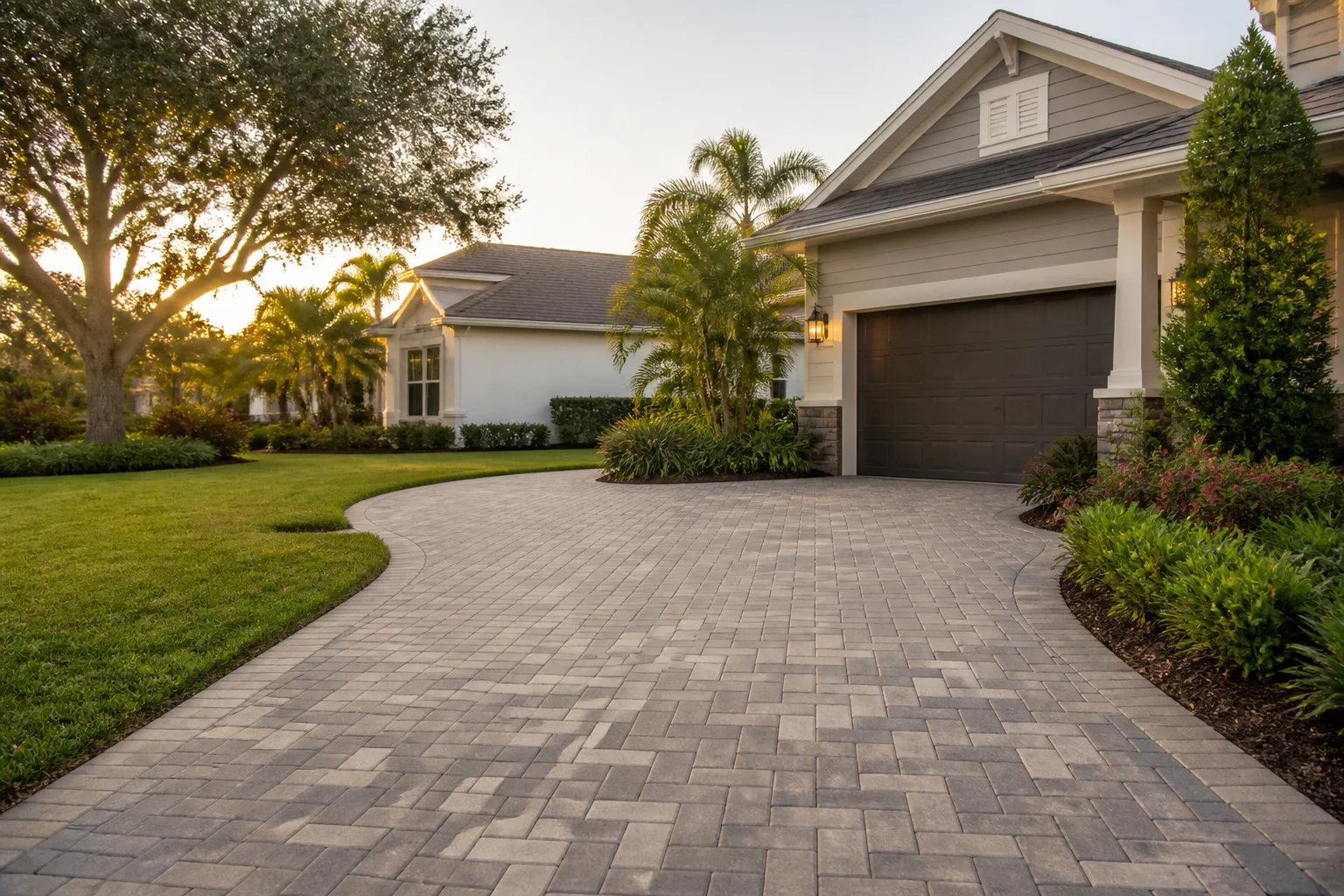
Think of a paver driveway as two projects sharing one surface. The bottom project is a structural foundation: excavate to depth, grade for drainage, lay geotextile fabric, place and compact crushed aggregate in lifts, then screed a bedding layer. The top project is finishing work: setting pavers in a pattern, cutting edges, locking the perimeter with restraint, and filling joints with sand. These are fundamentally different jobs.
The bottom project decides whether your driveway survives. Pavers are rigid units resting on a flexible base; if the base compresses even a quarter inch in one spot, the surface telegraphs it within a season. We’ve seen homeowners in North Las Vegas spend three weekends laying a flawless herringbone pattern over a base they excavated by hand, and by the following summer the same driveway has ruts where the family car always parks.
The top project is forgiving. Paver cuts can be redone. Joint sand can be re-swept. Edge restraint can be pulled and replaced. That asymmetry is the entire basis for drawing the line at base prep: the part you can’t easily redo is the part you shouldn’t cut corners on.
What’s Genuinely Safe to Do Yourself
If the base is properly prepared by a professional, several surface steps are well within the reach of an able homeowner with a free weekend or two. These are the steps where care and patience matter more than specialized equipment:
- Edge restraint installation. Aluminum or plastic edge restraints are anchored with spikes into the base. They’re simple to place and the tools are hand-level: a drill, a mallet, and level.
- Cutting pavers. A rented wet saw handles straight and angled cuts. You’ll burn through a few blades learning, but paver waste is cheap and the blade is replaceable.
- Setting pavers in a pattern. Herringbone, running bond, and basketweave are pattern-following exercises. This is where homeowner work genuinely looks professional, because the geometry is on the pavers themselves.
- Applying joint sand. Sweeping polymeric sand into joints and misting it is slow but low-risk. It’s also the most satisfying part of the job.
- Final cleanup and sealing. Washing and sealing with a roller is DIY-friendly. You won’t damage anything if you follow the product directions.
Rental costs for the saw and compactor for the surface steps run a few hundred dollars, which is manageable against the labor savings. If you’ve got a solid, professionally built base, we’ve seen homeowners save real money on this portion of the work.
What You Shouldn’t Attempt on Your Own
The base prep stage is where the risk practically floods in. In North Las Vegas, three factors make this much harder than the typical YouTube tutorial shows:
- Caliche excavation. The cement-like calcium carbonate layer under much of the Las Vegas Valley doesn’t dig with a shovel. It needs a jackhammer, a mini-excavator, or a skid steer, and then hauling the broken material off site.
- Compaction equipment. A plate compactor is the correct tool for most residential bases, but it must be run in lifts of a few inches, with multiple passes per lift, at the right moisture content. Hand tamping cannot replicate this, and a rented compactor is easy to misuse.
- Grading for drainage. A paver driveway needs a calculated slope away from the house, and in North Las Vegas that slope has to survive sudden monsoon-level rain that arrives faster than most of the country’s storms. A half-percent error can send water into a garage wall.
- Excavation to depth. The correct depth for a paver base in North Las Vegas tends to be deeper than what a DIY dig achieves, because the base must accommodate compaction loss and the aggressive thermal movement of the desert.
These aren’t steps you can spot-fix later. If the base is wrong, the surface is wrong. The fix is a full demo and rebuild, which means the DIY savings disappear and then some.
The Money Math: Where DIY Savings Are Real
Most of the numbers people quote for DIY versus professional paver installation leave out the parts that matter. Here’s how the math actually shakes out for a typical North Las Vegas residential driveway in the 500 to 800 square foot range.
A straightforward professional installation runs roughly $12 to $22 per square foot for standard concrete pavers, with premium pavers on the higher end. That includes excavation, base, materials, labor, edge restraint, sand, and cleanup. On a 600 square foot driveway, that’s roughly $7,200 to $13,200 as a broad ballpark, though actual project cost varies with pattern, access, and soil conditions.
DIY of the entire build sounds like it saves the labor portion, which can be 40 to 55 percent of the bid. Here’s what gets subtracted from that savings:
- Equipment rental. A plate compactor, wet saw, jackhammer, and mini-excavator for a caliche dig can run $700 to $1,500 for a multi-day rental, plus delivery and fuel.
- Material waste. Homeowners over-order because random-lay patterns are harder to plan than they look; 15 percent waste isn’t unusual for a first-timer against 5 to 8 percent for a crew.
- Haul-away. North Las Vegas demolition debris has to be loaded, hauled to a transfer station, and paid for by weight. That’s usually a $300 to $600 line that surprises DIYers.
- Fix-retry cycles. A base that settles or a joint that washes out in the first monsoon is a full redo of the affected area, and often the whole install.
- Your time. A full build is 4 to 6 weekends for a fit homeowner, often more. At a household income many Groundwork customers are at, that time has real value.
Add those together on a 600 square foot driveway and DIY savings often compress from an apparent $4,000 to $5,000 down to a few hundred dollars, with all the risk on the homeowner. The savings are realest at the surface step and thinnest at the base step.
Why North Las Vegas Caliche Changes Everything
If you’ve ever tried to plant a shrub in a North Las Vegas yard, you’ve met caliche. It’s the hard, cement-like layer of calcium carbonate that forms a few inches to a few feet below the surface in much of the Valley, and it’s the single biggest reason DIY paver projects slow down or fail here. A hand dig that looks fine in a video filmed in Florida or Tennessee will stop dead on a caliche shelf in the north end of the Valley.
Failing to go deep enough is where the real damage happens. A paver base that stops short of proper depth on caliche does one of two things, both bad. It either perches on an uneven shelf, leaving the surface susceptible to cracks and settlement, or it leaves soft pockets around the caliche that collect water. That water intrusion during a monsoon storm causes heave, and heave is the number one cause of paver driveway failure we see across the Valley.
North Las Vegas code also governs some of this. Driveway approach aprons in many neighborhoods fall under municipal right-of-way rules, require permits, and get inspected on depth and slope. The 730-Day Done Right Promise exists in part because of how much of a paver job’s durability comes down to base work that no one sees after the project is done. We measure twice on the base because that’s where the guarantee is either earned or broken.
Professional equipment is the answer for caliche: a breaker, an excavator, or a skid steer sized to the job, and a trailer to take the spoil away. That’s the practical reason to draw the DIY line at base prep in North Las Vegas specifically, not some general principle of “hire a pro for everything.”
The Middle Path: Hiring Labor Only
The strongest financial argument in the DIY versus professional debate isn’t binary. It’s a labor-only arrangement, and it’s exactly what we recommend to homeowners who want to participate in their project without gambling its foundation. You hire a professional outfit to handle base prep, a homeowner handles the surface work, and everyone plays to their strengths.
Here’s what labor-only tends to look like in practice:
- You select and purchase pavers and materials. Keep the savings from sourcing and the pattern choice in your hands. Most suppliers will deliver on a scheduled date so the pavers land the day you need them.
- A crew excavates, hauls, grades, and compacts. They leave the base ready for bedding sand, and they’ll typically place edge restraint anchors too. This is where the professional value is concentrated.
- You take over the surface. From bedding sand onward, you set pavers, cut, sweep sand, and seal. You control timeline and pattern.
- You get an option at the end to have the crew inspect. A quick quality look at edge restraint spacing and joint fill is a valuable second set of eyes.
This arrangement isn’t right for everyone. It makes the most sense if you have calendar flexibility, another vehicle for the weeks your driveway is torn up, and a genuine interest in laying the pavers yourself. If any of those three are shaky, the standard full install tends to be the cleaner path. Our Driveway & Pavers in North Las Vegas page outlines what a full install scope typically looks like so you can compare it against a labor-only plan apples to apples.
How to Judge Your Own Capability Honestly
Before you commit to either path, run through this assessment honestly. Most DIY regret comes from answering these optimistically rather than accurately.
- Physical demand. Moving and placing pavers is hard on the back and hands. A 7-pound paver lifted 400 times in a weekend isn’t a gym workout, it’s a lower-back event. If you’ve got a current back, knee, or shoulder issue, plan around it.
- Time horizon. A 600 square foot DIY drive is a 4 to 6 weekend project if weather cooperates. If your timeline has no slack, you’re setting up for a long unfinished project and a driveway that stays torn up while you wait for good conditions.
- Access and staging. Do you have room for pallets of pavers, base rock, and a truck-size delivery? Many North Las Vegas lots are tight, especially in neighborhoods like Aliante with narrower side access than you might expect for a cart-and-wheelbarrow situation.
- Equipment comfort. A wet saw is easy. A plate compactor with a slip of the hand can dig into your base or hurt your foot. If you haven’t run one before, take the rental yard’s safety walkthrough seriously.
- Comfort with failing once. If the worst-case scenario is that you demo and pay a pro to redo it, can you afford that outcome without it being a disaster? If a redo would put real strain on your budget, the risk tolerance math argues for professional work from the beginning.
If you can honestly pass all five, DIY or labor-only is worth considering. If you stumble on two or more, the full professional route is the safer money.
See the difference
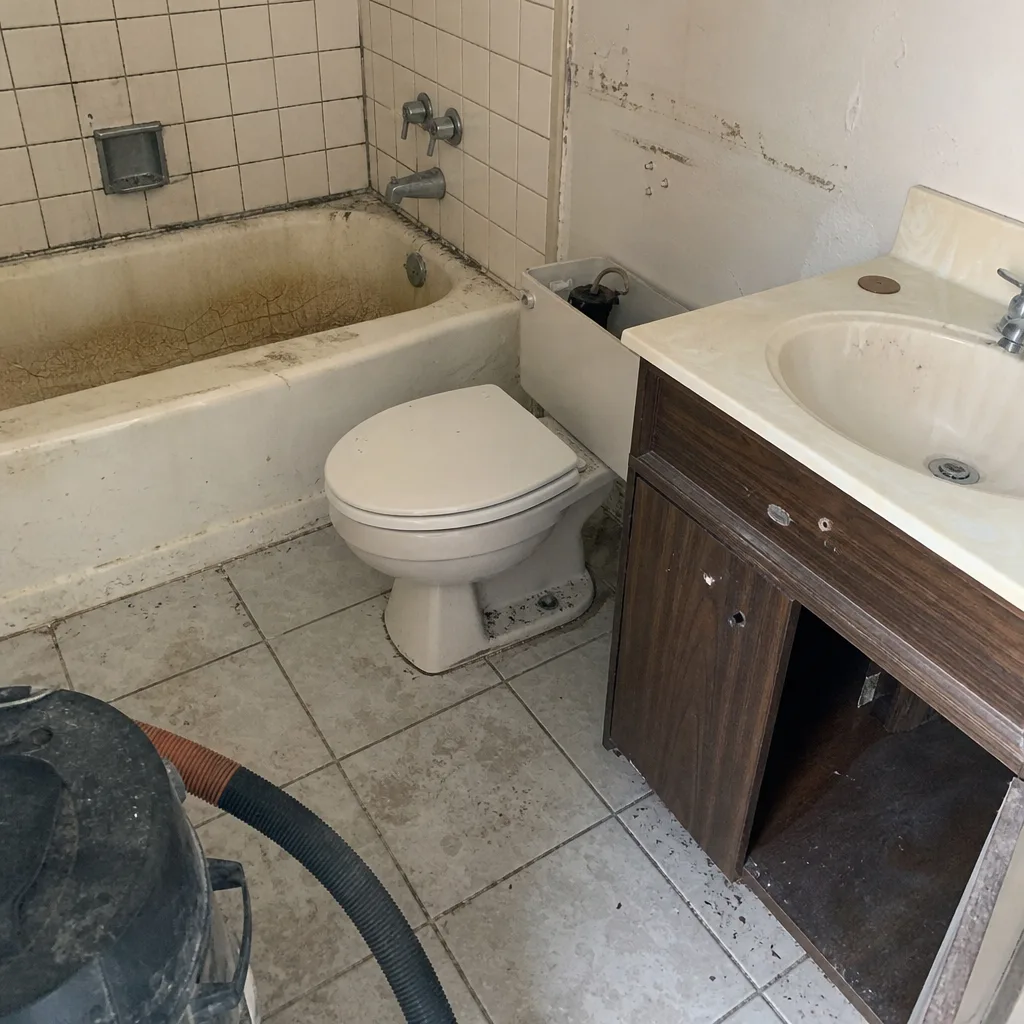 Before
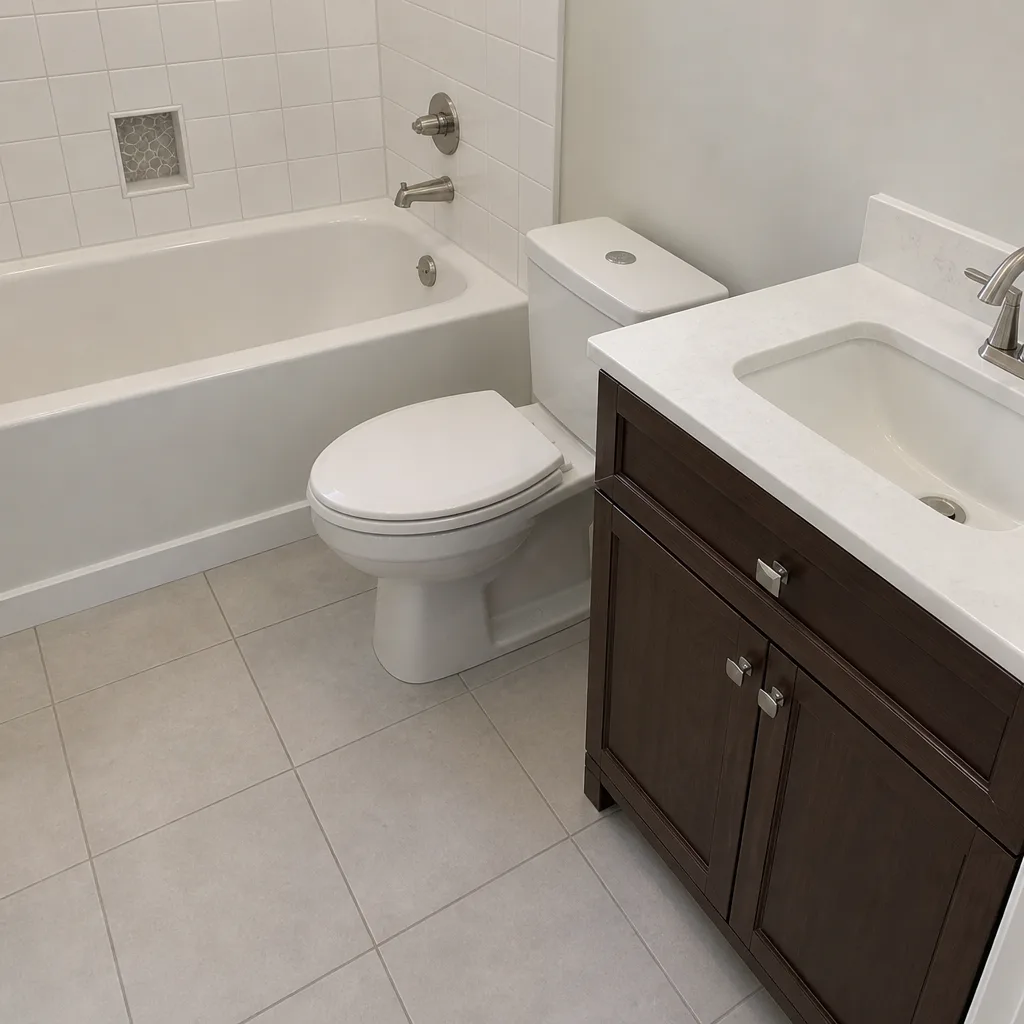 After
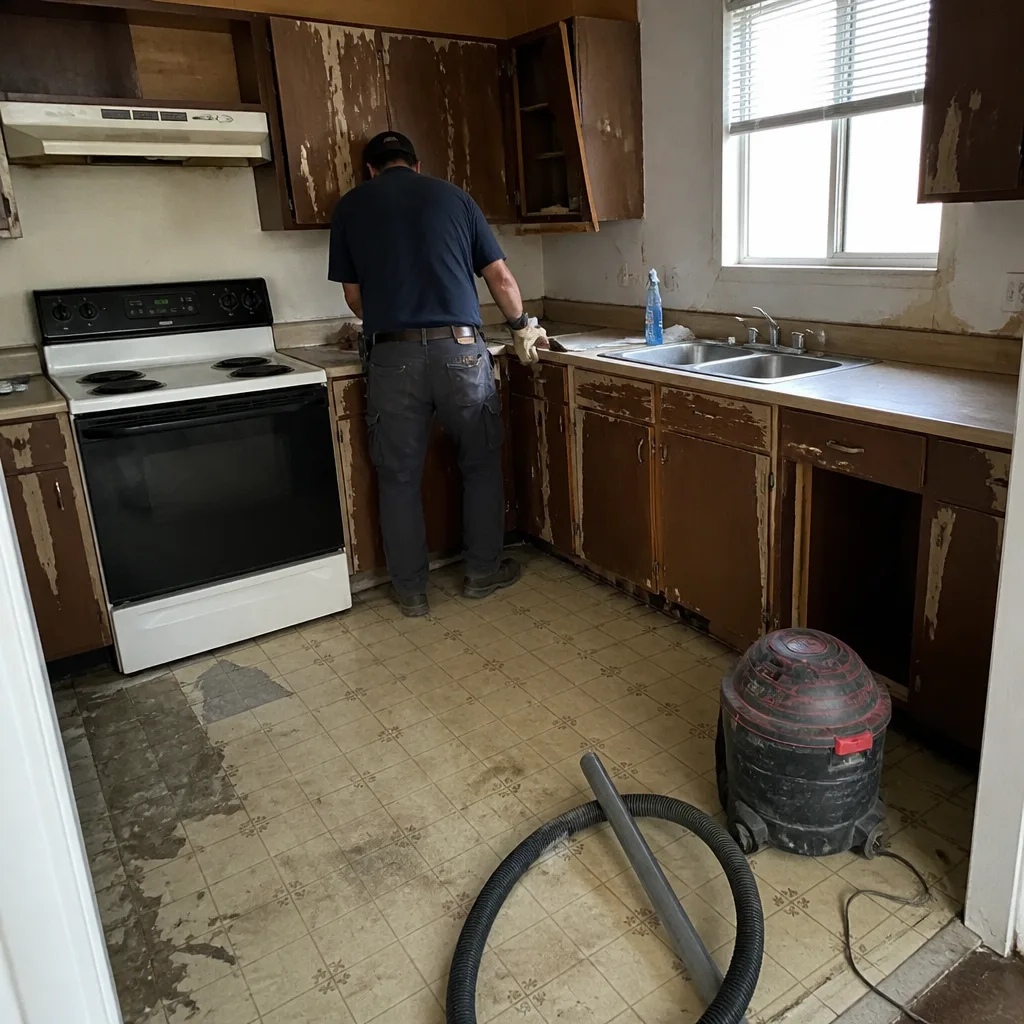 Before
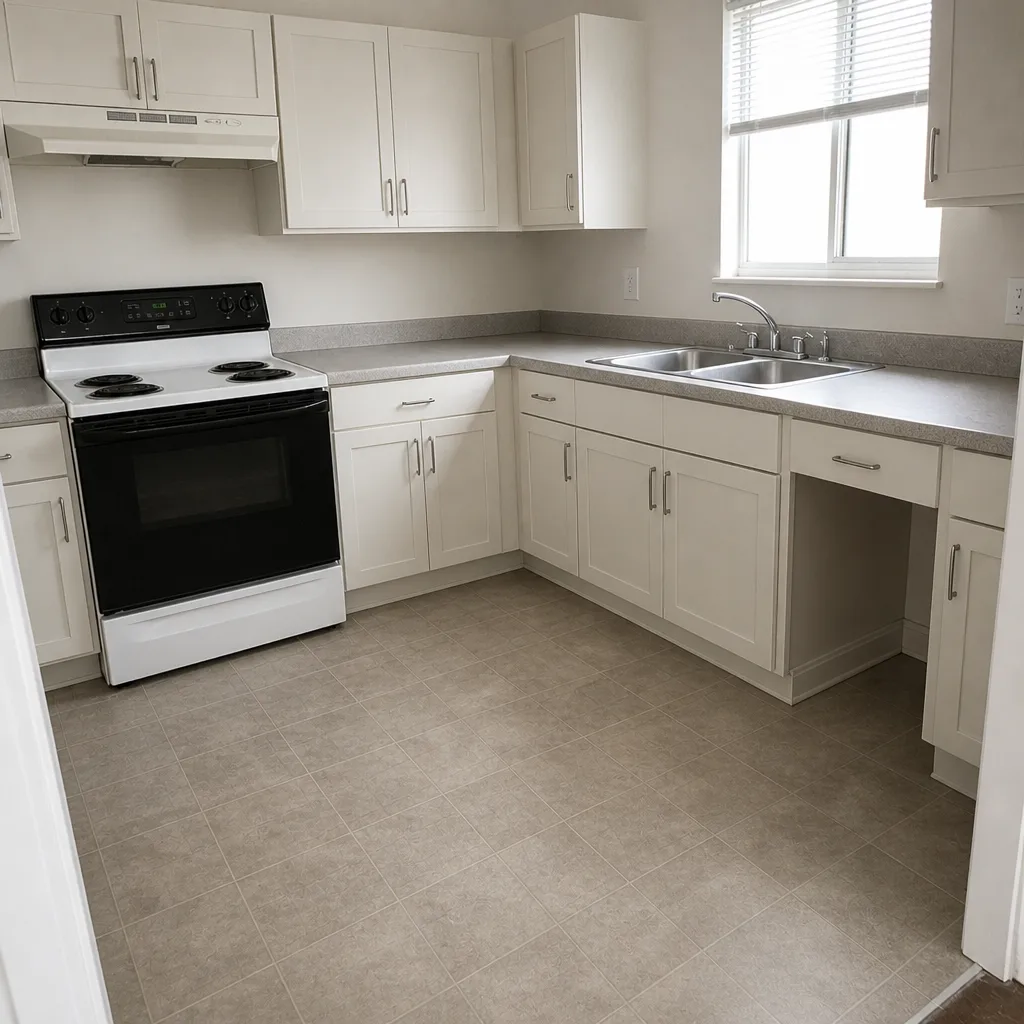 After
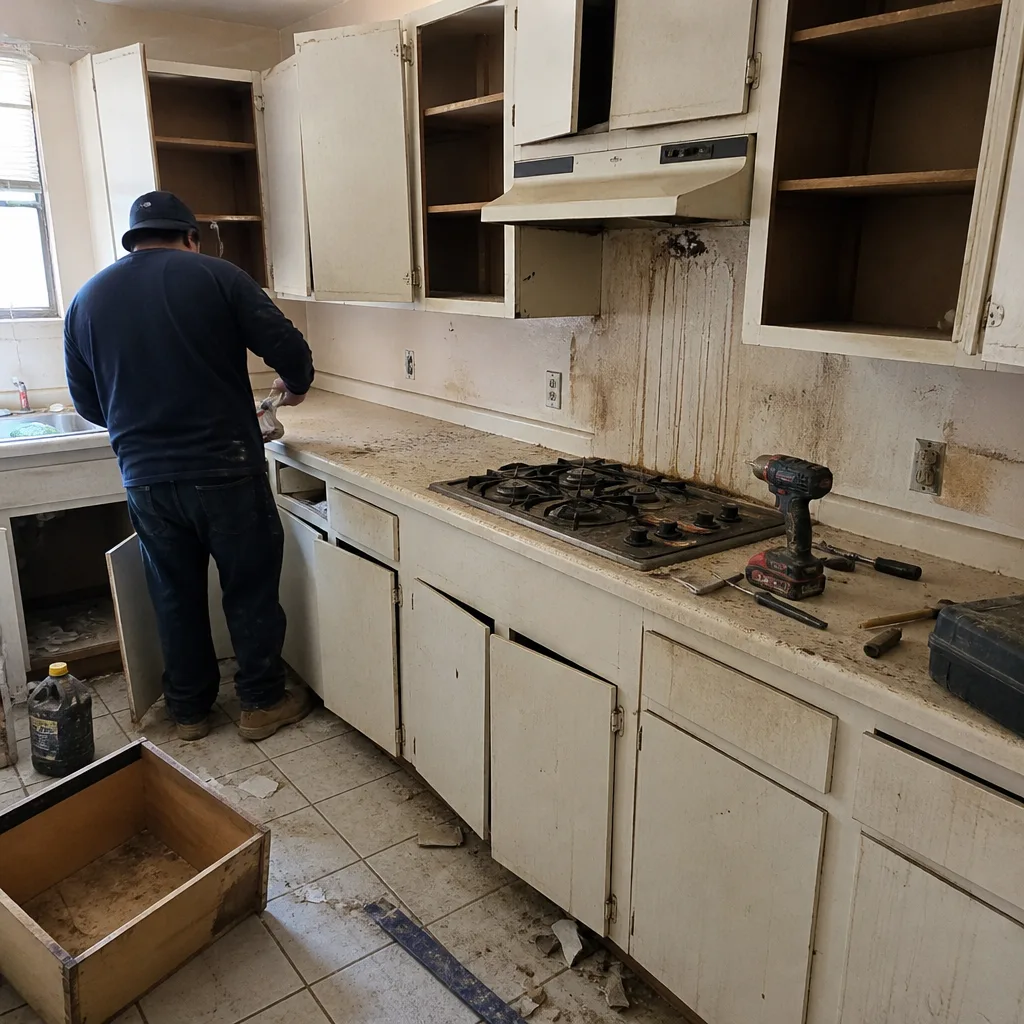 Before
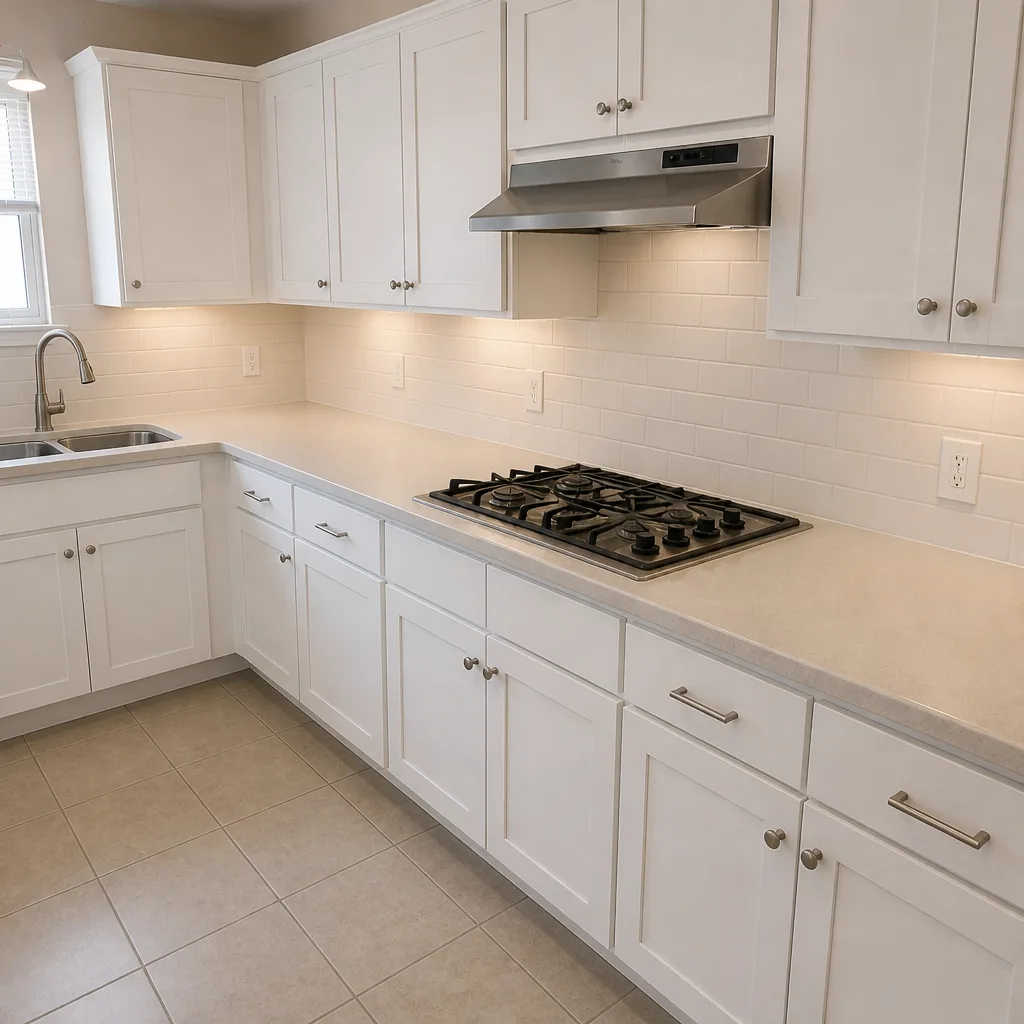 After
Other construction projects that follow the same pattern
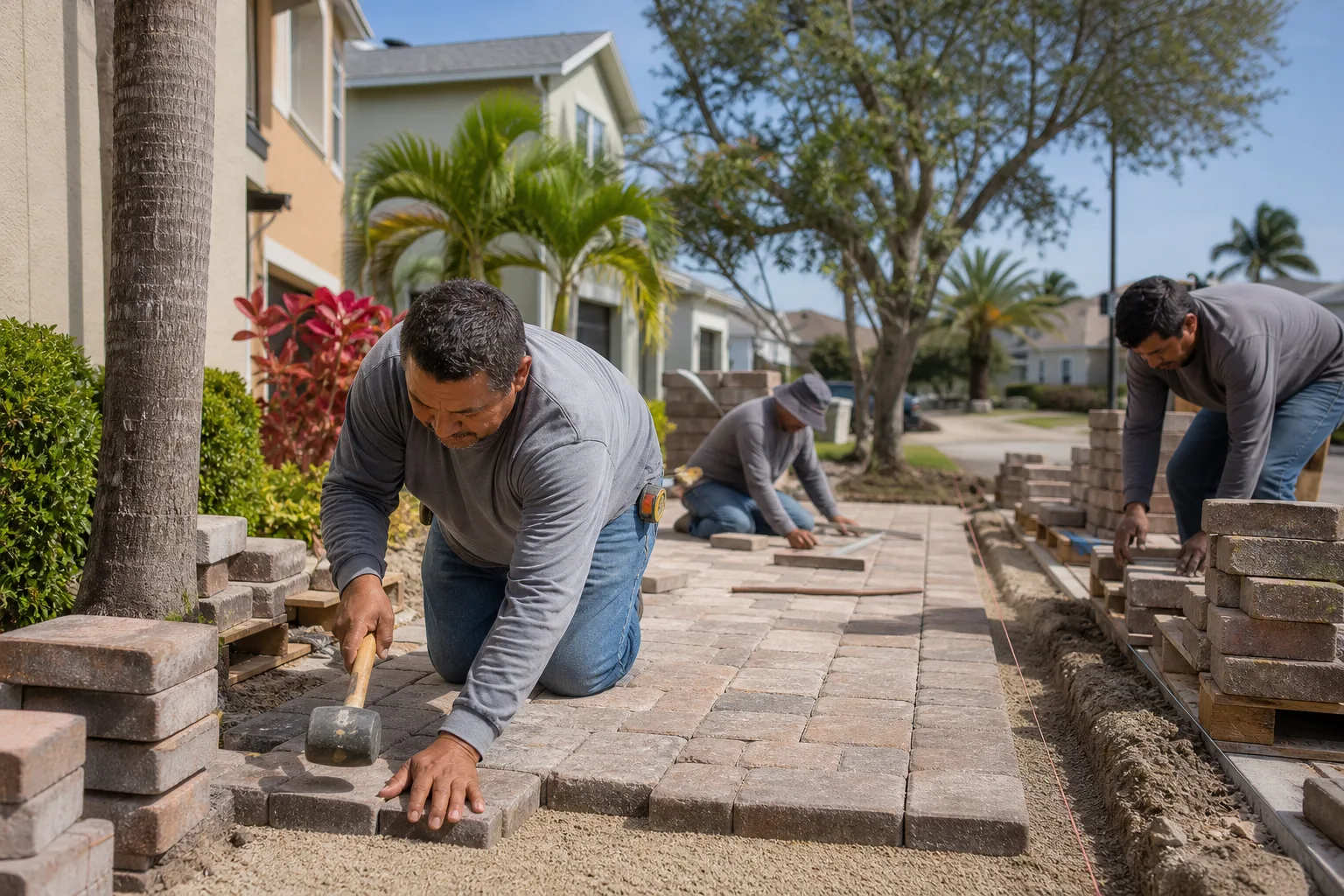
The base-prep logic isn’t unique to pavers. A handful of other home improvements around a North Las Vegas property split along a similar line: surface work is homeowner-accessible, foundational work is not. Window replacement is a good example. Swapping a sash is homeowner-friendly; getting the rough opening right and sealing against our wind-driven dust is not. Window brands like Therma-Tru and ECO Window Systems are built for this climate, but only when they’re installed to spec against a properly prepped opening.
The same pattern shows up across our other services. If you’re thinking about Fence Installation in North Las Vegas, the posts are the base, and the panels are the surface. If you’re planning a Home Additions & ADU in North Las Vegas, the slab and framing are the base and everything you see is the surface. Getting the base right is the single most reliable predictor of how any of these projects performs after five years. Full-scope partners exist for that reason: the trades that touch the foundation and the trades that finish the look don’t always talk well to each other when split.
Common Mistakes to Avoid
- Excavating only to the depth of the pavers. DIYers routinely dig just enough to fit the pavers plus a little sand, then skip the deep base. In North Las Vegas, the base needs several inches of compacted aggregate to survive summer heat movement and monsoon water; shortchanging that depth is why so many DIY installs fail in the first year.
- Using hand-tamping in place of a plate compactor. A hand tamper cannot match plate compactor density. It’s the most common surface-only mistake and often shows up as low spots in front of the garage within a season.
- Ignoring the permit line. North Las Vegas homes with driveway approach aprons in the municipal right-of-way typically require permits. Some DIYers skip that step and get caught later at resale or during a subsequent street repaving.
- Skipping geotextile fabric. Fabric keeps subgrade soil from migrating up into the base gravel. It’s about the cheapest material on the job and the most frequently skipped.
- Under-ordering pavers. First-timers plan for zero waste and end up 30 cuts short of the finish line. Plan for 10 to 15 percent waste and store the leftover in case of future cuts.
- Running edge restraint too loosely. Pavers migrate on a driveway. If the perimeter restraint isn’t anchored into solid base at close intervals, the driveway spreads at the edges within a couple of summers and the pattern gaps open up.
- Sealing too soon after installation. Polymeric sand and paver surfaces need time to cure. Sealing within days of install, especially in North Las Vegas summer heat, can trap moisture and produce a hazy surface that won’t come off.
When to Call a Professional
Call a professional if the job involves caliche excavation, if your driveway approach falls in the municipal right-of-way and needs a permit, if your surface area is over 500 square feet, or if the base and grading are anything other than straightforward. Also call if your motivation is a beautiful driveway but not a project, or if you can’t afford the fix-if-wrong outcome on your own. That last one is the most common honest answer, and it doesn’t matter if it’s your driveway, a roof, or an Groundwork Construction Co. of North Las Vegas home renovation you’re planning. Groundwork Construction Co. of North Las Vegas offers free estimates in North Las Vegas – call (844) 797-5026. We give written line-item quotes, we pull the permits, and everything we build is covered by the 730-Day Done Right Promise. Our technicians have up to 12 years of experience, and we’ll tell you straight if your project is one you can half-do yourself.
Frequently Asked Questions
You can safely do the surface steps yourself: setting pavers, cutting with a rented wet saw, installing edge restraint, and applying joint sand. You should not do the base preparation yourself, particularly in North Las Vegas, where caliche excavation needs professional breaking equipment and compaction has to be done in proper lifts. Most homeowners get the best result from a labor-only arrangement that puts the base prep with a professional and the surface work with them. Call (844) 797-5026 for a free estimate on a labor-only quote.
Professional paver installation in North Las Vegas typically runs roughly $12 to $22 per square foot for standard concrete pavers, with premium pavers at the higher end of that range. A 600 square foot driveway lands roughly in the $7,200 to $13,200 range, though actual cost depends on pattern, access, soil conditions, and paver selection. We give written line-item quotes so you see every line before work starts, and the number you see is the number you pay. Call (844) 797-5026 for an exact quote – estimates are free.
Caliche is the hard, cement-like calcium carbonate layer that sits a few inches to a few feet below the surface across much of the Las Vegas Valley. It affects DIY paver projects in two ways: it slows or stops hand excavation entirely, and it creates uneven shelves and water pockets that cause settling and heave if the base isn’t deep enough. A caliche-heavy base is the single biggest reason we recommend professional excavation in North Las Vegas. Call (844) 797-5026 for a free site assessment.
No, not with a proper written line-item quote. Groundwork Construction Co. of North Las Vegas gives written line-item pricing before work starts, so additions require your written approval, not an assumption. The number you see on the quote is the number you pay. Call (844) 797-5026 to schedule a free estimate.
Yes, when a permit is required. Driveway approach aprons in the municipal right-of-way often fall under North Las Vegas permitting rules and get inspected on base depth and slope. We handle the permitting and the inspection schedule as part of the job, so you’re not chasing a city office while your driveway is torn up. Call (844) 797-5026 to talk through your specific lot.
Most residential paver driveways in the 500 to 800 square foot range take about 4 to 7 working days from demo to final joint sand, weather permitting. Caliche excavation adds time, and summer heat usually pushes work to early mornings. You’ll get a schedule with your written quote, and we stick to it – 730-Day Done Right Promise behind all of it. Call (844) 797-5026 to schedule your free estimate.
The Bottom Line
The DIY versus professional question for pavers isn’t really a debate about skill. It’s a debate about whether you want to gamble your driveway’s foundation on a YouTube tutorial. Draw the line at base prep, in North Las Vegas especially, where caliche, monsoon water, and summer heat punish shortcuts faster than in most of the country. Surface work is genuinely DIY-friendly if you have the time, the comfort with a wet saw, and the patience for it. Base work is not. If you want a middle path, labor-only arrangements are legitimate and worth pricing out. For everything below the surface, hire it out. Groundwork Construction Co. of North Las Vegas handles the full scope from foundation to finish line, and we’re happy to quote both a full install and a labor-only scope so you can compare them side by side.
If you’re evaluating other parts of your property along the same logic, our Fence Installation in North Las Vegas page is written the same way, and so is our Home Additions & ADU in North Las Vegas guide. Every one of these projects has a base line, and we draw it the same way every time.
Call (844) 797-5026 for a free estimate. A live person answers around the clock, we give written line-item quotes, and we stand behind everything we build with the 730-Day Done Right Promise.
Written by the team at Groundwork Construction Co. of North Las Vegas.