Free written scope consultation - allowances, timeline, and change-order rules on paper before a single trade is scheduled
Styles & brands we work with
- Kitchen remodeling
- Bathroom remodeling
- Home additions & ADU
- Roofing
- Windows & doors
- Driveway & pavers
- Fence
See the difference
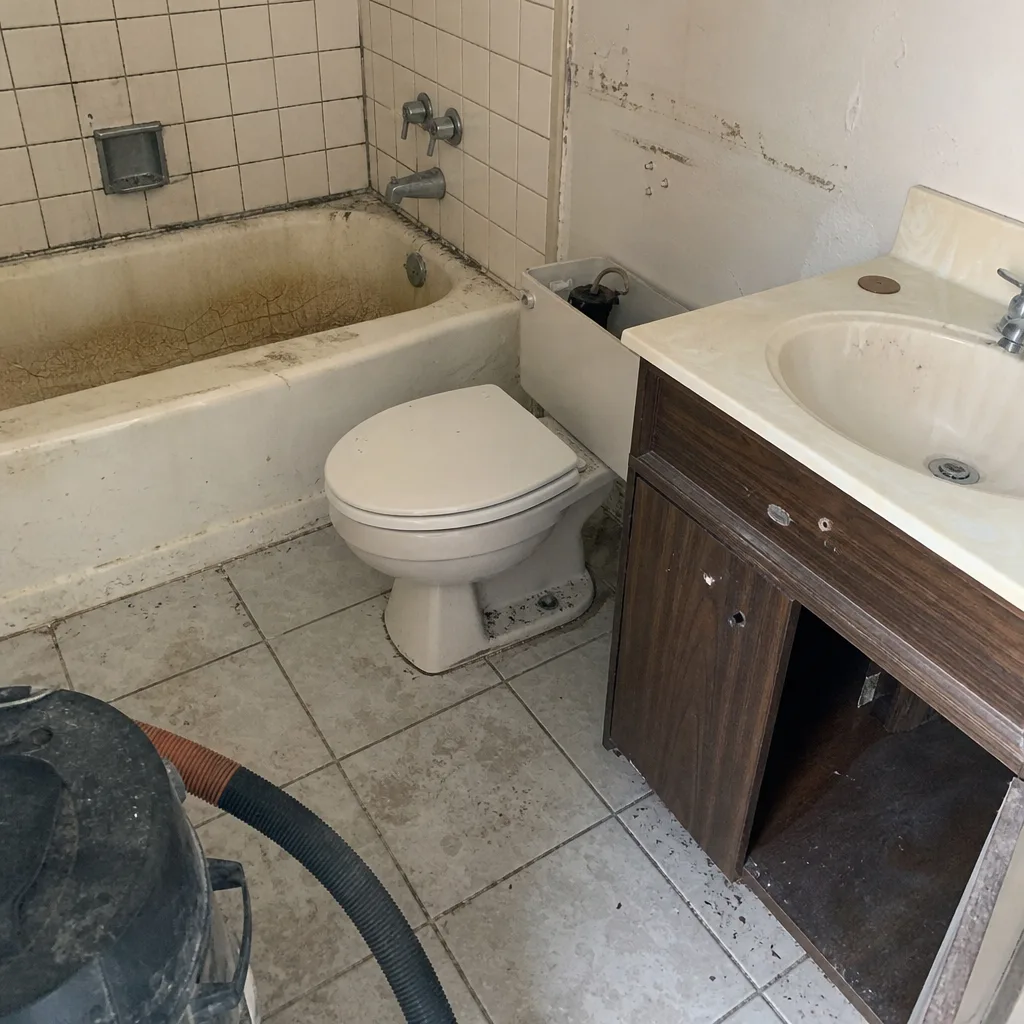 Before
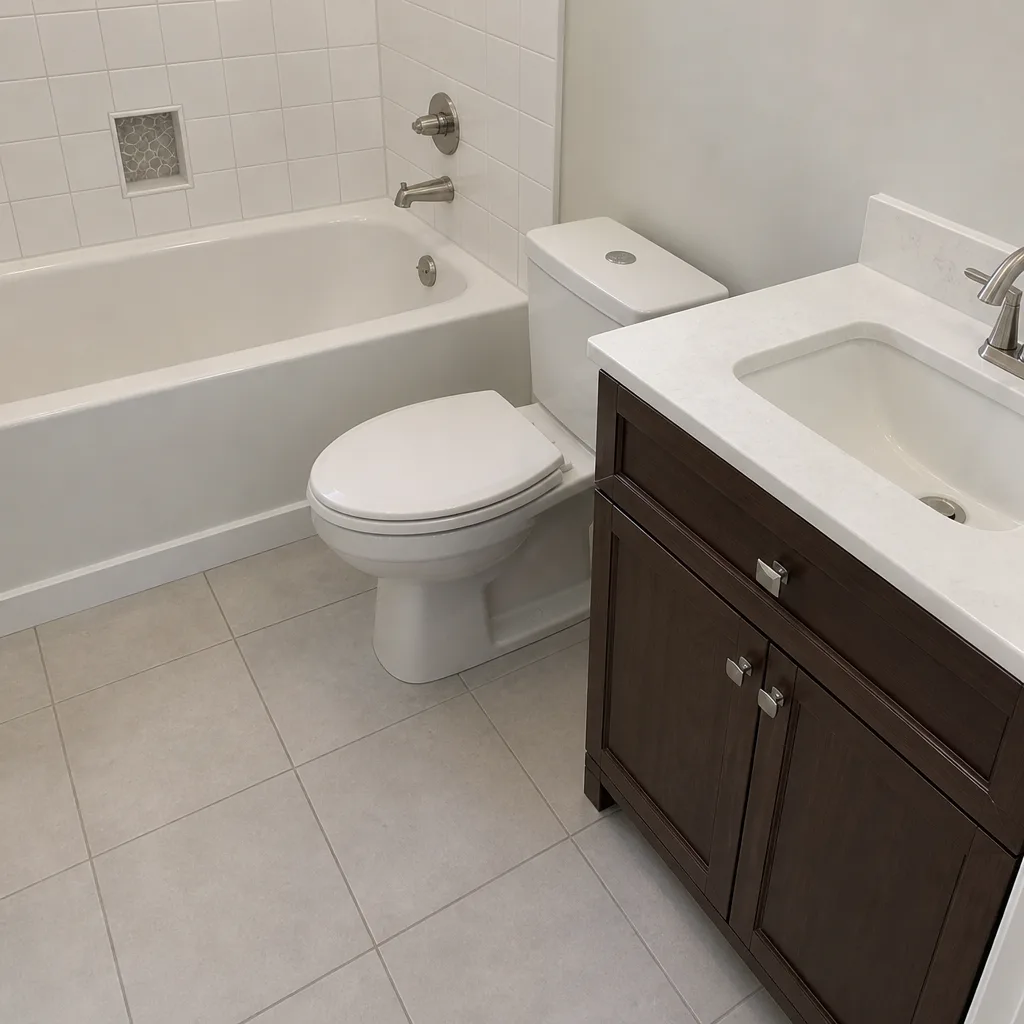 After
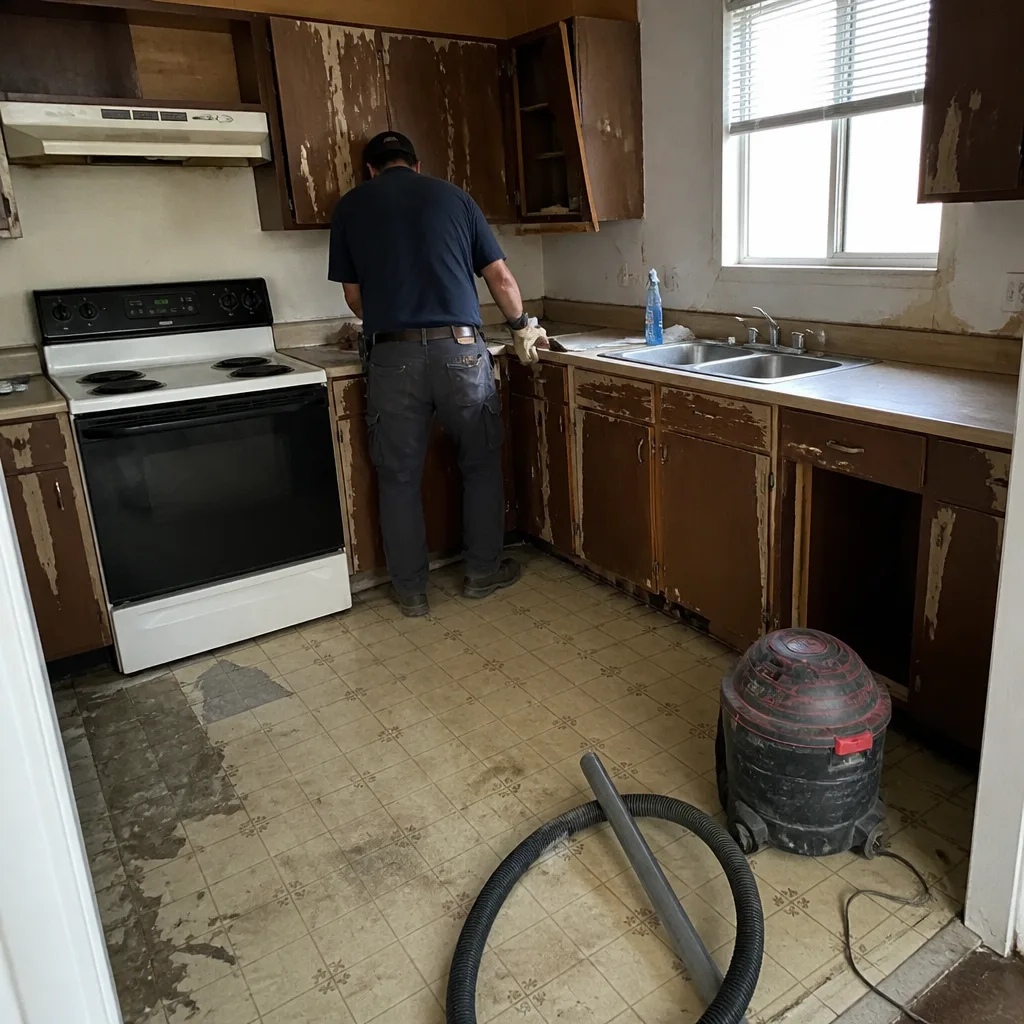 Before
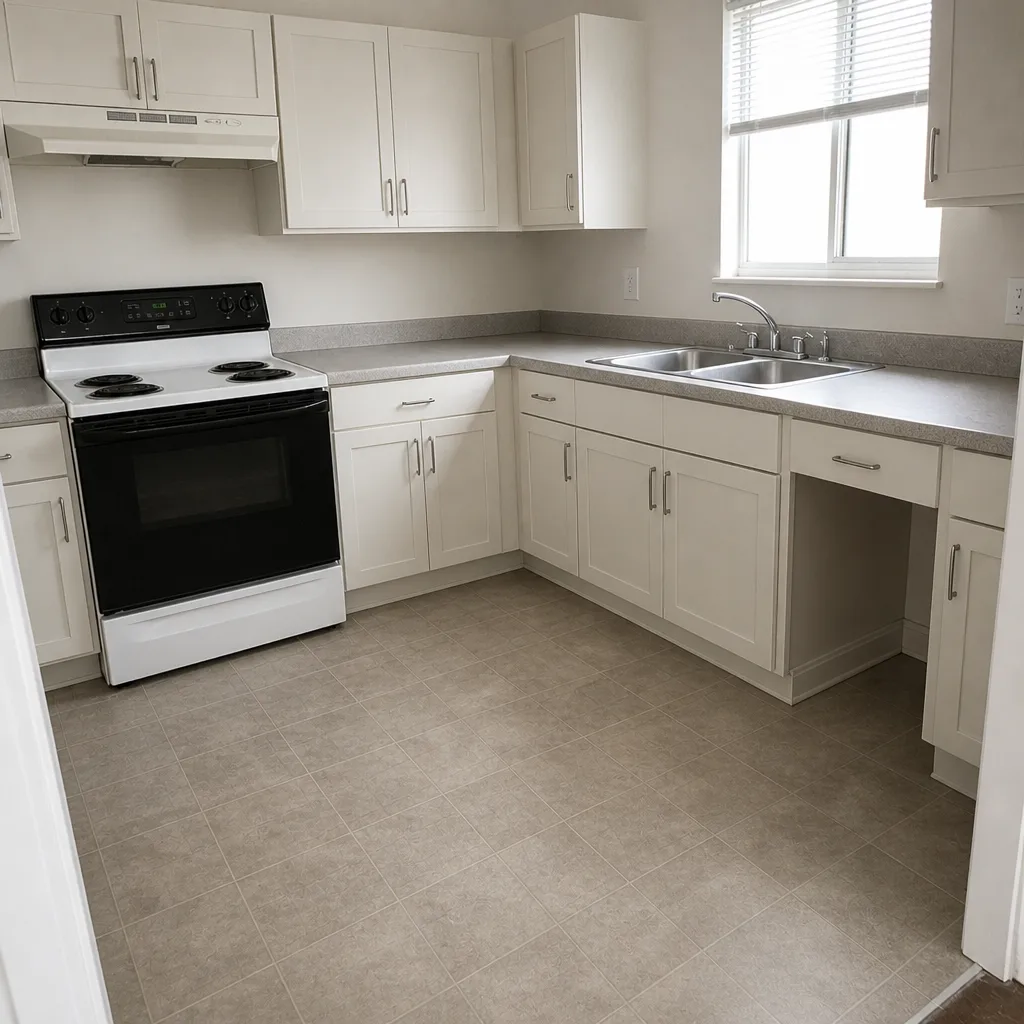 After
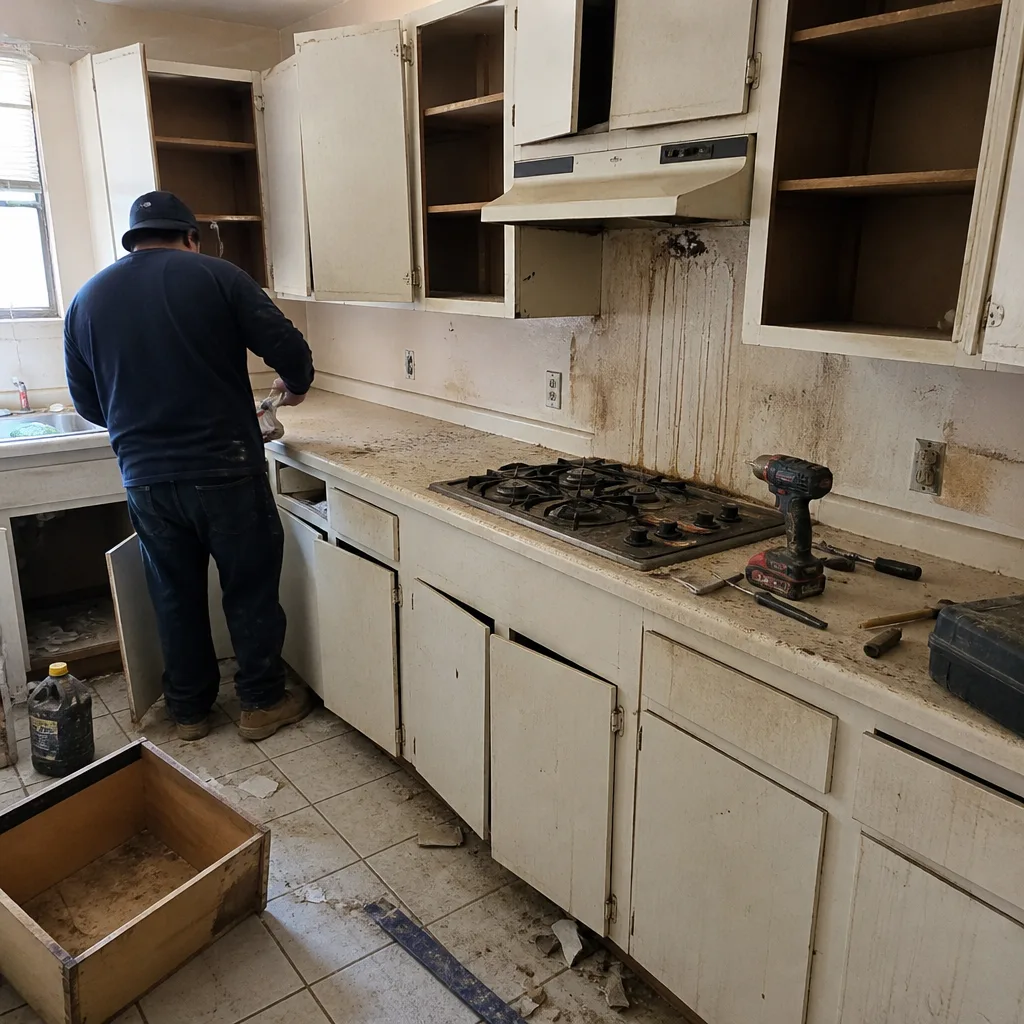 Before
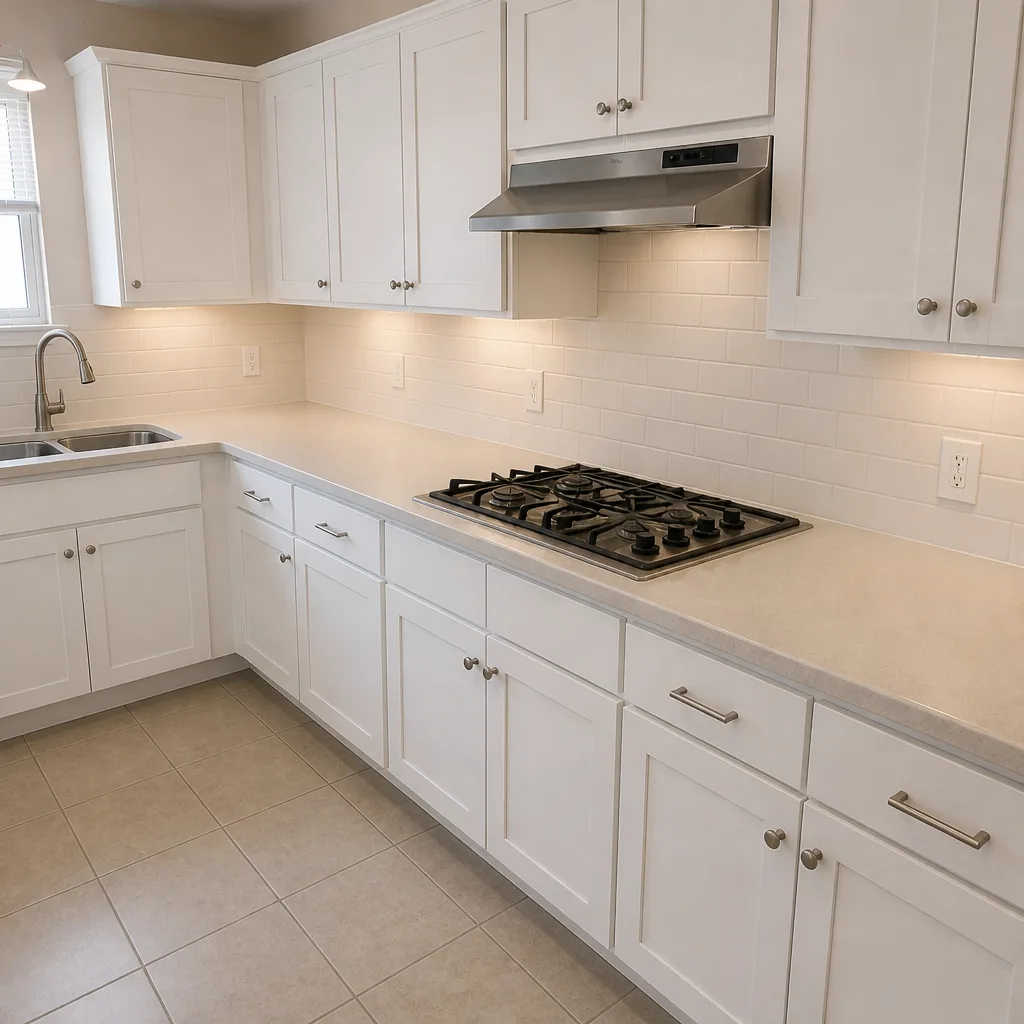 After
Metal Roof vs. Shingles in North Las Vegas: Which One Passes Inspection and Holds Up?
For most North Las Vegas homeowners, choose metal if you’re staying in the house more than 15 years, or if your roof pitch and HOA allow it and you can handle the monthly premium. Choose architectural shingles if budget is tighter, the home is a rental or short-term hold, or the roof geometry makes panel labor expensive. That’s the honest short version. The longer answer matters more here, because North Las Vegas enforces some of the most current wind-uplift codes in the valley, and not every roofing system that passes in Henderson will pass inspection here. Call (844) 797-5026 for a free estimate and we’ll tell you what your specific address actually requires.
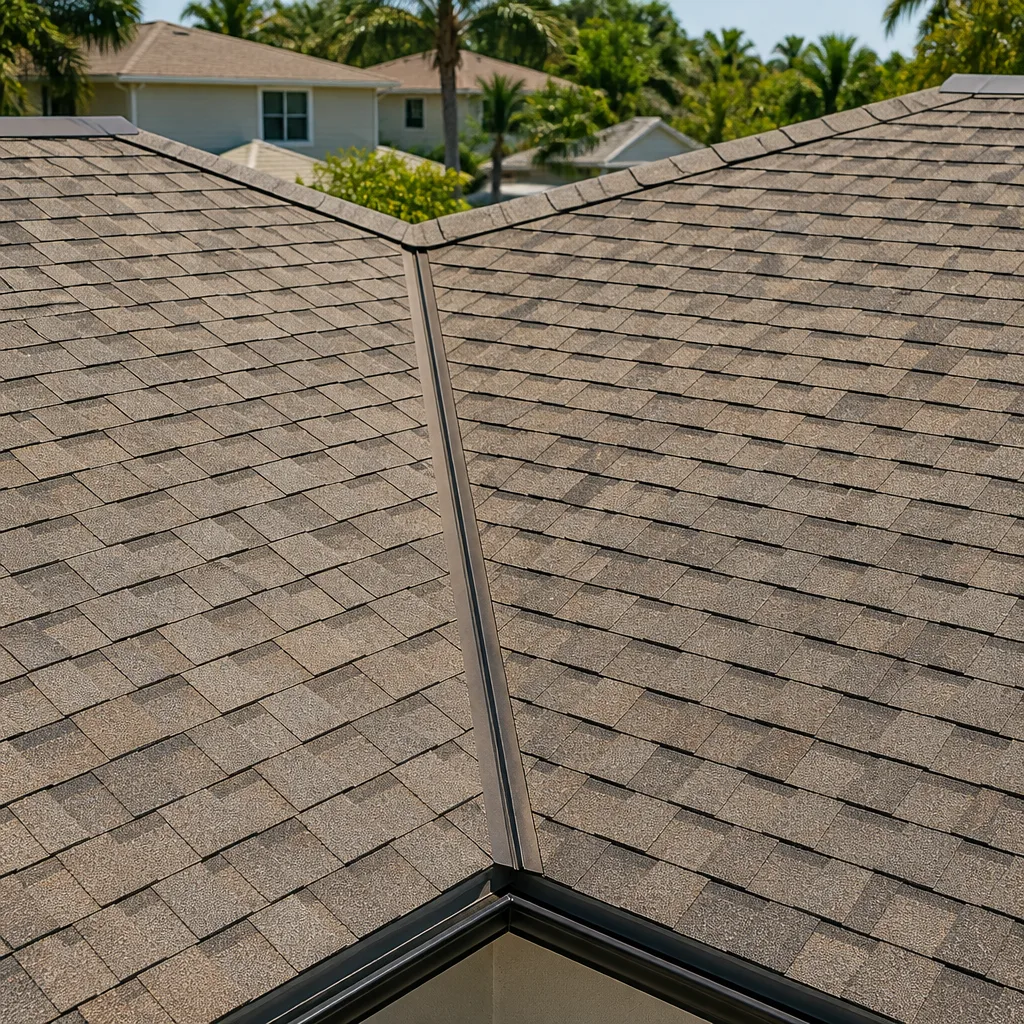
Why the North Las Vegas Code Layer Changes This Decision
Most comparison guides treat metal vs. shingles as a spreadsheet: cost per square, lifespan, curb appeal. That’s fine for a generic market. It falls apart in North Las Vegas, where the city sits in a high-wind and seismic zone and inspectors are enforcing the latest code adoptions on active job sites.
What that means in practice: your roofer’s fastening pattern, uplift rating, and shear detailing get checked at inspection, not just at the bid. A 3-tab shingle package nailed to the minimum schedule may meet the letter of an older spec but fail the wind-uplift math now being applied on newer subdivisions. Standing-seam metal frequently hits higher uplift ratings than shingles at a comparable price point, because the concealed fastener system and panel length let you control the load path in ways shingles can’t.
Where this shows up in local housing stock
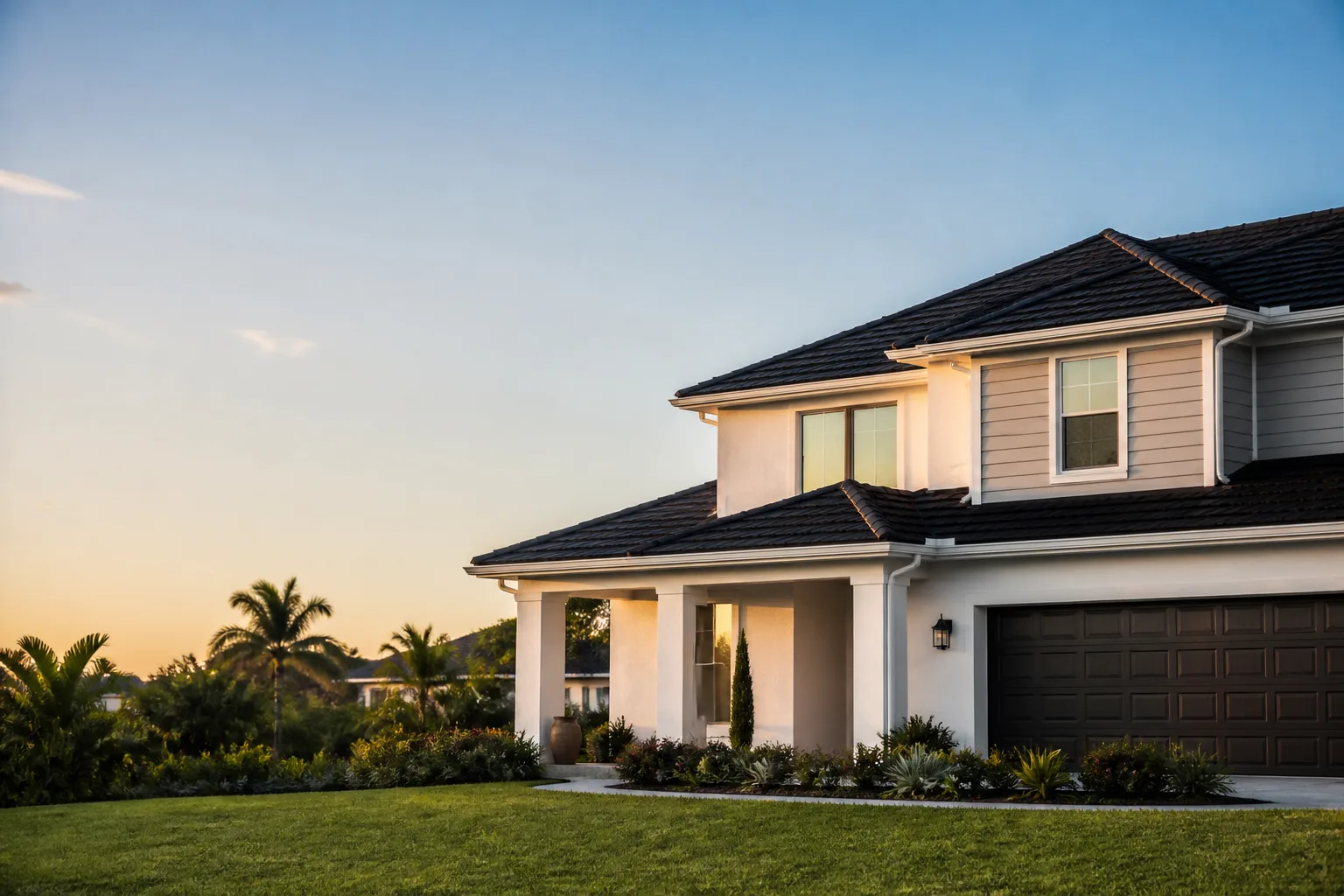
The bulk of North Las Vegas housing is post-1990 tract construction in master-planned subdivisions like Aliante, Valley Vista, and Tule Springs, built as stucco-on-frame on 4:12 to 6:12 pitch roofs. That pitch range is the sweet spot for metal panels once you factor labor efficiency – panels arrive pre-cut to length, install faster per square than premium architectural shingles on a simple hip-and-ridge roof, and don’t need the same underlayment layering. On the older 1950s-70s ranch homes in the Downtown and Rancho core, the math often flips: irregular roof planes, added dormers, and patched decking can make panel fabrication more expensive, and a high-grade shingle is the smarter call.
If you’re looking for a broader overview of what we do across all roof types, our Roofing page covers the full scope. But for this specific decision, the code and geometry come first, product second.
Side-by-Side: Metal vs. Architectural Shingles in North Las Vegas
| Factor | Standing-Seam Metal | Architectural / Class 4 Shingles |
|---|---|---|
| Installed cost, ~1,800 sq ft tract home | $15,000-$40,000 | $8,000-$20,000 |
| Wind uplift rating | Often higher; concealed fasteners spread load | Class 4 impact rated helps, but fastening pattern still governs |
| Desert UV life | 30-50+ years typical; reflectivity holds | Class 4 granules slow granule loss, but UV still degrades faster than metal |
| Heat performance above 105°F | Reflective finishes keep attic temps down | Granule loss accelerates in UV-saturated sun; reflectivity fades sooner |
| Best fit for | Long-hold owners, 4:12 to 6:12 simple pitches, Aliante-style subdivisions | Budget-conscious, rentals, irregular roofs, Rancho/Downtown rehabs |
| Repair profile | Localized panel replacement; seam failures are visible early | Individual shingle replacement; blow-offs often post-monsoon |
Those installed ranges assume standard tear-off and code-compliant fastening on a typical 1,800 sq ft North Las Vegas tract home. Complex geometry, decking replacement, and HOA-driven material upgrades push the numbers, and we walk every address before quoting. The North Las Vegas service area page shows how we handle inspections and scheduling across the city.
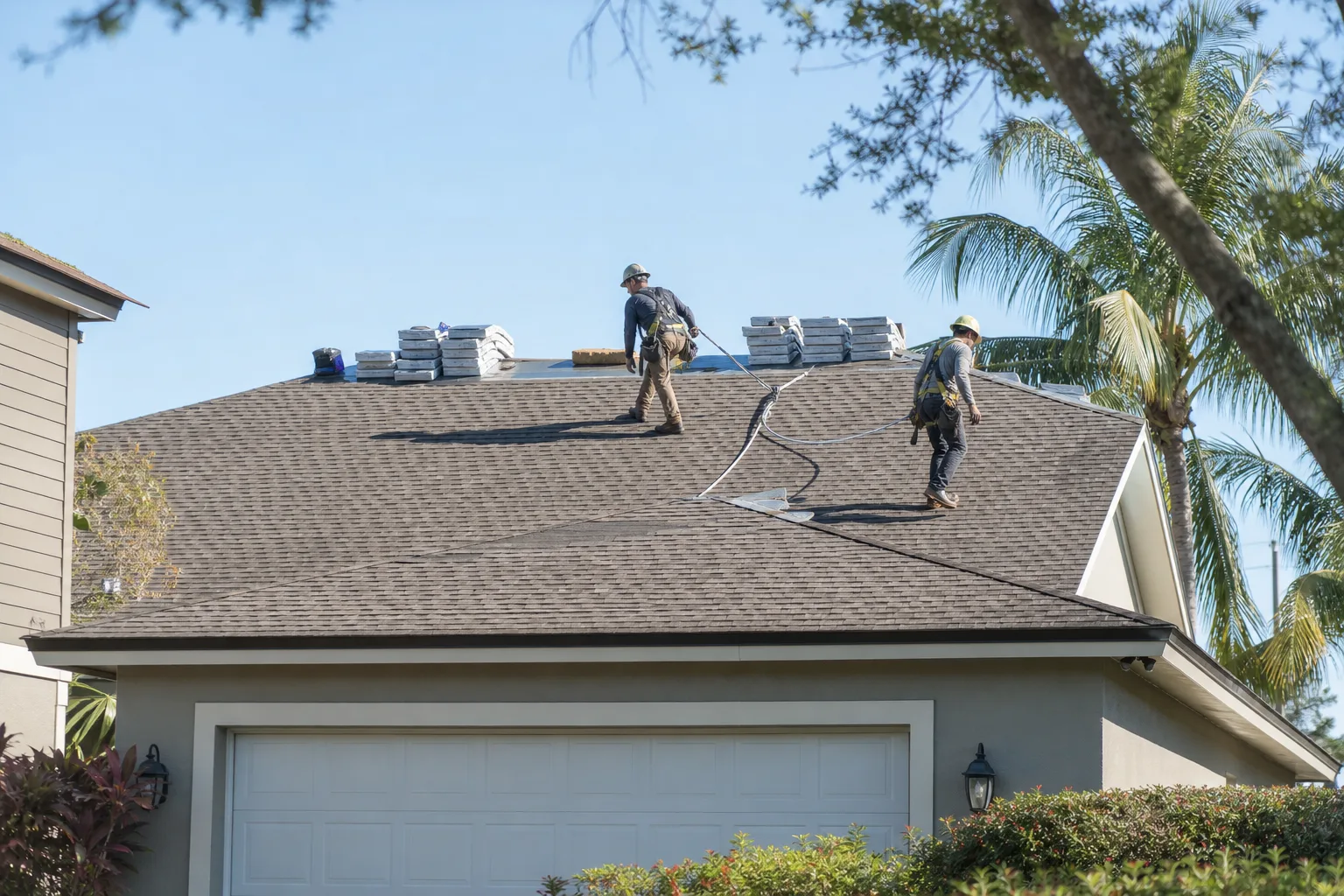
The Heat Reality: What 105°F+ Does to Each System
Summer highs here routinely top 105°F, and that’s the single biggest driver of premature roof failure we see on shingle roofs. Asphalt granules bake off faster under sustained UV, and once the asphalt mat is exposed, the shingle starts cracking and lifting at the edges – which is exactly when a monsoon gust finds the loose corner and peels it back.
Class 4 impact-rated architectural shingles from GAF and Owens Corning do hold up better than standard 3-tab; the heavier mat and denser granule coverage slow the degradation curve. But they still lose reflectivity over a decade in this sun, and they still degrade faster than a properly finished metal panel.
Metal handles UV and heat without the granule-loss problem. A standing-seam system’s reflective finish keeps attic temperatures down, and the panel surface doesn’t depend on granules to survive the sun. On the UV front, metal is simply the better material for this climate. That’s not a sales pitch – it’s what the roofs we replace tell us year after year.
Wind and seismic: what we actually see on failed roofs
In Aliante and similar subdivisions we regularly see spring and early-summer failures on shingle roofs where the original fastening schedule met a prior wind-uplift standard but not the current one. The pattern is consistent: south- and west-facing slopes lose tabs first, then whole shingles during the first real wind event after monsoon season. On metal roofs, seam failures are rarer but different in character – they usually trace back to a thermal expansion detail that wasn’t allowed for, and they show up as a visible lifted seam rather than scattered debris. Both are fixable. Only one of them is likely to send you looking for a tarp at 9 p.m.
What the 730-Day Done Right Promise Looks Like on a Metal Seam vs. a Shingle Blow-Off
This is the part no competitor publishes, so here it is plainly. Our 730-Day Done Right Promise means if the workmanship isn’t right, we make it right – and it applies to both systems, for two full years after install.
- Metal seam failure: If a seam lifts within the promise window and the cause traces to installation (fastener torque, thermal expansion detail, panel engagement), we correct the seam and the underlying detail at no charge. If a panel needs replacement, that’s on us.
- Shingle blow-off: If shingles lift within the window and inspection shows a fastening-schedule or underlayment error, we re-secure the field and replace damaged shingles at no charge. If wind exceeded the system’s rated uplift, that’s a storm claim – we’ll tell you honestly which one it is.
- Both systems: Our technicians have up to 12 years of experience, they’re background-checked, and they arrive in uniform. The same standard applies to a metal job and a shingle job.
That’s what “built to last, backed in writing” actually means when a claim happens. It’s a written commitment, not a verbal one.
The Cost Conversation: Making the Metal Premium Manageable
Metal runs roughly $7,000-$20,000 more than architectural shingles on a typical North Las Vegas tract home. That’s a real gap. Here’s how it breaks down in monthly terms: our 0% financing for 18 months spreads the premium across a manageable monthly delta, and $1,000 off projects over $10,000 applies to either system. The metal roof’s longer service life means you’re likely buying one roof instead of two – but only if the code, pitch, and geometry support the install.
Upfront pricing is the rule here: the number you see is the number you pay, no line items that balloon after tear-off. That’s the standard we apply whether the job is a $8,000 shingle replacement or a $40,000 standing-seam metal install.
Common North Las Vegas Scenarios
Aliante tract home, 4:12 pitch, original 2000s shingles failing: Metal is cost-competitive once labor efficiency is factored in, and it solves the UV problem for good. This is our most common metal recommendation.
Rental property in the Valley Vista area: Architectural shingles almost always win on total cost of ownership over a shorter hold. The metal premium doesn’t pay back fast enough.
Downtown or Rancho 1960s ranch with irregular roof planes and added additions: Shingles usually win, because panel fabrication on a chopped-up roof eats the labor savings.
Post-monsoon shingle blow-off on any subdivision roof: Before recommending replacement, we check whether the fastening schedule met current wind-uplift standards. Sometimes it’s a repair, not a replacement.
FAQs
Metal is the better long-term roof in North Las Vegas because it survives UV and heat without granule loss, and standing-seam systems often achieve higher wind-uplift ratings than shingles at comparable price points. Shingles are the better choice when budget or roof geometry doesn’t support metal. The right answer depends on your pitch, your hold horizon, and what the current city inspection requires for your address.
Metal roof installation in North Las Vegas runs $15,000-$40,000, while architectural shingle replacement runs $8,000-$20,000 on a typical 1,800 sq ft tract home. The $7,000-$20,000 gap is the metal premium, and 0% financing for 18 months spreads it into a monthly figure most long-hold owners can work with. Call (844) 797-5026 for an exact quote – estimates are free and we walk the roof before pricing.
Yes – standing-seam metal routinely meets the stricter wind-uplift and shear requirements North Las Vegas enforces, because concealed fasteners and panel length let us control the load path. The key is getting the fastening schedule and shear detailing right on the bid, not discovering the gap at inspection. We confirm the uplift math for your specific address before we quote.
Repair is almost always cheaper when the failure is localized – roof repair runs $400-$1,800 versus $8,000-$20,000 for full replacement. The tipping point is granule loss across the field or multiple slopes losing tabs after a wind event; at that stage, patching just delays the inevitable. Call (844) 797-5026 and we’ll tell you honestly which side of that line your roof is on.
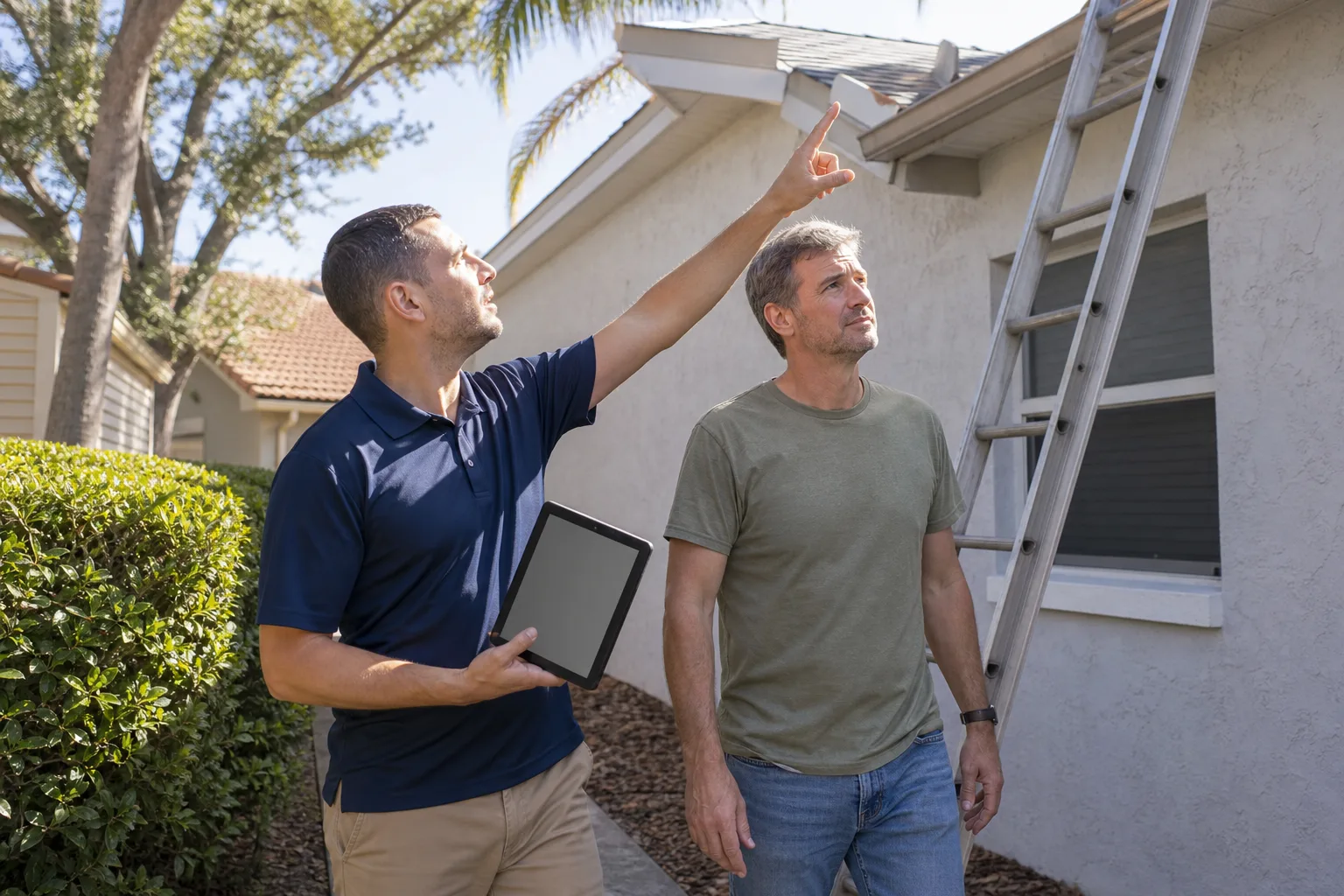
If you’d rather have it looked at, Groundwork Construction Co. of North Las Vegas offers a no-pressure assessment in North Las Vegas – call (844) 797-5026. We’ll walk the roof, check the fastening schedule against what your address actually requires, and give you upfront pricing on both systems so you can decide without a sales pitch. Calls are answered by a live person, 24/7, and estimates are free.
Written by the team at Groundwork Construction Co. of North Las Vegas, serving North Las Vegas, NV.