Last updated November 18, 2026



Free written scope consultation - allowances, timeline, and change-order rules on paper before a single trade is scheduled
Driveway & Pavers Maintenance Schedule: What to Do and When
Homeowners who seal their pavers in August, the most common timing we see, are doing it wrong. Sealant applied when surface temperatures climb past 90°F bubbles, cures unevenly, and breaks down early, and in North Las Vegas that unsafe window is longer than most people realize. The desert doesn’t hand you the gentle seasonal grace periods the rest of the country counts on. Heat, UV, monsoon runoff, and wind-driven grit push every failure point harder and faster here. What you’ll get below is the exact month-by-month schedule we’ve built for this climate, plus a 30-minute inspection checklist that catches most problems before they get expensive.
Quick Answer
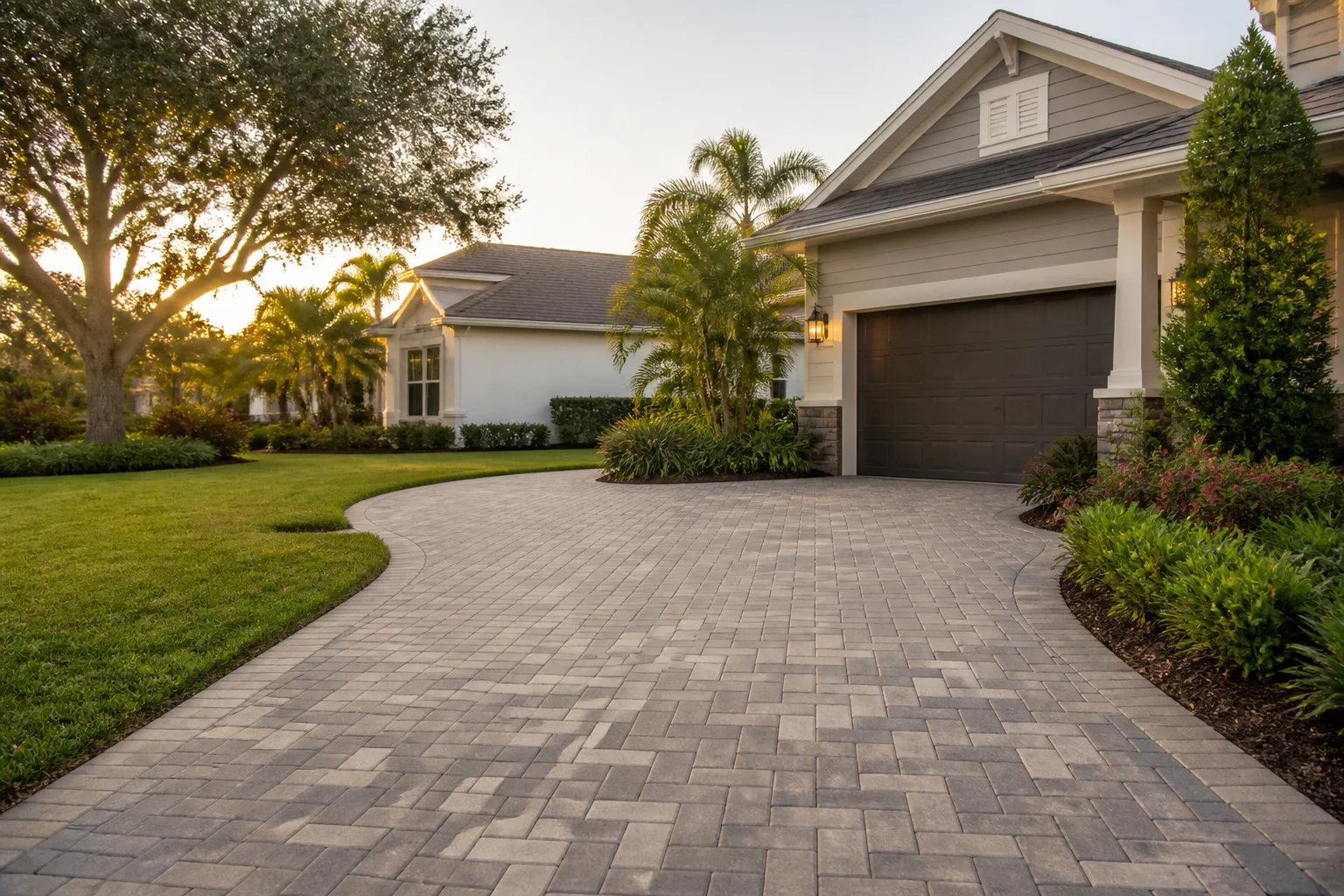
Paver maintenance in North Las Vegas runs on a heat-adjusted calendar, not the standard four-season one. The safe sealing window is October through early April only, joint sand gets inspected before and after monsoon season (roughly June through September), and a 30-minute annual walkthrough each spring catches about 90% of small issues before they become costly repairs. Clean twice a year, reseal every two to three years, and never apply sealant on a hot surface.
Styles & brands we work with
- Kitchen remodeling
- Bathroom remodeling
- Home additions & ADU
- Roofing
- Windows & doors
- Driveway & pavers
- Fence
Table of Contents
- The North Las Vegas Paver Maintenance Calendar at a Glance
- Why the Sealing Window Is October to Early April (and Never August)
- Joint Sand and Monsoon Water Flow: When to Check and Why
- The 30-Minute Annual Inspection Checklist
- UV Color Fade at Year 1, Year 3, and Year 5: Normal vs. Product Failure
- What You Can Do Yourself vs. What Voids a Manufacturer Warranty
- Month-by-Month Task Planner
- Common Mistakes to Avoid
The North Las Vegas Paver Maintenance Calendar at a Glance
Most paver guides assume a spring thaw, a mild summer, and a wet fall. North Las Vegas gets none of those. Our summers are the devil’s own work on hardscape, our monsoon pushes a year’s worth of water through in a handful of storms, and our “winter” is a short cool stretch that happens to be the only reliable time to work with sealants. The schedule below adjusts for all of it.
Here’s the shape of the year, and it’s worth taping to the garage wall:
- October through early April: The resealing window. Surface temperatures are low enough for sealant to cure properly. This is your shot.
- February and March: Best time for repairs. Loose pavers, cracked units, and settled areas are visible after the summer’s expansion and are easy to reset in mild weather.
- April and May: Pre-monsoon prep. Re-sand joints, check drainage slope, clear any cracking before the rain arrives.
- June through September: Monsoon watch. Inspect joint sand after any heavy storm. Cleaning and light weeding only. No sealing.
- October: Post-monsoon inspection, then reseal if the pavers are due.
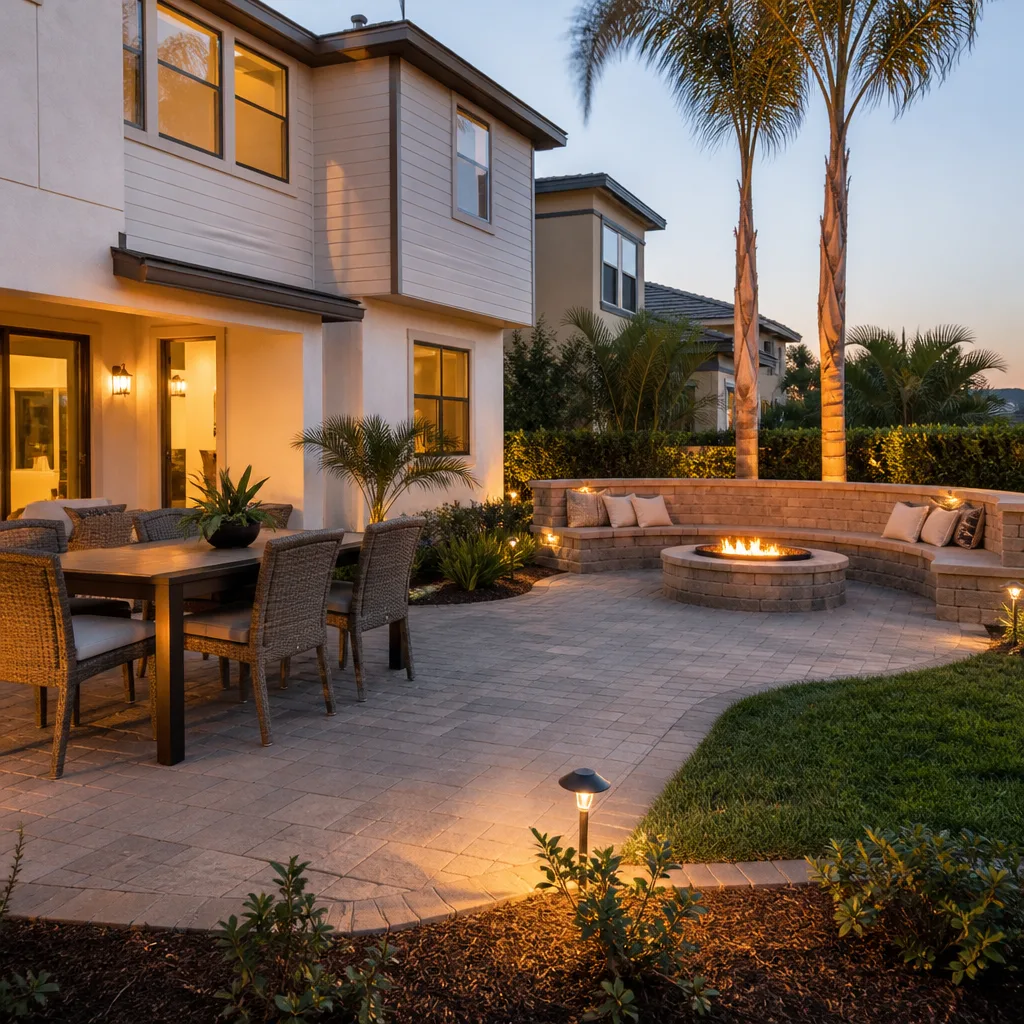
The point is that the calendar is inverted from most of the country. Where northern homeowners do their heavy work in summer, North Las Vegas homeowners should be doing it in the cooler months and holding steady through the heat. If you’re planning a new install and want the base built to handle this cycle from day one, our Driveway & Pavers in North Las Vegas team sets every project up around it.
Why the Sealing Window Is October to Early April (and Never August)
Sealing is the single most misunderstood task on this schedule, and timing is why. A penetrating or film-forming sealer needs to cure at moderate temperatures, ideally surface temps between 50°F and 90°F with no rain for 24 to 48 hours. In North Las Vegas, paver surfaces routinely hit 130°F to 150°F in July and stay above 90°F well into September. Sealant applied in that window skins over before it can bond and cures in patches. It bubbles, it turns cloudy, it peels within a year, and it looks worse than the unsealed paver it replaced.
The reliable range here is October through early April. A few practical notes for that window:
- Check the forecast. No rain within 24 to 48 hours of application. Our rare winter storms move fast, and one shower on fresh sealer ruins the job.
- Apply in the morning. Surface temperature is lowest before about 10 a.m., and the sealer gets hours to start curing before the sun gets serious.
- Two thin coats beat one thick coat. Thin coats cure evenly; thick coats trap solvent and go tacky.
- Clean first, always. Sealant locks in dirt. Power washing and a full dry-out (24 to 48 hours) come before any sealer touches the pavers.
How often you reseal depends on exposure. A full-sun driveway in the Aliante or Tule Springs area bakes harder than a shaded patio, so plan on resealing every two to three years for a driveway and every three to four for a covered area. If a paver surface looks chalky or water stops beading, that’s the signal to reseal, not a fixed calendar date. And in our experience, the homeowners who wait until August because that’s when they finally have a free weekend end up paying to strip and redo the whole job.
Joint Sand and Monsoon Water Flow: When to Check and Why
Joint sand is what keeps a paver driveway tight. It fills the gaps, locks the units against lateral movement, and gives the surface structural integrity. When the sand washes out, pavers shift, edge restraints take a beating, and weeds find every gap. In most of the country, sand loss is a slow process. In North Las Vegas, the monsoon compresses it into a handful of afternoons.
Our monsoon pattern is specific and predictable enough to plan around. From roughly June through September, intense afternoon storms dump fast water onto hard, sun-baked soil that can’t absorb it quickly. That water sheets across the driveway, and wherever the slope is slightly off or the edge restraint has any gap, it scours the joint sand out. The water flow patterns are different from a Midwest rain because the storm intensity here is concentrated and the ground is hydrophobic. A single storm can strip more sand than a month of rain elsewhere.
Here’s how to stay ahead of it:
- Before the season (April/May): Top off joint sand and sweep it into the gaps until they’re level and firm. Check that the edge restraints on both sides are tight and the drainage slope still sheds water away from the foundation.
- After any major storm (June through September): Walk the driveway. Look for sandless joints, washed-out edges, and standing water that didn’t drain. Re-sand as needed.
- After the season (October): Full sand replenishment if the summer took a toll, then seal only if the pavers are due.
Sand that won’t stay put after a normal re-sand is a sign the base is moving or the edge restraint has failed. That’s not a sand problem, and it’s worth a professional look. Neighbors ask us about this constantly in the newer North Las Vegas subdivisions where driveways were built on fill that’s still settling.
The 30-Minute Annual Inspection Checklist
You don’t need a clipboard or a contractor to catch the big stuff. A spring walkthrough takes about half an hour and catches roughly 90% of issues before they turn into a repair bill. Do it in February or March, before the heat and the storms. Here’s the walkthrough, in order:
- Walk every edge. Follow the perimeter where pavers meet the garage, the street, and any side borders. Look for gaps, lifted units, or sand falling away. Loose edge pavers let the whole field spread.
- Look for movement. Pick a straight line along the surface and sight down it. Any wave or dip in what should be flat means a settling base or a failing subgrade.
- Check joint sand. Scan for joints that look hollow or wide. They should be filled and firm to the touch.
- Check drainage. Pour a bucket of water at the high point and watch where it goes. It should run toward the street or a drain, not pool or head toward the house.
- Inspect for cracks and chips. Note them by location. A few hairlines are cosmetic; a crack running across several pavers points to a base problem.
- Check color uniformity. Look for fade or blotching patterns (the next section covers what’s normal at each age).
- Scan for weeds and efflorescence. Weeds in the joints mean sand loss. White chalky residue is efflorescence, which is common with our mineral-rich water and usually clears with a good cleaning.
- Note it all. Small issues you can handle; anything on the movement, edge, or drainage list is worth a professional opinion. A camera phone and ten minutes of notes will save you a much bigger bill.
UV Color Fade at Year 1, Year 3, and Year 5: Normal vs. Product Failure
Our UV index is one of the hardest in the country, and it shows up on your pavers. Understanding what fade is normal helps you tell the difference between aging and a bad product. Here’s the progression we see on North Las Vegas driveways:
- Year 1: A slight softening of tone, especially on darker pavers (charcoal, reds, deep browns), is normal. Surface color fades a touch as the factory-applied sealant wears down. This is expected, not a defect.
- Year 3: Noticeable but even lightening across full-sun areas. Motion patterns deepen slightly. If the fade is uniform, it’s just weathering. If one batch of pavers is clearly lighter than the rest, that’s a batch or dye-variation issue worth raising with the manufacturer.
- Year 5: Full-sun pavers will be several shades lighter than shaded pavers if you haven’t resealed on schedule. Resealing every two to three years slows this significantly. A paver that has faded uniformly to a sun-bleached tone is normal; a paver that has developed blotchy, patchy, or localized color loss (or has turned chalky) may be a product failure, and it’s worth a claim.
The tell between normal fade and failure is consistency. Even, gradient fade across the whole surface is the desert doing its work. Patchy fade, color loss in isolated patches, or pavers that look washed out in a distinct pattern points to something else. In our experience, most North Las Vegas “product failures” turn out to be missing sealer, not a bad paver. If you’re unsure, a professional inspection will tell you which one you’re looking at.
What You Can Do Yourself vs. What Voids a Manufacturer Warranty
A lot of this schedule you can own. Some of it you shouldn’t touch. The line matters because certain actions void common manufacturer warranties, and losing a warranty over a weekend project is a bad trade. Here’s the split:
Safe to do yourself:
- Cleaning and rinsing between storms.
- Topping off joint sand with a dry, fine sand (sweep it in, water it lightly to settle).
- Pulling weeds by hand before they set root.
- Reapplying sealer inside the safe window, if you use a compatible product.
- Recording conditions and keeping photos for the record.
Better left to a professional:
- Replacing lifting or cracked pavers that point to base movement.
- Re-setting edge restraints.
- Correcting drainage slope and re-grading a base.
- Stripping a failed or improperly applied sealer.
- Any repair where the paver surface is bonded and needs to be lifted as a unit.
On the warranty point specifically: many paver manufacturers’ product warranties require that maintenance comply with their published guidelines, and using the wrong cleaning chemical (a harsh acid wash, for example) can void a color or structural claim. Using the wrong sealer does the same. The safest route is to use a compatible, manufacturer-recommended product, follow the label exactly, and keep receipts. When a warranty issue comes up, we’ve seen homeowners lose valid claims simply because they couldn’t document what they applied and when. And if your paver driveway is part of a bigger exterior project, our Fence Installation in North Las Vegas page covers how we sequence exterior work so drainage, hardscape, and fencing all get built to work together.
Month-by-Month Task Planner
Here’s the full year in one place, adjusted for North Las Vegas:
- January: Wash off winter grime. Check joints for any sand loss.
- February: Full 30-minute inspection (see above). Note any loose pavers or cracked units.
- March: Repairs and re-sanding. Best month for corrections before heat sets in.
- April: Pre-monsoon prep. Re-sand joints, verify drainage slope, tighten edge restraints.
- May: Light cleaning. No sealing (surface temps are climbing).
- June: Monsoon watch begins. Inspect after every major storm for sand loss.
- July: Storm-by-storm re-sanding as needed. Stay off the surface during heat-of-day cleaning.
- August: Do not seal. Inspect after storms. This is the month most homeowners get sealing wrong.
- September: Final monsoon checks. Late-month cleaning if storms have passed.
- October: Post-season inspection. Re-sand. Sealing window opens.
- November: Reseal if due. Best window opens for strip-and-reseal corrections.
- December: Light cleaning. Enjoys the coolest stretch, no active maintenance.
Two things to note on this planner. First, the “clean” months are for light work; the heavy repairs and sealing live in the cool months. Second, a new install and a mature driveway need slightly different emphasis. A young driveway (first two years) needs extra sand attention because the base is settling. An older driveway (five-plus years) needs more focus on drainage and resealing. If you’re also planning a covered patio, an ADU, or an added room over your pavers, our Home Additions & ADU in North Las Vegas team builds the hardscape and drainage so additions and driveways live together rather than fight each other. If you’re working with a structural driveway (a garage-to-street access or a heavy-use path), the same seasonal logic applies, and we build the base to handle the load and the climate from the start.
Common Mistakes to Avoid
- Sealing in the heat. Applying sealer in August (or any time surface temps climb past 90°F) causes bubbling, cloudiness, and early failure. The North Las Vegas desert is the worst possible place to get this wrong.
- Skipping sand before the monsoon. If you re-sand in March and then ignore the June-to-September storms, you’ll find half your joints empty by October. The monsoon strips more sand in a few storms than a normal climate loses in a year.
- Acid-washing to remove stains. Harsh acid washes damage the paver surface and can void a color warranty. Use a manufacturer-approved cleaner instead.
- Trusting the “it’ll last forever” pitch. Paver driveways are durable, but the desert UV, heat, and runoff still require resealing every two to three years. Homeowners who skip this end up replacing faded pavers that were fine until the sealer stopped doing its job.
- Ignoring a single lifted paver. In a North Las Vegas driveway, one lifting unit is often the first sign of base settling or failed edge restraint. Waiting until the whole field is waving means a much bigger repair.
- Sealing too soon after install. Fresh pavers need time to settle. Sealing a brand-new install before the base has stabilized traps moisture and can cause cloudiness. Give a young driveway a full season before the first seal.
- Letting sand loss go unrecorded. If you ever file a warranty claim, having photos and dates of your maintenance schedule matters. A quick photo log takes minutes and backs up your claim.
See the difference
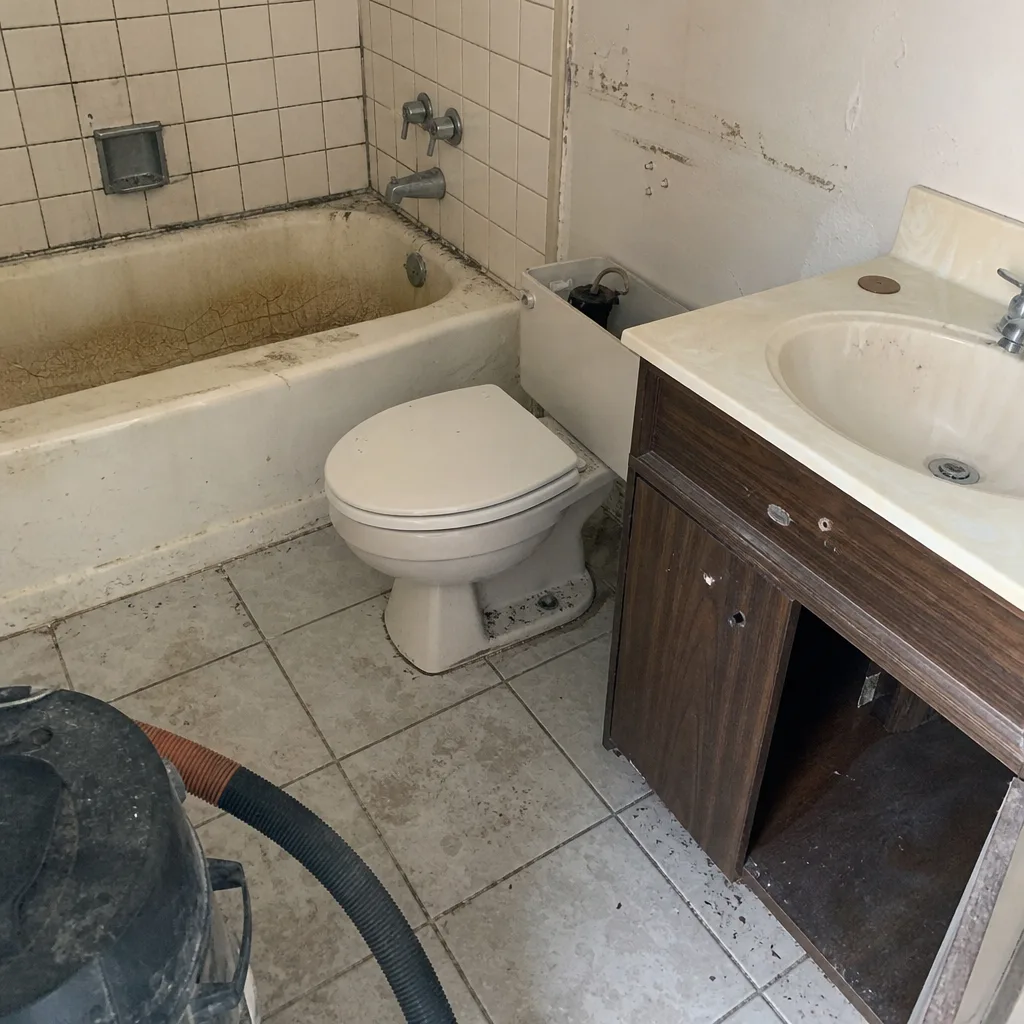 Before
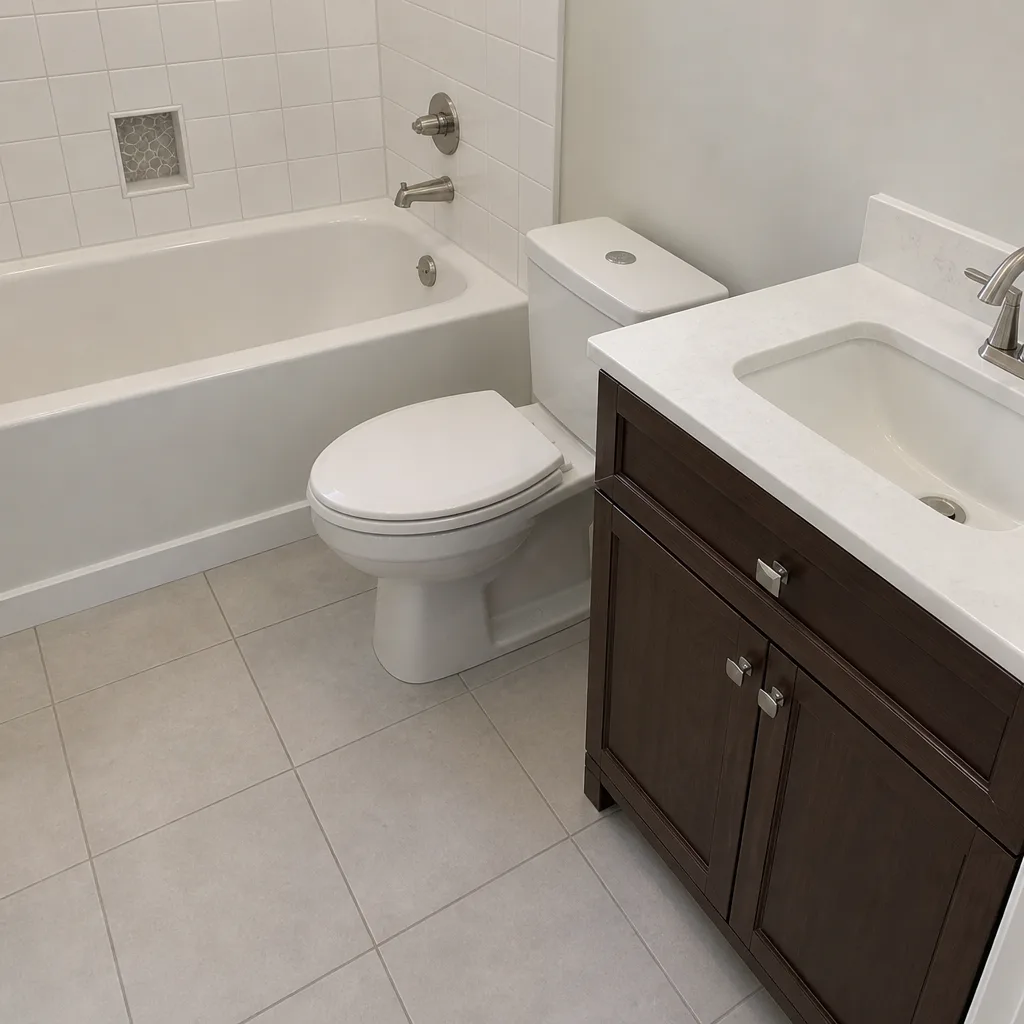 After
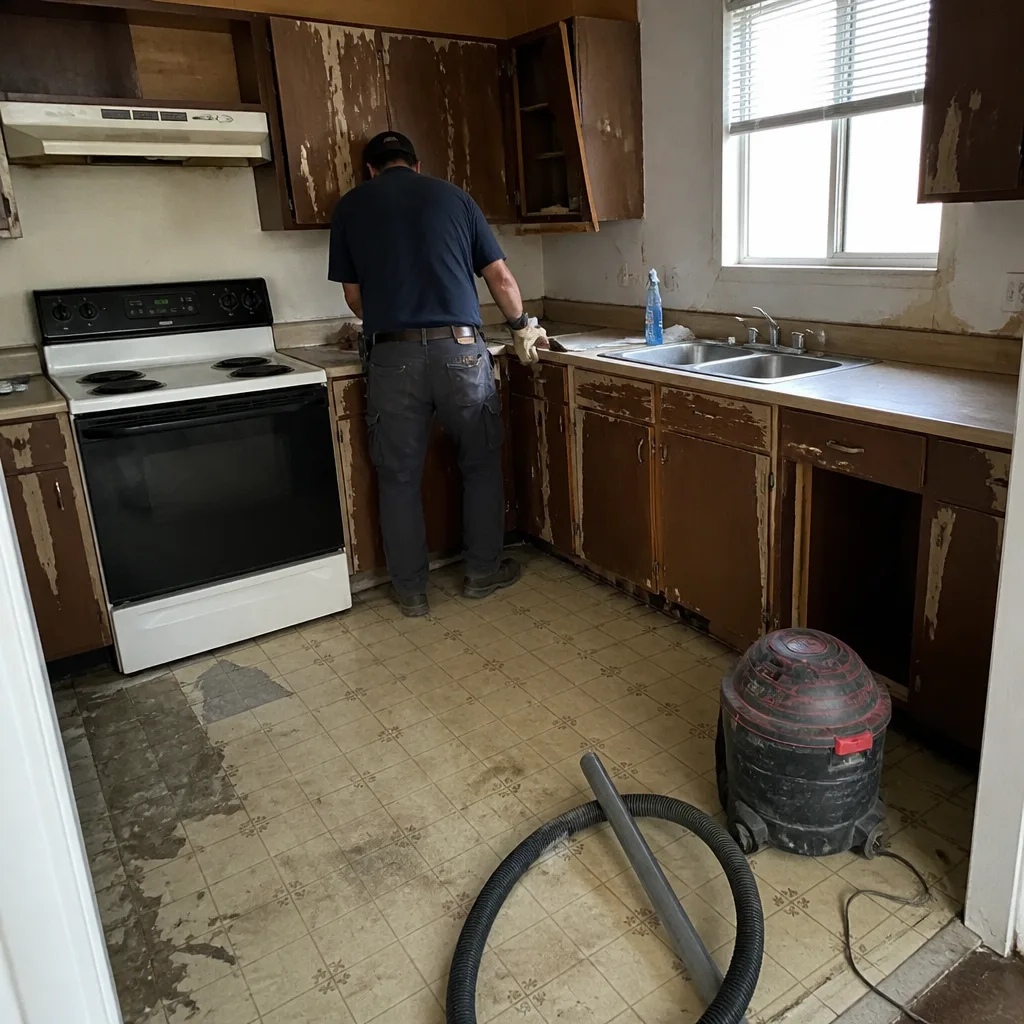 Before
 After
 Before
 After
When to Call a Professional
Some of this schedule you should own. Some of it will cost you more if you don’t call. Call when you see pavers that have moved from their straight lines, dips or waves in the surface, cracked units running across several pavers, a base that’s clearly settling, or standing water that won’t drain away from the house. Call when a repair needs the pavers lifted as a unit and re-set with proper compaction. And call before you strip or reseal a large driveway, especially if you’re unsure whether your paver product is still under warranty. One bad weekend DIY job can undo years of value. Groundwork Construction Co. of North Las Vegas offers free estimates in North Las Vegas – call (844) 797-5026. We walk the driveway with you, hand you a written scope, and stand behind the work with our 730-Day Done Right Promise.
Frequently Asked Questions
No. Surface temperatures climb past 90°F from late spring into September, and sealant applied in that range bubbles and cures unevenly. The reliable sealing window is October through early April, and specifically apply in the morning when the surface is coolest. Call (844) 797-5026 for an exact quote on a professional reseal – estimates are free.
Check and top off joint sand before monsoon season (April or May) and again after the rainy stretch ends in October, with spot checks after any major summer storm. Our intense monsoon flow scours out sand faster than a normal climate, so plan on one or two extra checks each summer. Call (844) 797-5026 if a re-sanded driveway keeps losing sand, because that usually points to a base problem.
Normal fade is even and gradual across the full-sun areas, with darker pavers lightening a touch more than lighter ones. If the fade is patchy, uneven, or one batch of pavers is clearly lighter than the rest, that’s worth a warranty conversation. Call (844) 797-5026 for an inspection to tell the difference before you file a claim.
Not if you use a compatible, manufacturer-approved cleaner. The risk is in harsh acid washes, applying the wrong sealer, or failing to follow the manufacturer’s maintenance guidelines. Keep receipts and a photo record of what you apply and when. Call (844) 797-5026 and we’ll tell you what products are safe for your specific pavers.
Routine cleaning and re-sanding usually runs in the low hundreds, resealing a typical driveway falls in the few-hundred-dollar range, and repair work depends on how much has moved. Upfront pricing means the number you see is the number you pay. Call (844) 797-5026 for a written, line-item quote – estimates are free.
Right away. One lifted paver in a North Las Vegas driveway is often the first sign of base settling or failed edge restraint, and waiting lets water under the surface and spreads the movement. A single-unit repair is cheaper and faster than re-setting a whole field. Call (844) 797-5026 to schedule a free estimate.
The Bottom Line
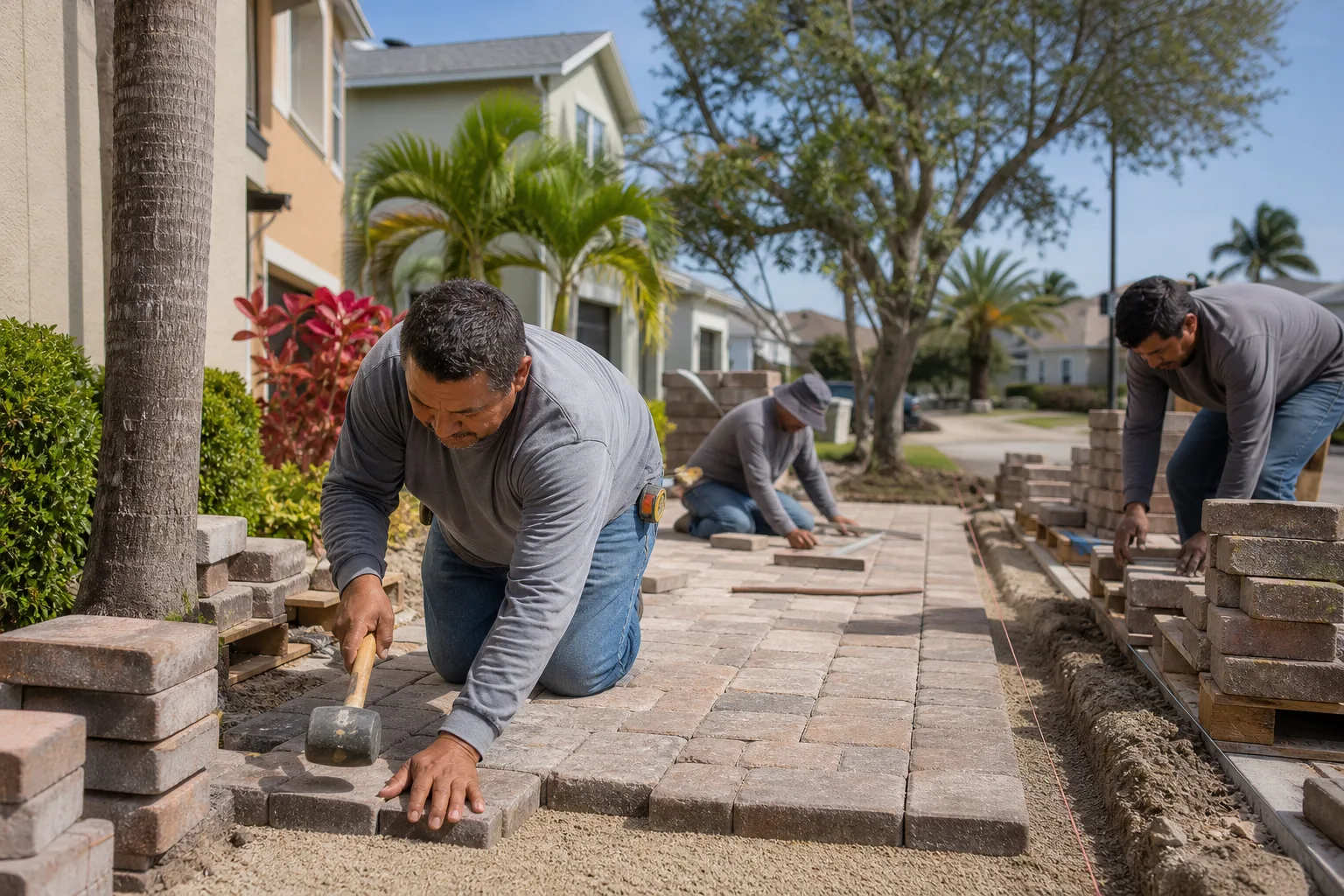
North Las Vegas doesn’t hand you a gentle maintenance calendar. The heat, UV, and monsoon accelerate every failure point, so the schedule has to bend to the climate rather than the other way around. Seal in the cool months (October to early April) and never in summer. Inspect joint sand before and after the monsoon, do a 30-minute spring walkthrough every year, and reseal every two to three years. Know what normal UV fade looks like so you can spot a real product problem when it appears. And know which tasks are safe to own and which ones void a warranty. Do the calendar right and a paver driveway will hold up for decades. Skip it and the desert will make you pay. When the work calls for professional hands, call (844) 797-5026 for a free estimate, and let the Groundwork Construction Co. of North Las Vegas home team take it from foundation to finish line.
Written by the team at Groundwork Construction Co. of North Las Vegas.