Last updated November 18, 2026


Free written scope consultation - allowances, timeline, and change-order rules on paper before a single trade is scheduled
Fence Installation Maintenance Schedule: What to Do and When
An untreated wood fence in North Las Vegas shows UV gray-out in about 18 months and surface check cracking in three years. In a milder climate, the same fence holds its color for six to eight years before it needs attention. That compression changes everything about how you maintain a fence here, and it’s the single reason the standard “stain every three to five years” advice quietly costs homeowners a premature replacement. Below is a material-by-material schedule built for the Mojave, a post-monsoon inspection checklist, a seasonal log template, and the hard-water cleaning specifics most guides skip. Work through it once and you’ll know exactly what your fence needs and when.
Quick Answer
In North Las Vegas, schedule wood fence sealing every 18 to 24 months, vinyl cleaning twice a year with an annual UV protectant, wrought iron inspection and paint touch-up annually before monsoon season, and aluminum washing every six to twelve months. Inspect every fence after the August-September rains and log all work so material warranties stay enforceable.
Styles & brands we work with
- Kitchen remodeling
- Bathroom remodeling
- Home additions & ADU
- Roofing
- Windows & doors
- Driveway & pavers
- Fence
Table of Contents
- Why Fence Maintenance in North Las Vegas Runs on a Compressed Clock
- Wood Fence Maintenance: Sealing Every 18 to 24 Months
- Vinyl Fence Care: Annual UV Protection and Twice-Yearly Cleaning
- Wrought Iron: Inspect and Touch Up Paint Before Monsoon Season
- Aluminum Fencing: Bi-Annual Wash and Hardware Checks
- The Post-Monsoon Inspection Checklist
- Spotting Caliche Soil Expansion Damage Before Your Fence Leans
- Cleaning Products for Hard Water Conditions
- Building a Seasonal Maintenance Log That Protects Your Warranty
- Common Mistakes to Avoid
- When to Call a Professional
- Frequently Asked Questions
Why Fence Maintenance in North Las Vegas Runs on a Compressed Clock
A fence in North Las Vegas doesn’t age the way a fence in Portland or Atlanta ages. Our UV index routinely climbs past 11 in summer, and sunlight here delivers roughly 7.5 to 8.0 kWh per square meter per day of solar energy at peak season, compared with about 4.0 in the Southeast. That radiation breaks down the lignin in wood and attacks the chemical bonds in vinyl. The result is a fence that weathers on a schedule closer to two-thirds the national norm.
Then there’s the temperature cycling. Summer highs in North Las Vegas push past 110 degrees, and overnight lows in winter drop near freezing. That daily and seasonal swing makes wood expand and contract, which opens hairline checks that let water in. Vinyl grows more brittle with every cycle. Metal hardware loosens in small increments that add up over a couple of seasons.
The soil finishes the job. Much of the ground across North Las Vegas, especially up toward the Aliante and Lone Mountain areas, sits on caliche and high-alkaline soils that swell and shift with moisture. Post footings take that movement directly.
What this means in practice: a maintenance calendar built for a mild climate will leave gaps. The rest of this guide rebuilds that calendar around what actually happens here. If you’re planning a new fence rather than maintaining one, the builders at our Fence Installation in North Las Vegas page can set up your material and footing for these conditions from day one.
Wood Fence Maintenance: Sealing Every 18 to 24 Months
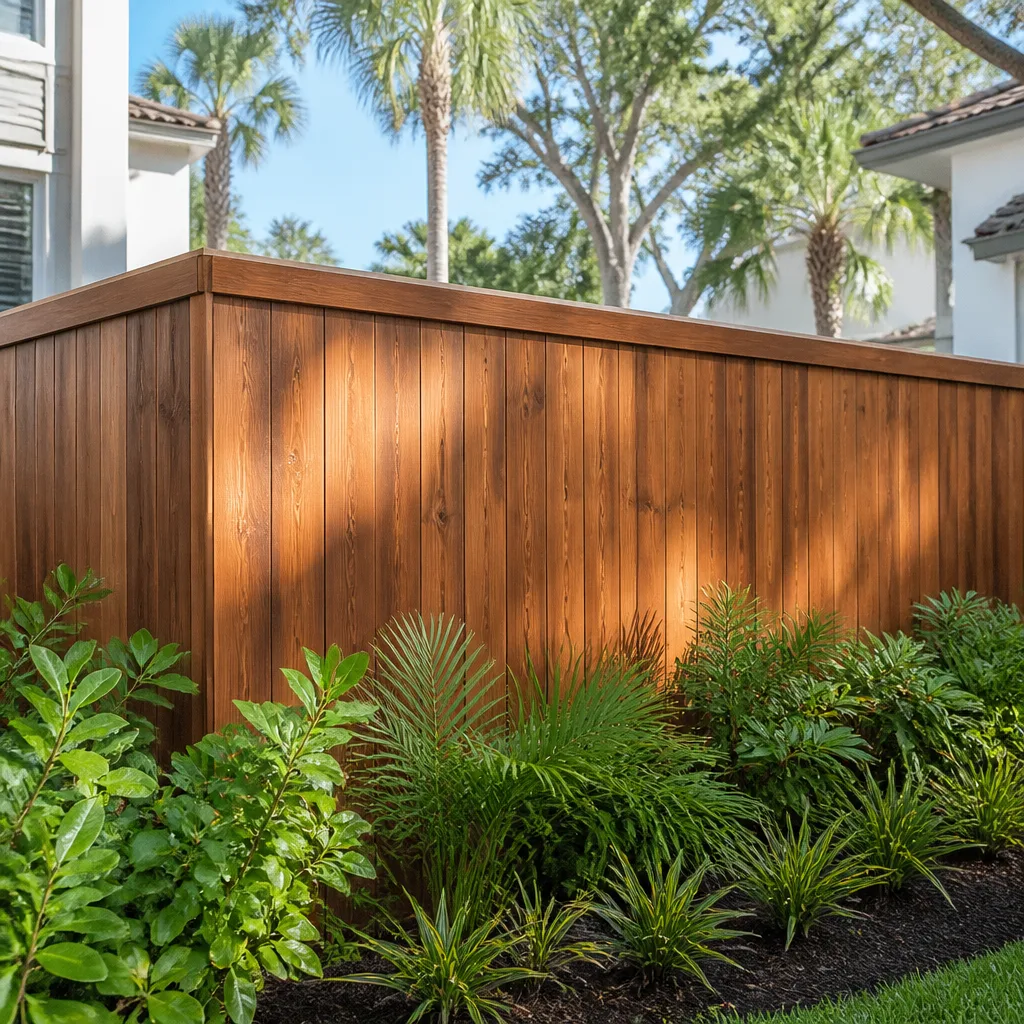
Wood is the material most affected by the Mojave schedule. A bare, untreated wood fence in North Las Vegas will turn gray within 18 months. By year three, you’ll see surface checking (the short cracks that run along the grain) and by year five the cracks deepen into things that hold water. Once water finds the wood, the rot clock starts.
Here’s the schedule we recommend for wood fences in North Las Vegas:
- Month 1 to 3 after installation: Let new pressure-treated lumber dry and stabilize for 4 to 8 weeks before the first sealer coat. Sealing green wood traps moisture and you’ll get peeling later.
- Every 18 to 24 months: Clean, brighten, and re-seal. In North Las Vegas, treat 18 months as the target and 24 months as the outer limit. If the fence faces full afternoon sun, aim for the shorter end.
- Annually: Walk the fence line and press a screwdriver into the post bases. Soft wood means rot has started.
- Before monsoon season: Check every board for loose fasteners and re-set any that have backed out.
Not all wood behaves the same. Cedar and redwood hold up better under UV than pine or fir, but they still gray out faster here than they would elsewhere. James Hardie doesn’t make fencing, but the fiber-cement approach they use for siding is worth understanding if you’re weighing wood against a composite system – the same UV resistance logic applies.
Which sealer? A penetrating oil-based or water-based sealer with UV blockers outperforms a film-forming surface coat in North Las Vegas. A film coat will blister and peel under the summer sun within a season. A penetrating sealer soaks in, blocks UV at the cellular level, and lets the wood breathe. Apply two coats on the sunny side and one on the shaded side.
What to check between sealing: look for popped nails or screws, which are common when wood dries and contracts. And look for the dark streaking that signals moisture trapped behind the fence. If you see it, the sealer has failed on that section and needs to be re-applied early.
Vinyl Fence Care: Annual UV Protection and Twice-Yearly Cleaning
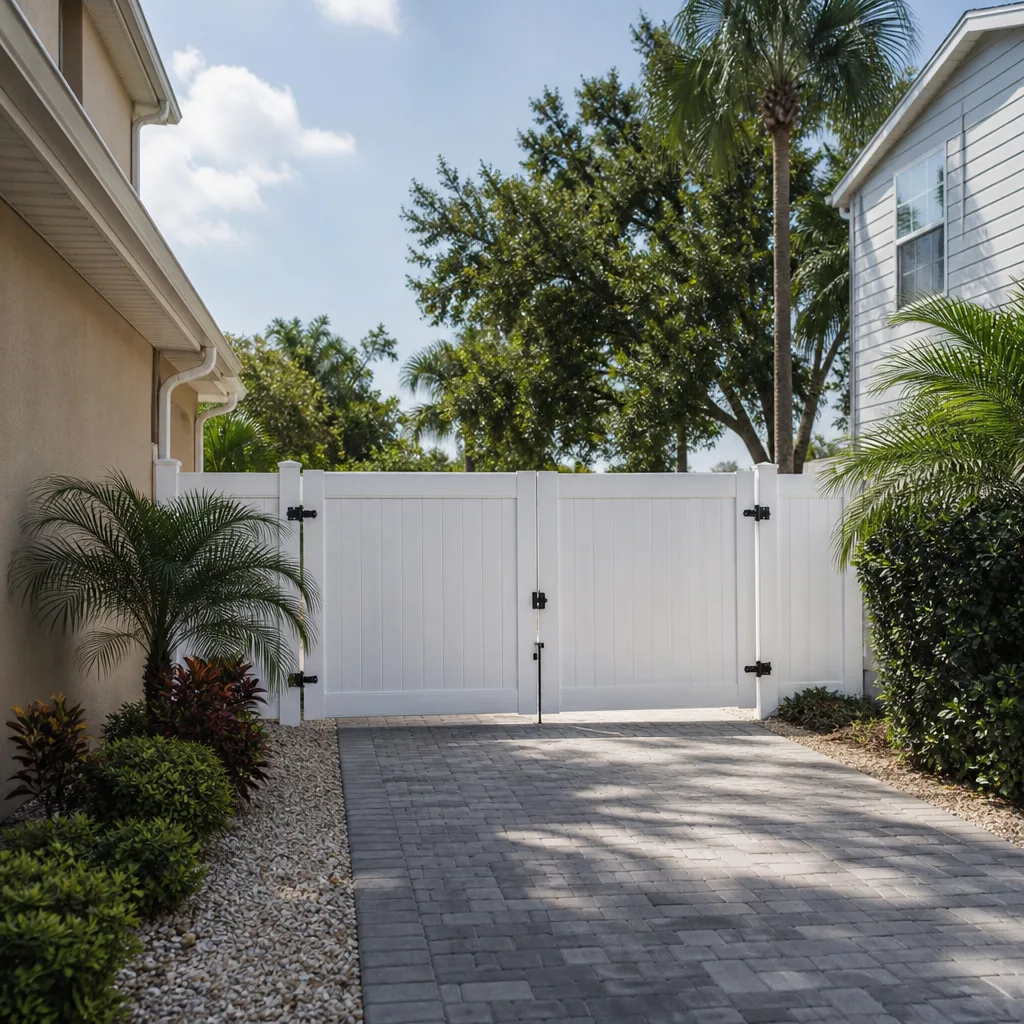
Vinyl fencing is popular in the newer North Las Vegas subdivisions because it doesn’t rot or need paint. That doesn’t mean it’s maintenance-free. Vinyl’s main enemy in North Las Vegas is UV, which slowly oxidizes the surface and makes light-colored vinyl chalk and discolor over time. A quality UV protectant applied once a year keeps that surface intact.
The vinyl maintenance schedule:
- Twice a year (spring and fall): Wash down with a mild detergent solution. A garden hose, a soft brush, and a bucket of dish soap or a vinyl-safe cleaner.
- Once a year (before summer): Apply a UV-blocking vinyl protectant. This is what keeps the surface from chalking and dulling in the sun.
- After monsoon season: Check for mud splatter and mineral deposits left behind by evaporating rain runoff – hard water leaves white haze on vinyl that lingers.
- Annually: Check the gate hinges and latches, which loosen more than the fence itself in our temperature swings.
What not to use on vinyl: never press a pressure washer nozzle close to the surface at high pressure, which will scar the vinyl permanently. Never use abrasive pads or steel wool. Never use bleach at full strength, which dulls the color and shortens the useful life of the surface.
The one North Las Vegas quirk for vinyl homeowners: the summer sun on a west-facing vinyl fence can heat the surface to 160 degrees or more. This isn’t a crisis, but heavy-gauge panels with the tightest UV-rated cores will hold color better than thinner builder-grade panels. If your fence is pressing against the eastern or northern face of your house for shade, the heat load on the west exposures is something to plan around when it comes to replacement time.
Wrought Iron: Inspect and Touch Up Paint Before Monsoon Season
Wrought iron fencing brings a classic look and real durability, but it has a specific maintenance vulnerability in North Las Vegas. The monsoon rains in August and September hit fast, and any spot on your wrought iron where the paint has chipped will start to rust within the same season. Once rust starts, it spreads under the paint film and pushes more paint off.
The wrought iron schedule:
- Annually, ideally in late spring: Walk the fence line and inspect for chipped paint, rust spots, and scratches. Pay particular attention to welds, the base of each post, and areas near sprinklers or irrigation.
- Spot-treat any rust: Sand down to bare metal, clean it thoroughly, apply a rust-converting primer, and top-coat with a quality exterior metal paint. Do this before monsoon season rather than after.
- Annually: Lubricate gate hinges and latch mechanisms with a graphite or lithium-based lubricant. Avoid penetrating oil on gate hinges because it attracts dust.
- Every 3 to 5 years: Full repaint. A quality exterior metal paint or powder coating will go the distance.
After the monsoon rains, walk the entire fence line again. Look for new rust patches on the horizontal rails, which collect water and let it sit. Wrought iron in the North Las Vegas market tends to look great for the first few years without attention, which is exactly why maintenance gets skipped – and that’s when the rust cycle starts.
Beware of one specific failure point: the bottom of the pickets and the base of the posts. That area stays wet from splash-back when water fills the dripline. If the paint is failing at the bottom of your wrought iron, that’s the priority repair before monsoon season, not the pretty top rails.
Aluminum Fencing: Bi-Annual Wash and Hardware Checks
Aluminum fencing is the lowest-maintenance metal option. It won’t rust the way wrought iron does, and it handles UV without breaking down. The schedule is straightforward: wash it every six to twelve months and check the hardware twice a year.
The aluminum schedule:
- Twice a year: Wash down with a mild soap solution and a soft cloth or brush. Rinse thoroughly. Aluminum in North Las Vegas will show mineral haze from irrigation runoff and the occasional dusty wind event.
- Twice a year: Check the fasteners and tighten anything that’s worked loose.
- Annually: Look for oxidation at welds and joints, which appears as a white or chalky film. In North Las Vegas, aluminum typically resists oxidation well, but you want to catch it early if it appears.
- Annually: Lubricate gate hinges and check the gate alignment.
Avoid using abrasive cleaners on aluminum. Never use steel wool, wire brushes, or scouring pads – they’ll scratch through the finish and expose the bare metal beneath. Chlorine bleach should also be avoided on most aluminum finishes. For any harder mineral deposits, a solution of white vinegar and water (about one part vinegar to three parts water) will do the job without damaging the finish.
One more item: the gate is the part of the aluminum fence that fails first. Not because aluminum is weak, but because gates get used dozens of times a day. Check the latch alignment and the strike plate every season, especially after the temperature swings of winter and summer.
The Post-Monsoon Inspection Checklist
The August and September monsoon season sends short, intense rain bursts that loosen footings, stress panel connections, and work over gate hardware faster than any other seasonal event. The dry months before monsoon leave the ground cracked and loose, so the first heavy rain arrives on soil that’s ready to shift. The week after the season stands is when you need a full inspection.
Walk the fence line in this order:
- Footings: At every post, check for movement. Press on the post – if it moves at all, the footing has shifted. Look for cracking at the base of the post where it meets the footing.
- Panels: Walk each span and look for sagging panels, panels that have shifted out of level, and gaps at the bottom rail that widened during the rain.
- Board and picket attachments: Every fastener must be tight. Loose pickets are the number one post-monsoon repair call.
- Gates: Open and close each gate. Listen for binding and sagging. Check the hinges for movement and the latch alignment.
- Weeds and debris along the bottom rail: Debris traps moisture against the fence and against the footing base. Clear it.
- Wood softening: If your fence is wood, press a screwdriver at the base of each post. Soft wood is a rot warning.
- Dirt line changes: Has the ground beneath the fence settled? If the bottom rail is now floating 3 to 4 inches off the ground, the soil has eroded and needs to be re-graded.
This checklist takes about 20 minutes for a typical residential fence in North Las Vegas. Doing it every year catches the small problems (a loose panel, a starting lean) before they become the expensive ones (a post replacement or a full section re-build).
Spotting Caliche Soil Expansion Damage Before Your Fence Leans
Caliche is the calcium-carbonate-rich layer that shows up under a lot of North Las Vegas soil. It behaves very differently from normal soil. Caliche is hard as concrete when dry, but it holds water like a sponge and expands when wet. When it dries, it contracts. On the moisture cycle that monsoon seasons create, the ground under your fence posts is literally moving up and down each year.
The problem for a fence owner is that caliche damage starts out invisible. It shows up first in the footing, not in the fence itself. What that means for you:
- Early warning sign: Small cracks in the concrete collar around the base of a post. This is the swelling caliche pressing outward on the footing.
- Middle warning sign: A post that develops a subtle lean after rain, but pulls back to level when dry. This back-and-forth is caliche-driven.
- Late warning sign: A post that stays off-vertical and continues to lean. At this point the footing has been displaced enough that it’s not coming back.
- The wider damage: Fence panel sagging between two posts. This is a sign that the footings have shifted differentially, not that the panels themselves are failing.
What to do about it: if you notice the early warning sign (cracks in the concrete at post bases), get a professional assessment before winter. The fix is often a footing re-pour at that post, done before the whole fence starts to follow. If you’re in a newer North Las Vegas neighborhood on fill soil, or up near the Lone Mountain area with a heavy caliche layer, you’re more likely to see this.
If your fence is leaning significantly, you’re past maintenance and into repair or replacement territory. That’s a call for a proper look rather than a weekend project. Our Driveway & Pavers in North Las Vegas page covers some of the same soil preparation issues, and it’s worth understanding because the sub-base matters for both pavers and fence footings. If the fence shares a boundary with a planned addition, our Home Additions & ADU in North Las Vegas team can coordinate the footings so nothing gets disturbed later.
Cleaning Products for Hard Water Conditions
North Las Vegas water is hard. Typical hardness runs from 15 to 20 grains per gallon, and much of the area’s domestic water comes from Lake Mead, which carries additional mineral content. That means irrigation runoff leaves white mineral deposits (calcium and magnesium) on concrete, metal, and vinyl fences. Regular rain runoff carries the same minerals. Hard water stains are one of the most common complaints we hear about fence maintenance.
What works on each material, and what to avoid:
| Material | What Removes Mineral Deposits | What to Avoid |
|---|---|---|
| Vinyl | White vinegar + water (1:3), or a dedicated hard-water remover | Bleach (dulls color), abrasive pads |
| Aluminum | White vinegar + water, soft cloth, plain soap | Steel wool, wire brushes, full-strength chlorine |
| Wrought Iron | Mild detergent, then dry thoroughly, touch up any spots | Bleach on painted surfaces, abrasive cleaners |
| Wood | Wood brightener (oxalic-acid based), then reseal | Bleach at full strength, harsh degreasers |
| Concrete (paver) base | White vinegar solution or concrete-safe hard-water remover | Full-strength muriatic acid (damages the paver surface) |
A few workable principles for hard water conditions specifically:
- Rinse, don’t soak. After any cleaning, rinse thoroughly with fresh water. Leftover cleaning solution plus the minerals in your water equals a whole new set of stains.
- Dry the metal. On aluminum and wrought iron, dry with a cloth after washing. Air-drying leaves water spots behind in hard water regions.
- Treat the source. Where you can, redirect irrigation sprinkler heads so they’re not hitting the fence. That’s the single best long-term fix for mineral haze.
- Test before using. Any new cleaner should be tested on a small, inconspicuous area first, especially on vinyl and painted metal.
Building a Seasonal Maintenance Log That Protects Your Warranty
A maintenance log is the difference between being able to claim a material warranty and not being able to claim it. Most fence manufacturers and material suppliers require documented maintenance as a condition of warranty. If a vinyl panel fails at year six and you can’t show it was cleaned and UV-treated annually, you’re paying for the replacement.
What to track in your log:
- Date and what was done. “Cleaned vinyl with dish soap and water” or “Sealed wood fence – two coats penetrating sealer.”
- Materials and products used. Brand name and product name. This matters because warranty claims can hinge on whether you used a manufacturer-approved sealer or cleaner.
- Every photo. Take a photo of the fence at each maintenance session. Photos are the strongest evidence you can have when a warranty claim comes up.
- Repairs made. Loose picket secured, gate hinge lubricated, post base touched up.
- Weather notes. Note any flooding, extensive monsoon rain, or heat waves that hit the fence. This helps explain wear patterns.
- Inspection findings. Anything flagged for future fix (“eastern gate post shows 2-inch lean, watch next season”) gets recorded.
You don’t need a fancy app. A simple notebook or spreadsheet is enough. Store it with your home records. If you’re ever going to sell your home and someone asks about the fence, your log is a real selling point. If the fence is still under a workmanship warranty from Groundwork Construction Co. of North Las Vegas, we’ll want to see it – our 730-Day Done Right Promise only applies to workmanship, so material failures need to be documented for the manufacturer’s warranty separately.
A good log also helps you plan. After two or three seasons you’ll know exactly which manufacturers and products have held up on your fence, and you’ll know what your specific fence needs for the next season before June decides for you.
Common Mistakes to Avoid
- Following the “stain every 3-5 years” advice. That interval was written for a milder climate. Your wood fence in North Las Vegas needs sealing at 18 to 24 months or you’ll be replacing boards within a decade, not repainting them.
- Skipping post-monsoon inspection. The single most expensive fence repair scenario in North Las Vegas is a post footing that starts to lean during the monsoon season and goes unnoticed until the whole panel has to be re-built. Twenty minutes each September saves thousands.
- Using bleach on vinyl. Bleach seems like the obvious answer for algae and organic growth, but on vinyl it accelerates the oxidation process and can dull or yellow the color permanently. Stick with mild detergent and a UV protectant.
- Pressure-washing too aggressively. A pressure washer set too high will gouge wood grain, scar vinyl, and strip paint from wrought iron in a single pass. If you’re pressure-washing a fence, keep the nozzle moving and the pressure dialed back.
- Not documenting maintenance. Homeowners in North Las Vegas who’ve had a material fail are frequently surprised to find out that the warranty was conditional on documented cleaning and sealing. Take photos, note the date, and keep the record.
- Ignoring caliche cracks at post bases. Those early hairline cracks around the post collar are the first sign of caliche expansion. If you don’t get ahead of them, the post leans and the panel follows.
- Using the wrong cleaner for hard water. Window cleaner and general-purpose degreasers don’t dissolve calcium and magnesium deposits. You need either a vinegar solution or a dedicated hard-water remover for the mineral haze that shows up in North Las Vegas.
When to Call a Professional
Not every fence maintenance task needs a professional. Cleaning, sealing, and touch-up paint are all weekend projects. But there are specific situations where you should stop and call someone with experience. If a post has moved more than an inch from vertical, if you’ve found rot at the base of two or more posts in a single section, if a footing has cracked open after a monsoon, or if the fence is leaning because of caliche shift, these are repairs that start small and end with a total section replacement if they’re done wrong. Metal fences with rust spreading under the paint film need professional attention too, because the prep work is where the repair holds or fails.
Footing repairs, post replacement, and re-setting leaning sections require proper sub-base prep and, in a lot of North Las Vegas neighborhoods, the right sort of concrete specification for caliche soil. Going too shallow or too fast here is how the same post ends up leaning again next season. Groundwork Construction Co. of North Las Vegas offers free estimates in North Las Vegas – call (844) 797-5026 and we’ll take a look at what your fence actually needs.
Frequently Asked Questions
Every 18 to 24 months. North Las Vegas UV exposure and temperature cycling accelerate wood aging compared with the national average, so the standard 3 to 5 year advice doesn’t apply. Aim for 18 months on the sun-facing sides, 24 months maximum on the shaded sides. Call (844) 797-5026 for a free estimate if your fence is due for a full re-seal and you’d rather have a professional handle the prep work.
Vinyl fencing needs washing twice a year with mild detergent and a UV protectant applied once a year before summer. In North Las Vegas, the UV index is high enough that unprotected vinyl will slowly chalk and discolor. Twice-yearly washes keep mineral deposits from hard water at bay, and the annual protectant extends the life of the surface finish.
Yes, every year. The August-September monsoon season sends short heavy rain bursts that stress footings, panel connections, and gate hardware. A 20-minute inspection post-monsoon catches shifting footings, loose fasteners, and gate sag before they become expensive repairs. Focus on post bases first – that’s where the money damage starts.
Look for small cracks in the concrete collar at the base of each post. Those cracks are the first warning sign that caliche below the post is expanding and contracting with moisture changes. A post that leans after rain and straightens when dry is the second warning sign. If a post stays off-vertical, the swelling has already displaced the footing. Get a professional assessment before the whole panel follows.
A white vinegar and water solution (about one part vinegar to three parts water) removes mineral deposits from vinyl, aluminum, and concrete surfaces. For wood, use an oxalic-acid-based wood brightener instead. Avoid bleach at full strength on any fence material and avoid steel wool or wire brushes on aluminum. A dedicated hard-water remover works for stubborn deposits, but test it on a small area first.
In most cases, yes – at least for material warranties. Most vinyl and wood fence manufacturers require documented maintenance as a warranty condition. That means dates, cleaning products, sealing products, and photos of the work done. Keeping a maintenance log is the single best way to protect a warranty claim if a panel or a post fails prematurely. Our 730-Day Done Right Promise covers workmanship, and it lives alongside whatever material warranty your manufacturer offers – both need your maintenance record to stand.
The Bottom Line
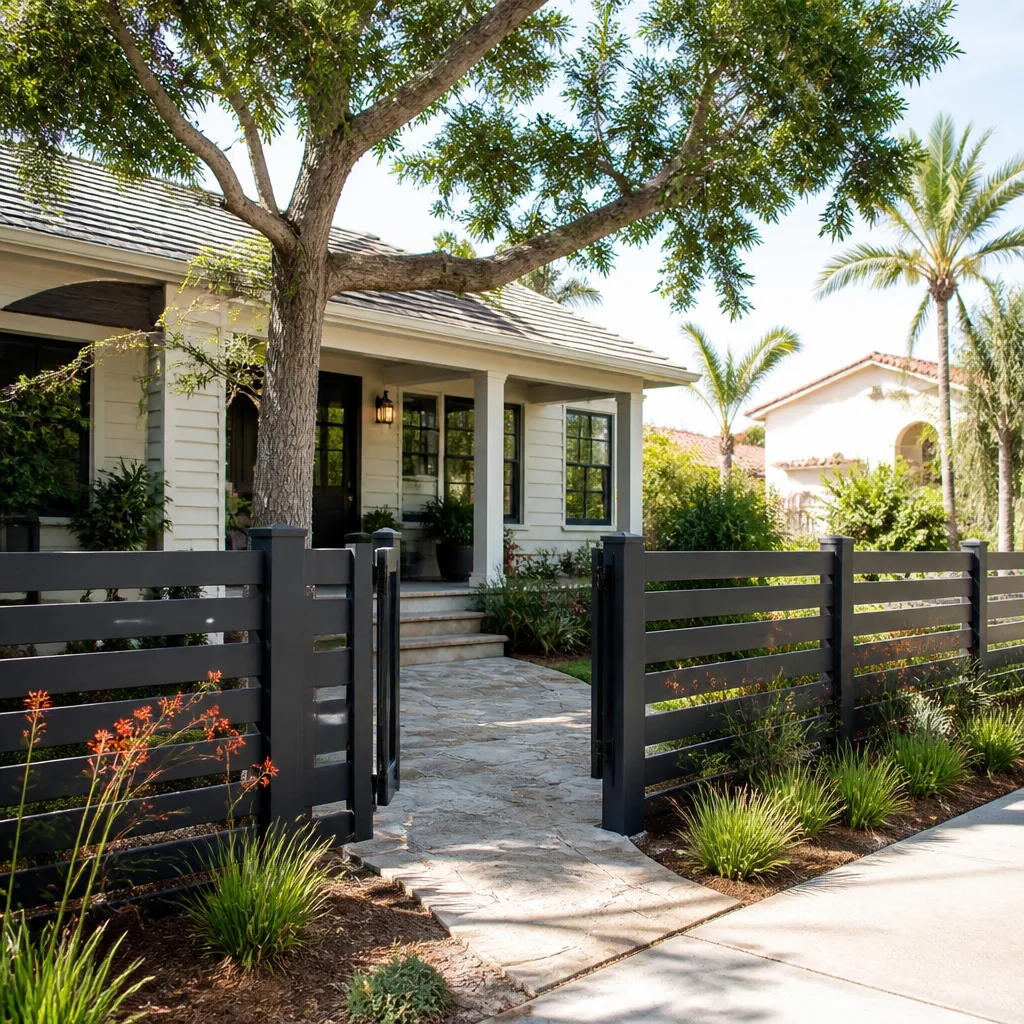
Fence maintenance in North Las Vegas runs on a compressed clock. Wood fences need sealing every 18 to 24 months, not every three to five years. Vinyl needs a UV protectant every year and washing twice a year. Wrought iron needs inspection and paint touch-up before monsoon season, not after. Aluminum needs a bi-annual wash and hardware check. Add a post-monsoon inspection, watch the concrete collar at each post base for caliche movement, use the right cleaner for hard water conditions, and keep a maintenance log that protects your warranty. Do these things and your fence will last well past its material rating. Skip them and you’ll be replacing sections you could have saved.
Groundwork Construction Co. of North Las Vegas handles fence installation, repair, and full property projects across North Las Vegas with background-checked, uniformed technicians and upfront pricing you can plan around. Every project is backed by our 730-Day Done Right Promise – if it’s not done right, we make it right. We answer the phone 24/7 with a live person, and estimates are always free. Call (844) 797-5026 to schedule your free estimate and design consult, or start from our Groundwork Construction Co. of North Las Vegas home page to see the full scope of what we build.
Written by the team at Groundwork Construction Co. of North Las Vegas.
See the difference
 Before
 After
 Before
 After
 Before
 After