






Free written scope consultation - allowances, timeline, and change-order rules on paper before a single trade is scheduled
Styles & brands we work with
- Kitchen remodeling
- Bathroom remodeling
- Home additions & ADU
- Roofing
- Windows & doors
- Driveway & pavers
- Fence
See the difference
 Before
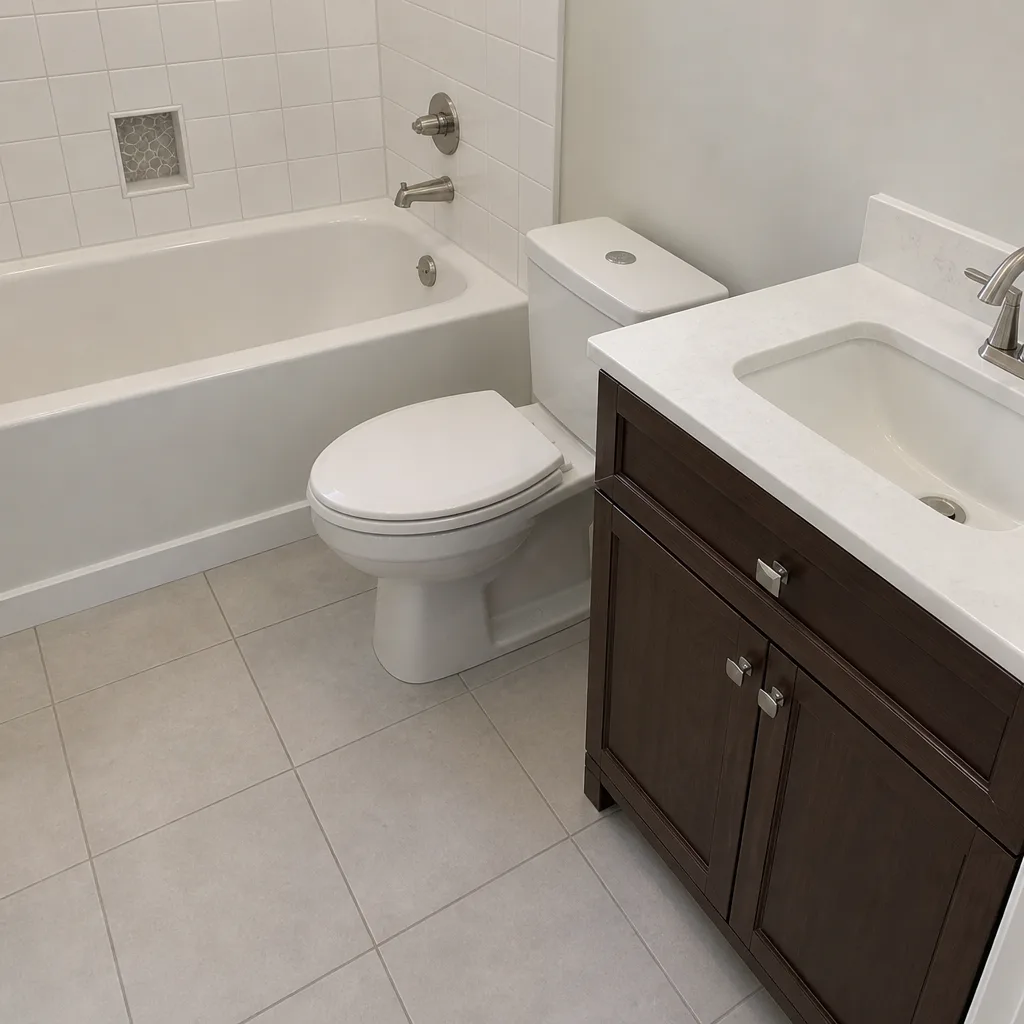 After
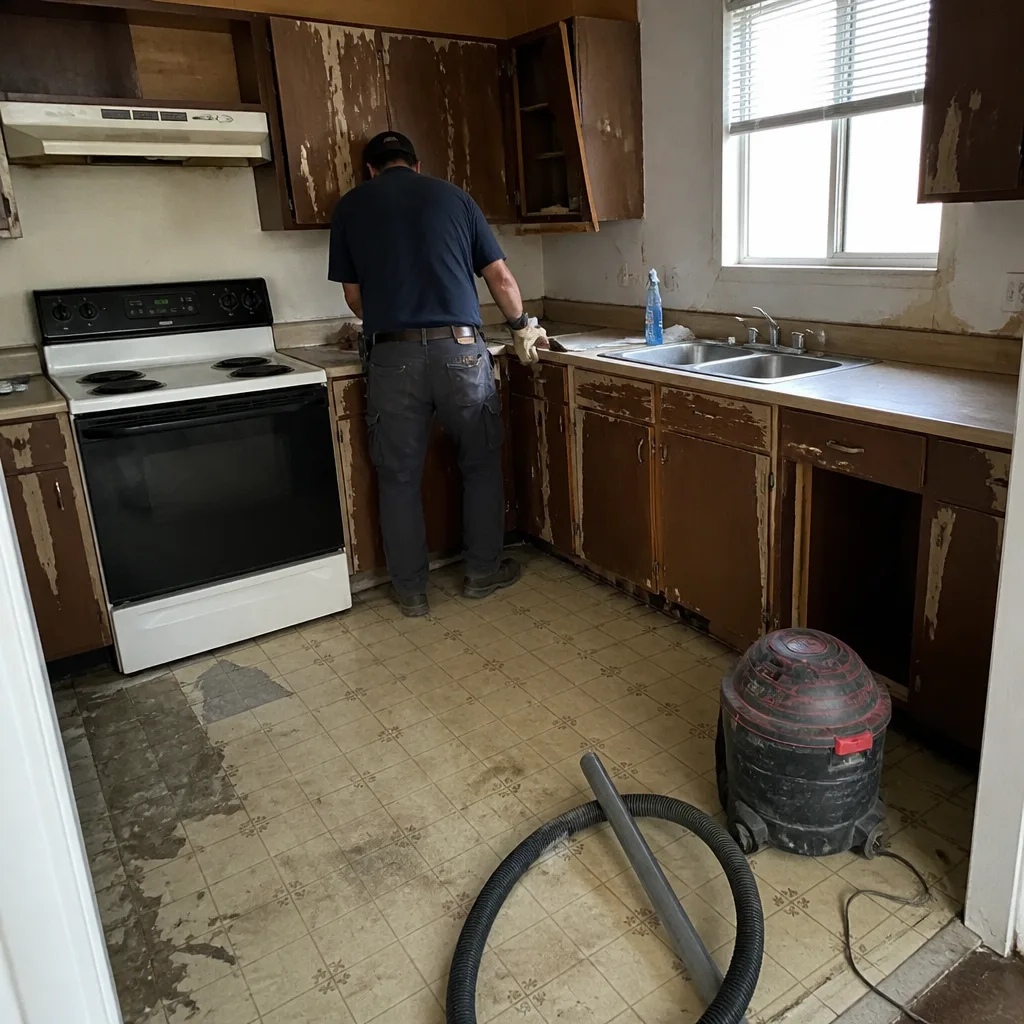 Before
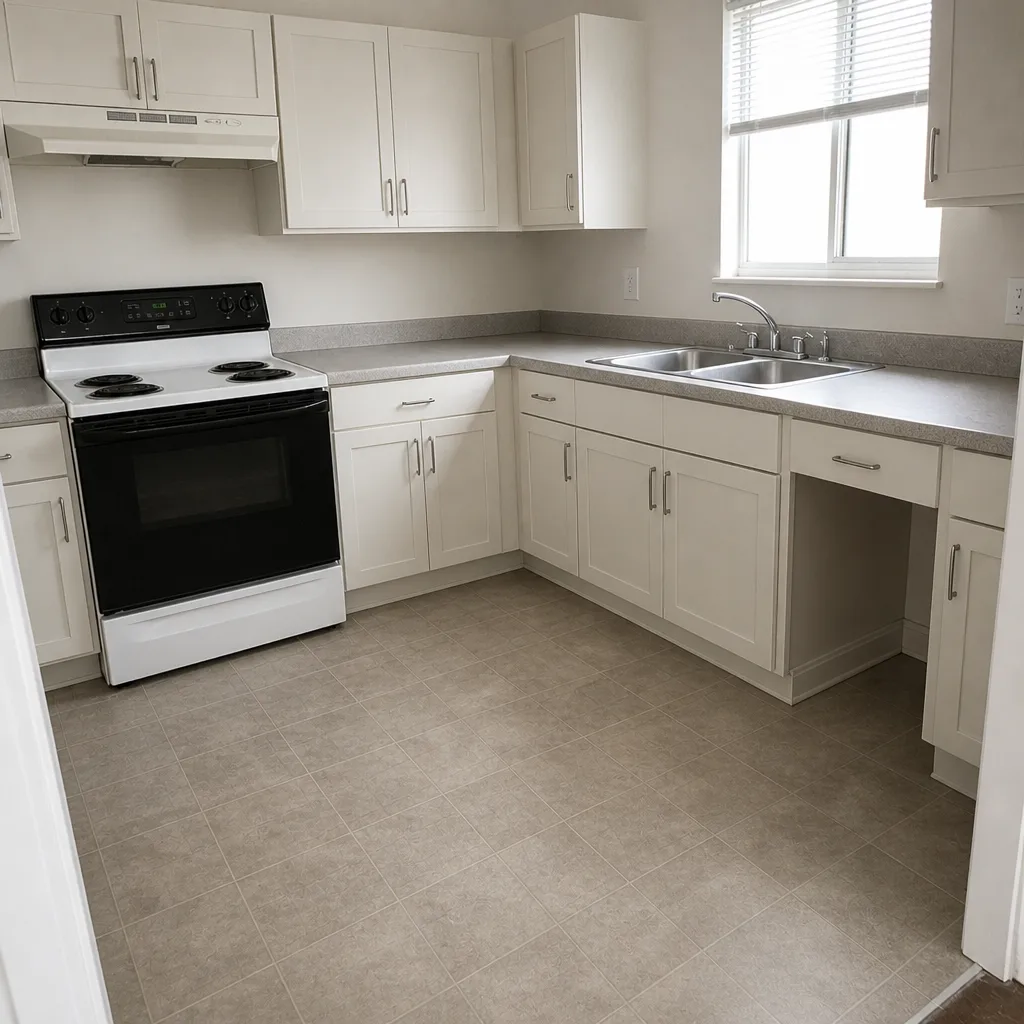 After
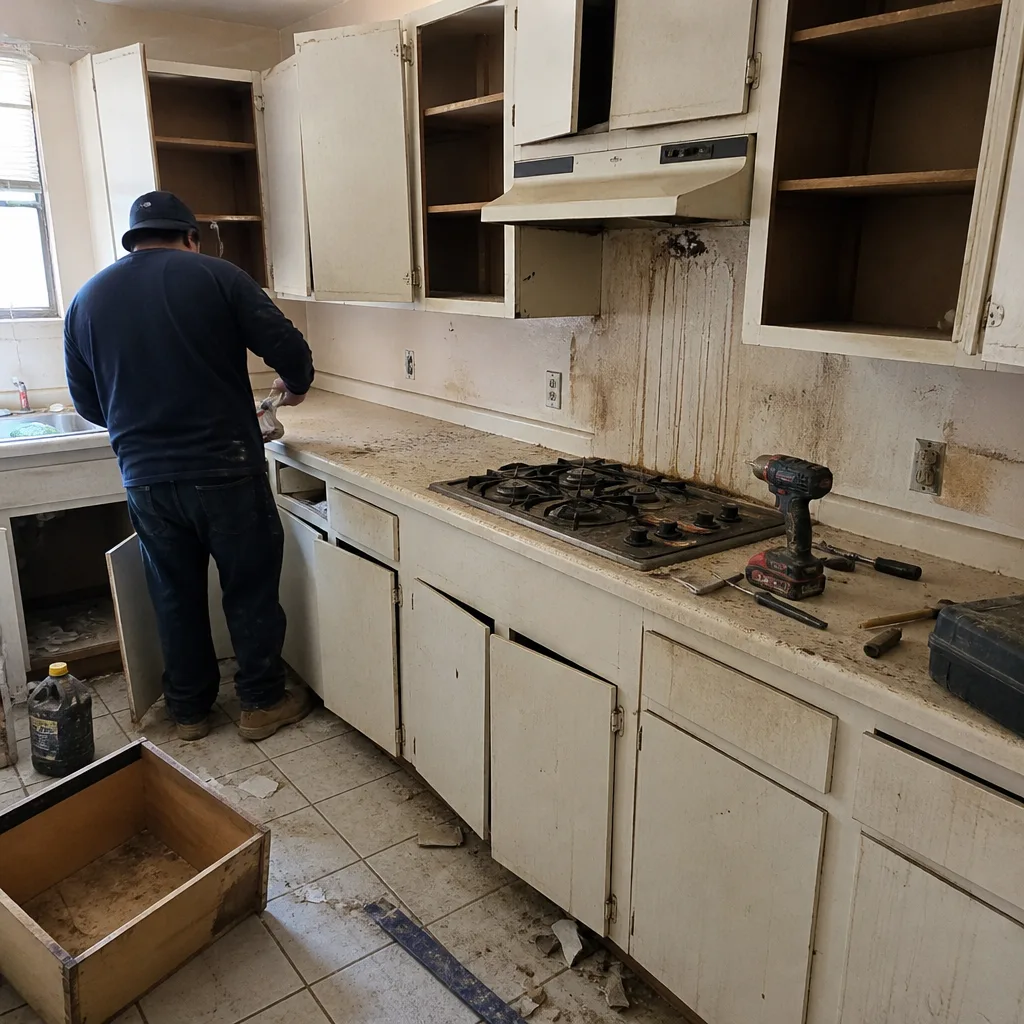 Before
 After
How to Find a Roof Leak in North Las Vegas, NV: Why the Stain Isn’t Above the Hole
The short answer: on a North Las Vegas stucco-on-frame home, the leak almost never sits directly above the ceiling stain. Water enters at a roof penetration or a stucco-to-flashing gap, runs sideways down the wall’s internal drainage plane, and drops out 4 to 6 feet from where it got in. So finding a roof leak here means tracing the wall-roof junction, not staring at the field of the roof. If you’re mid-monsoon and water is coming through, call Groundwork Construction Co. of North Las Vegas at (844) 797-5026 for a same-day diagnostic.
That one fact reshapes everything about how you hunt a leak in this city. Most of what you’ll read online was written for shingle roofs on wood siding in wet climates. North Las Vegas doesn’t work that way, and neither does the water.

Why stucco-on-frame changes the search
Drive through Tule Springs or Valley Vista and you’re looking at the dominant local housing type: post-1990 tract homes, stucco over wood frame, slab-on-grade. That stucco isn’t a solid barrier. It’s a layered system with a drainage plane behind it, and that plane behaves like a gutter running down the side of your house.
Here’s what that means in practice. Wind-driven rain pushes into a stucco-to-fascia joint or a gap around a window flashing. The water gets behind the stucco and travels down the drainage plane, sometimes horizontally along a horizontal seam or a weep screed, before it finds a way into the wall cavity and onto your drywall. The stain on your ceiling is the exit, not the entrance. Start your search by looking up at the ceiling and you’ll have your face in the wrong part of the house.
This is why the standard advice to “trace the stain upward to the ridge” fails so often here. It assumes vertical travel. Stucco redirects. Treat the ceiling stain as a clue to a general area, not a bullseye.
The North Las Vegas leak triggers nobody talks about
Monsoon rain in this valley doesn’t fall straight down. It blows in sideways at 40 to 60 mph, which means it hits your walls as hard as your roof. That single detail changes where leaks start.
Instead of roof-penetration leaks from vertical rain, we see a steady pattern of horizontal-drive leaks:
- Stucco-to-fascia joints where the wall meets the roofline, especially on the upwind side of the house.
- Stucco-to-window-flashing gaps, where caulk has dried and cracked after a few summers over 105°F.
- Parapet walls and chimney bases, where hairline cracks open up in the stucco and let water straight in.
- Vents, pipe boots, and ridge caps that lift under wind suction and let rain in behind them.
Notice how many of those are wall problems, not roof problems. That’s the local reality. North Las Vegas also sits in a high-wind zone with stricter wind-uplift requirements than neighboring jurisdictions, so flashing and fasteners there get tested every monsoon season. When we re-roof with GAF or Owens Corning systems, the flashing detail at the wall-roof junction gets as much attention as the shingles, because that’s where the water actually gets in around here.
The diagnostic sequence that actually works on a stucco home
Standard leak-hunting advice tells you to start high and work down. On a stucco-on-frame house, invert it. Start low and work up, and let the water tell you where it’s coming from rather than guessing. Here’s the sequence we walk homeowners through.
- Map the ceiling stain. Mark its outline with painter’s tape and note the date. A stain that grows during a wind-driven storm points to a wall-junction source. One that grows during steady vertical rain points more toward the roof field.
- Identify every roof penetration and wall-roof junction within a 6-foot radius of the stain in every direction. Six feet, not six inches. That’s the horizontal travel range stucco gives water. Look at vents, pipe boots, skylights, chimney bases, and the entire stucco-to-fascia line.
- Inspect the stucco for hairline cracks at parapet walls and chimney bases. Run a hand along the wall and feel for cracks you can’t see. Any crack wider than a hair is a candidate.
- Run a garden hose test, section by section, starting low and moving up. Have a helper inside watching the stain with a flashlight. Soak one section for 10 to 15 minutes, wait, then move up. When the stain darkens, you’ve found your section. This is the step most people get backward, and it’s the one that saves hours.
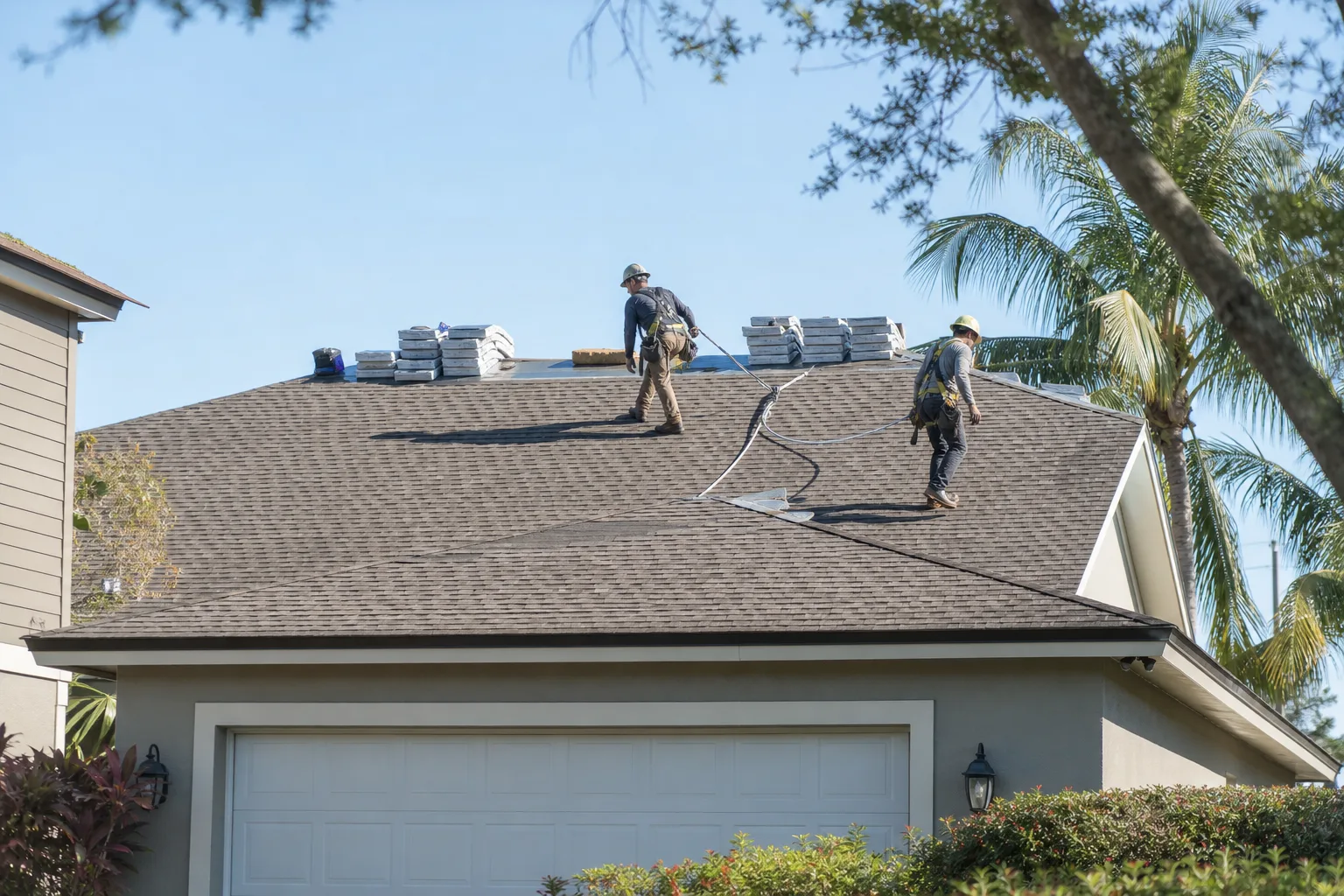
One caution before you climb anything: roof work means ladders, pitch, and heat. If your roof is steep, or if the leak is at a second-story wall-roof junction, staying on the ground and calling a pro is the right call. Falls from height are the leading cause of serious injury in residential construction, and a leak isn’t worth a broken back.
After a 60 mph wind event, check the upwind side first
During monsoon season, North Las Vegas’s prevailing wind comes from the south and southwest. So after a big blow, the south-facing flashing, vents, and ridge caps are your first inspection targets, not the north side. Water gets pushed in from the direction the wind is coming, which means the leak source is almost always on the windward side of your house even when the stain shows up on the ceiling of a north-facing room.
This is a first-hand detail that’s easy to miss: on a south-wind storm, we’ve traced ceiling stains in the middle of a home back to south-facing wall joints a full room away. The stain and the source were on opposite sides of the same wall. If you only inspect the roof directly above the stain, you’ll never find it.
When to call and when to patch
There’s a clear line between a homeowner fix and a job for a trained pro. If you’ve found a suspected entry point and it’s a cracked caulk joint at a window flashing on a single-story wall you can safely reach from the ground, a tube of exterior sealant and a dry day is a reasonable temporary measure. That’s maintenance, not repair.
Call a professional when any of these are true:
- The source is at a roof penetration, ridge, or second-story wall-roof junction.
- Water is coming through a ceiling or light fixture (turn off the breaker first).
- The stain has grown across more than one storm.
- You see lifted, cracked, or missing flashing or shingles.
- You can’t find the source after the hose test.
Here in North Las Vegas, leak diagnostics and repairs typically run from $400 to $1,800 depending on the source and access, which is a fraction of what a full Roofing replacement costs if a small leak is left to rot the decking. Our technicians have up to 12 years of experience reading these homes, and every repair is backed by our 730-Day Done Right Promise: if it’s not done right, we make it right. That guarantee matters most on a leak, because a repair that fails next monsoon is worse than no repair at all.
Why a 24/7 live answer matters on a leak
Leaks don’t respect business hours. They show up at 11 p.m. during a monsoon when the ceiling is dripping into a bucket and you have no idea whether to shut off a breaker or move the furniture. Most contractors route you to voicemail and call back Monday morning, by which point the damage has spread.
Groundwork answers the phone with a live person 24/7. That means you can get a real diagnostic conversation in the middle of the storm, not a recording. Our technicians arrive background-checked and in uniform, with no-hassle upfront pricing so the number you see is the number you pay. For a North Las Vegas service area homeowner watching water spread, that’s the difference between a bucket and a real answer. If you’d like to understand the full scope of what we handle from foundation to finish line, our home page lays it out.
What does roof leak repair cost in North Las Vegas?
Roof leak diagnostics and repair in North Las Vegas typically run $400 to $1,800, depending on the source, access, and how much water damage needs to be dried and sealed. A simple flashing reseal sits at the low end; a wall-roof junction tear-out sits at the high end. Call (844) 797-5026 for an exact quote, the estimate is free.
Can I find a roof leak myself without climbing the roof?
Yes, partially. You can map the ceiling stain, inspect reachable ground-level stucco for hairline cracks, and run the garden hose test from the ground on a single-story wall. What you can’t safely do is inspect roof penetrations, ridge caps, or second-story wall-roof junctions, so call a pro for anything above ground level.
Why does my ceiling leak only during wind-driven storms?
Wind-driven storms push rain sideways into stucco-to-fascia joints and window flashing gaps that vertical rain never touches. That’s the signature of a horizontal-drive leak on a stucco-on-frame North Las Vegas home, and it almost always traces to the windward wall, not the roof above the stain. Call (844) 797-5026 and we’ll trace it for you.
How long does a roof leak repair take?
Most leak repairs are completed in a single visit once the source is found, often within a two to four hour window for a straightforward flashing or penetration repair. Locating the source on a stucco home can take longer than the repair itself, which is why the diagnostic sequence matters so much.
If you’d rather have it looked at than climb a ladder, Groundwork Construction Co. of North Las Vegas offers a no-pressure assessment in North Las Vegas. Call (844) 797-5026 for a free estimate, upfront pricing, and a 730-Day Done Right Promise on the repair.
Written by the team at Groundwork Construction Co. of North Las Vegas, serving North Las Vegas, NV.