Last updated November 18, 2026

Free written scope consultation - allowances, timeline, and change-order rules on paper before a single trade is scheduled
DIY vs Professional Bathroom Remodeling: What’s Safe to Do Yourself
Homeowners lose real money every year because unpermitted bathroom work gets flagged during a sale inspection – work they were proud of, work that looked fine, work that now has to be torn out or retroactively legalized at their expense. In North Las Vegas, where homes turn over quickly and buyers’ agents read permit history before they read the listing photos, a bathroom that was “just updated” without paper trail is a negotiating liability, not an asset. This guide draws a hard line between the jobs that genuinely save you money and the ones that quietly cost you everything. We’ll cover exactly which bathroom tasks require a licensed contractor in Clark County, what happens to your insurance claim when a DIY plumbing job floods the floor below, and how to run the true cost math before you pick up a pry bar.
Quick Answer
Painting, swapping hardware, replacing a vanity mirror, regrouting tile, and installing a new faucet or toilet are genuinely safe to do yourself in North Las Vegas. Anything that touches the water supply behind a wall, the drain lines under the floor, the electrical circuit, or the waterproofing membrane of a shower requires a licensed professional – not because you lack the ability, but because unpermitted work in Clark County can void insurance claims, complicate a future sale, and fail inspection years after you’ve forgotten which weekend you did it.
Styles & brands we work with
- Kitchen remodeling
- Bathroom remodeling
- Home additions & ADU
- Roofing
- Windows & doors
- Driveway & pavers
- Fence
Table of Contents
- Which Bathroom Tasks Require a Licensed Contractor in Clark County?
- The Insurance Coverage Gap Nobody Explains Before You Start
- What’s Genuinely Safe to Do Yourself
- Tasks That Look Simple But Aren’t
- How Unpermitted Work Affects Your North Las Vegas Home Sale
- The Hidden Cost Math: DIY vs Professional Quotes
- A Decision Framework for Every Task on Your List
- North Las Vegas Climate and Your Bathroom
Which Bathroom Tasks Require a Licensed Contractor in Clark County?
Nevada draws clearer lines than most homeowners expect. Under Clark County and City of North Las Vegas building department rules, any work that alters the plumbing system, the electrical system, or the structural framing requires a permit and a licensed contractor to pull it. That’s not a suggestion – it’s the condition under which the work is legally recognized. Cosmetic surface changes typically don’t require a permit, which is exactly why so many homeowners assume the whole bathroom is fair game.
Here’s the practical breakdown for a typical North Las Vegas bathroom:
- Requires a permit and licensed contractor: relocating or adding a drain, moving a toilet or sink supply line, replacing a shower valve, converting a tub to a walk-in shower (it changes the drain and often the framing), adding a new electrical circuit, installing a heated floor, moving a light or outlet, replacing drywall that includes structural repair, and any work on the waterproofing behind tile in a wet area.
- Usually no permit required: painting, replacing a vanity top on existing cabinetry without moving plumbing, swapping a faucet on existing supply lines, replacing a toilet on the existing flange, hanging a mirror, installing a new towel bar, replacing a light fixture on an existing circuit, and regrouting or resealing existing tile.
- Gray zone – call the city before you start: replacing a shower pan in kind, installing tile over existing tile, and relocating a vanity that requires moving a supply line even a few inches. The gray zone is where most DIY projects get into trouble.
In our experience, the call to the North Las Vegas building department takes about ten minutes and settles the question before you’ve spent a dollar. Do it before demolition, not after. A bathroom that fails final inspection because the shower valve was swapped without a permit is a bathroom that has to be opened back up, and that’s true whether the work was done well or not.
One more thing worth knowing: permits aren’t just paperwork. They trigger inspections at specific stages – rough plumbing, rough electrical, waterproofing, and final – and each of those inspections is a chance for a problem to be caught while it’s still cheap to fix. Skipping the permit skips the inspection, and the inspection is the part that protects you.
The Insurance Coverage Gap Nobody Explains Before You Start
Here’s the scenario we see play out more than homeowners realize. A North Las Vegas homeowner replaces a shower valve on a Saturday. The connection holds fine for six months, then fails slowly behind the wall. Water wicks into the subfloor, the drywall below the bathroom stains, and eventually a ceiling gives. The homeowner calls their insurance company expecting a covered water damage claim. What they often get instead is a denial or a partial denial, because the adjuster determines the loss originated from unpermitted, non-code-compliant work.
Standard homeowner policies typically exclude damage caused by faulty workmanship, and many carriers will point to unpermitted modifications as a coverage gap when the loss traces back to them. This isn’t universal – policy language varies and so does carrier behavior – but the risk is real and it’s not disclosed at the point of sale. You find out about it after the water is already on the floor.
The same logic applies to electrical work. Adding a GFCI outlet in a bathroom without a permit is a code issue, and a fire that traces to an unpermitted circuit can become a coverage dispute between you and your carrier while the damage sits there unrepaired.
What does this mean in practice? Two things. First, if you’re going to do work that touches plumbing or electrical, the permit and the licensed contractor aren’t optional extras – they’re the thing that keeps your coverage intact. Second, documented professional work backed in writing is your best defense if a claim ever comes up. Our Groundwork Construction Co. of North Las Vegas home page lays out how we handle permits and inspections on every bathroom project we take on.
What’s Genuinely Safe to Do Yourself
We’re not going to tell you that every bathroom task requires a professional. That would be dishonest, and it would waste money you could spend on the elements of the remodel that actually matter. Plenty of bathroom work is safe, satisfying, and genuinely money-saving for a careful homeowner with a free weekend. Here’s what we’d hand a homeowner a paintbrush for without hesitation.
- Painting walls and ceilings. A fresh coat of mold-resistant bathroom paint is the single best return on a weekend of DIY. Prep matters more than the paint: sand, wipe down with a degreaser, and use a primer rated for high humidity.
- Swapping cabinet hardware and faucets. New knobs, pulls, and a replacement faucet on existing supply lines transform a vanity without touching anything behind the wall. Shut off the water at the valve first and use new supply lines, not the old ones.
- Hanging a vanity mirror, shelves, and accessories. Standard drywall anchors are sufficient for most mirrors under 30 pounds. Anything heavier needs a stud finder and a plan.
- Replacing a toilet on the existing flange. This is a genuine weekend job for a homeowner with a wax ring, a new toilet, and an hour of patience. It only becomes a plumbing project if the flange is broken or the drain needs to move.
- Regrouting and resealing tile. Scraping out old grout and replacing it with a fresh epoxy grout is safe work. It also reveals water damage early if there is any, which is a benefit.
- Installing a new showerhead, towel bars, and a medicine cabinet. Thread-on, screw-in, hang-up work that doesn’t touch the wall cavity behind the waterproofing.
What all of these have in common: if the work goes wrong, the damage is visible, contained, and fixable without opening a wall. The moment a task fails one of those three tests, it stops being DIY work and starts being trade work.
Tasks That Look Simple But Aren’t
The YouTube video makes it look like twenty minutes. The reality is that these next tasks fail more often than they succeed for homeowners, and when they fail, they fail behind a wall or under a floor where you won’t see the problem until it’s expensive.
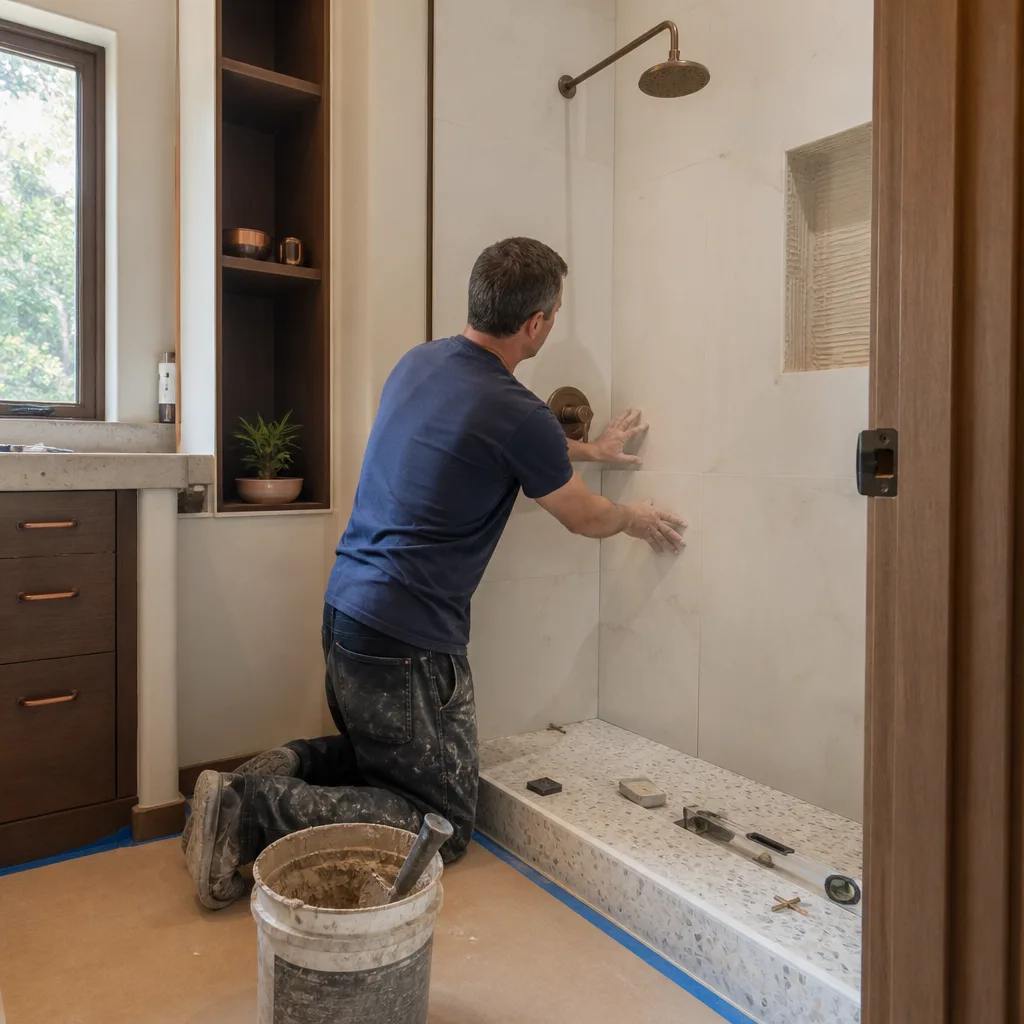
- Shower valve replacement. A shower valve is a pressure-balancing mixing cartridge set inside a wall cavity, connected to both hot and cold supply lines and sealed with a waterproofing membrane. One misaligned solder joint or a compression fitting that isn’t fully seated produces a slow leak inside the wall that takes months to show up. By the time you see the stain on the ceiling below, the drywall and framing are already compromised.
- Tile over tile. This looks like a shortcut and sometimes is, but it only works if the existing tile is firmly bonded, perfectly flat, and the added thickness doesn’t throw off the drain height or the door swing. In practice, tile over tile in a North Las Vegas bathroom often fails at the perimeter where the old substrate has loosened from years of thermal cycling, and the new tile pops off within a season.
- Subfloor repair. Cutting out water-damaged subfloor around a toilet flange means cutting into the joist bays, sistering in new framing, and re-establishing the flange height relative to the finished floor. Get the height wrong by a quarter inch and the toilet rocks, which eventually cracks the wax seal, which eventually leaks into the subfloor you just replaced.
- Waterproofing a shower. The tile is the visible layer. The waterproofing membrane behind it is what keeps the water out of your framing. A single pinhole in a liquid-applied membrane, or a corner that wasn’t properly banded, becomes a slow leak that never dries out in a sealed wall cavity. This is the number one cause of bathroom mold we’re called in to address.
- Electrical work in a wet area. Bathroom circuits require GFCI protection, specific box fill calculations, and moisture-rated fixtures. It’s not that this work is conceptually difficult – it’s that the consequences of a mistake are a shock hazard in a room where people are wet and barefoot.
If a task on your list involves opening a wall, cutting a floor, soldering a pipe, or running a wire, it’s a professional job. Not because you can’t learn it, but because the failure mode is invisible and expensive.
How Unpermitted Work Affects Your North Las Vegas Home Sale
North Las Vegas is a market where buyers’ agents pull permit history as a matter of routine. The city’s building department has an online permit search, and a bathroom listed as “fully remodeled” with no permit record for the plumbing or electrical work raises a question that doesn’t go away. In our market, that question shows up in three predictable places during a sale.
The first is the disclosure form. Nevada sellers are required to disclose known material defects, and unpermitted work falls in a gray area that buyers’ agents know how to exploit. A buyer who learns mid-escrow that the shower was replaced without a permit has a negotiating lever, and they use it.
The second is the appraisal. Appraisers compare the property to similar homes and note improvements. A remodeled bathroom adds value when the work is documented. When it isn’t, the appraiser may still note the update but the underwriter can require evidence of permitted work before the loan funds.
The third is the inspection. A home inspector who sees a new shower valve, fresh tile, and no permit record will flag it in the report as “work completed without apparent permit – recommend verification with the city.” That single line can stall a closing for weeks while the buyer’s agent pushes for a credit or a price reduction.
The practical effect: unpermitted work that cost you $4,000 to do yourself can cost you $8,000 to $12,000 in negotiated price reduction at sale time, plus the timeline delay. That math is why we tell homeowners the permit is not the paperwork – the permit is the asset. If you’re planning a sale and want a bathroom that appraises and passes inspection cleanly, our Home Additions & ADU in North Las Vegas service page describes how we handle permitting on larger scope additions – the same discipline applies to a bathroom remodel.
The Hidden Cost Math: DIY vs Professional Quotes
The comparison most homeowners run is materials versus labor. That’s the wrong comparison. The right one is total DIY cost – including tools, mistakes, permits, your time, and the probability of a callback – versus the professional quoted price. Here’s how that math actually plays out in North Las Vegas for a mid-range hall bathroom.
- Paint and prep: $150 in materials and a weekend of your time. Professional quoted cost: $600-$900. DIY wins clearly here.
- Vanity replacement (no plumbing move): $400-$900 for the vanity and $50 in tools. Professional cost quoted: $1,200-$1,800 installed. DIY wins if you’re comfortable disconnecting and reconnecting the supply lines and drain.
- Tile floor replacement (120 sq ft): $500 in materials plus $300-$500 in tools if you don’t own a wet saw, plus 15-25 hours of labor. Professional quoted cost: $2,200-$3,500. DIY is a coin flip here – the tile saw purchase, the substrate prep, and the odds of a redo cut deeply into the savings.
- Shower valve replacement: $230-$450 in parts. Professional quoted cost: $550-$1,100 including permit and inspection. DIY “savings” evaporate the moment there’s a leak, and a leak in this location averages $2,500-$6,000 in repair when it’s caught late.
- Full bathroom remodel, 5×8 footprint, mid-grade finishes: DIY materials run $6,000-$11,000 plus tools and 200-400 hours of your time. Professional quoted cost: $14,000-$24,000 in the North Las Vegas market. The DIY gap gets eaten by lost weekends, permit costs, mistakes, and the risk you carry yourself.
Two things to add to any DIY budget that homeowners routinely forget. First, the permit fees – Clark County plumbing and electrical permits for a bathroom project typically run $150-$400 total. Second, the dumpster and haul-away, which runs $300-$600 for a bathroom tear-out. Both are already inside a professional quote.
The hidden cost that never makes it into the math is your time. If you’d bill yourself at your hourly rate, the DIY math changes completely for anything above a paint and hardware scope. That’s why our quote on a bathroom project includes a written line-item scope – the number you see is the number you pay – so you can compare it to your true DIY cost without guesswork. Curated brand partners like Kohler and KraftMaid are part of that quote, and the same discipline applies to every trade we run, from our Driveway & Pavers in North Las Vegas work to an exterior Fence Installation in North Las Vegas.
A Decision Framework for Every Task on Your List
Walk through your bathroom list with these four questions. If the answer to any of them is “yes,” it’s a professional job. This framework works regardless of your experience level and applies to every bathroom project we’ve seen in North Las Vegas.
- Does the task touch the supply lines, drain lines, or electrical circuit in any way? If yes, it requires a permit and a licensed contractor in Clark County. Swap a faucet on existing supply lines, that’s fine. Move the supply line, that’s a plumber.
- Does the task involve the waterproofing membrane behind the tile, the subfloor, or the structural framing? If yes, it requires a licensed contractor. The failure mode is invisible and the repair is expensive.
- If this work fails in twelve months, will the damage be visible within days, or hidden behind a wall for a year? If hidden, professional. Visible damage you can catch, hidden damage you can’t.
- If I sell this home in three years, will a buyer’s agent ask for a permit on this work? If yes, get the permit. The permit is the paper trail that makes the work an asset instead of a liability.
Notice what’s not on that list: your skill level, your confidence, and your YouTube history. Those determine whether you can do the work, not whether you should. The question is legal, insurable, and structural, and the framework answers all three at once.
North Las Vegas Climate and Your Bathroom
North Las Vegas isn’t a wet climate, and that lulls homeowners into underestimating what moisture does inside a bathroom. The same dry air that keeps exterior wood from rotting also drives rapid evaporation at the surface of a slow leak, which means the visible evidence stays hidden longer. We’ve opened walls in North Las Vegas bathrooms where a slow valve leak ran for a year or more with nothing visible on the bathroom side – only a faint stain on the ceiling below, or nothing at all until a subfloor started to give.
What the local climate does give you: very low ambient humidity, which means a properly ventilated bathroom dries out fast, and a badly ventilated one dries slower than you think because the moisture gets trapped behind the tile. Every bathroom remodel we take on in North Las Vegas includes a ventilation plan – whether that’s a properly sized exhaust fan vented to the exterior (not into the attic, which is common and wrong) or a window strategy. The building code in Clark County requires mechanical ventilation in bathrooms without an operable window, and we treat it as non-negotiable in every bathroom we rebuild.
One more local factor: hard water. North Las Vegas water runs hard, and the mineral buildup takes a toll on shower valves, faucet cartridges, and tile grout. If you’re doing a shampoo and hardware swap yourself, that’s fine. If you’re replacing a cartridge or valve, understand that hard water makes those fittings seize, and a seized fitting is exactly the kind of thing a homeowner breaks while trying to force loose on a Saturday afternoon.
Common Mistakes to Avoid
- Starting demolition before checking permit requirements. Opening a wall commits you to a scope before you know what the city requires. Call the North Las Vegas building department first, and let the permit define the scope, not the other way around.
- Assuming “cosmetic” means “no permit.” Tile over tile, replacing a shower pan, and moving a vanity supply line all feel cosmetic but often require permits. Gray-zone tasks are the ones that trip up homeowners at sale time.
- Skipping the permit to save money. The permit runs $150-$400. The resale hit for unpermitted work runs five figures in a full bathroom case. That’s not a close call.
- Buying a shower valve and installing it without checking your insurance policy first. Read the exclusions page. Some carriers won’t cover damage traced to unpermitted work, and you should know that before you start, not after the ceiling gives.
- Waterproofing the shower without inspecting the framing first. In North Las Vegas we’ve found rotting subfloor and framing behind tile that looked pristine from the bathroom side. The waterproofing membrane only works if the substrate behind it is sound. Sealing over damage is the most common cause of bathroom mold we’re called to fix.
- Letting a contractor skip the permit to keep the price down. A quote that doesn’t include the permit cost is a quote that leaves you holding the liability. Ask for the permit line item. If it’s not there, that’s your answer.
- Buying tile before waterproofing is complete. Material lead times mean nothing if you’re waiting on a permit, a framing repair, or a waterproofing inspection. Sequence matters more than speed.
See the difference
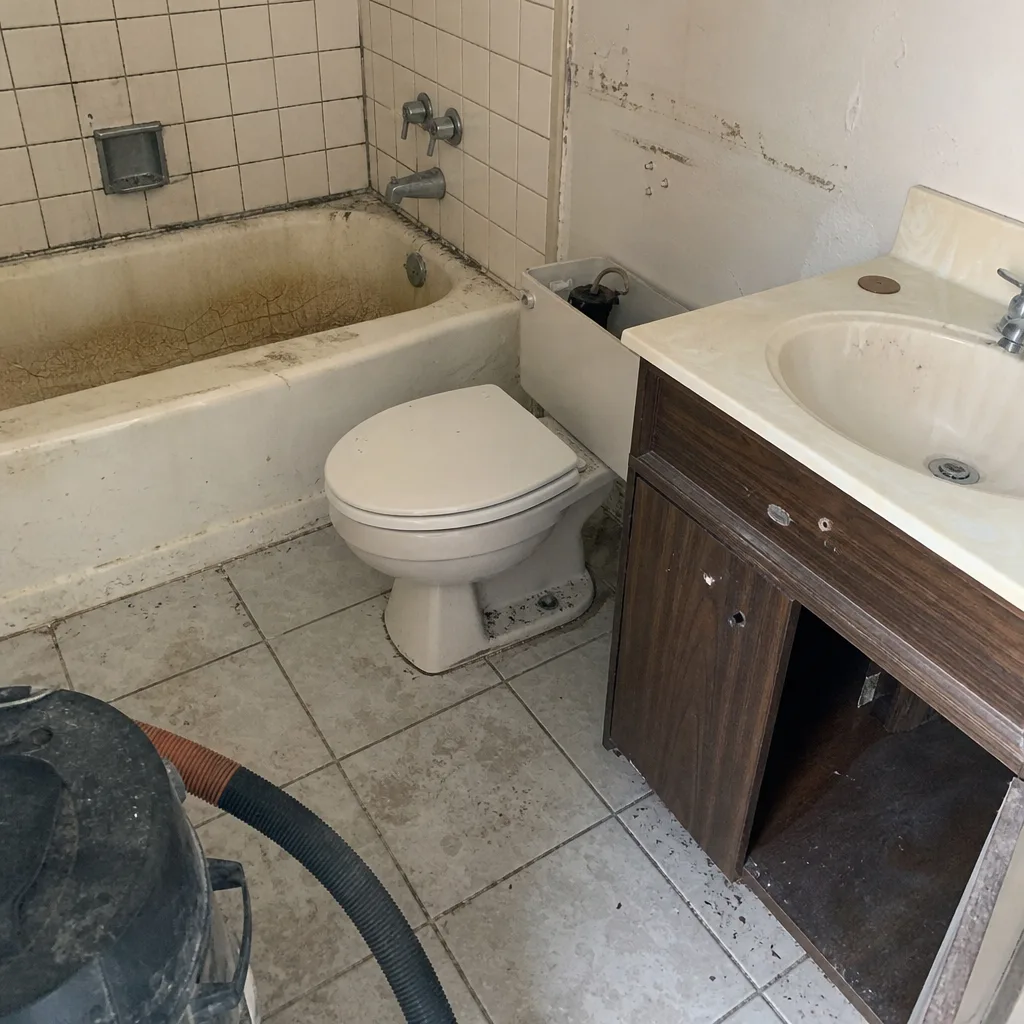 Before
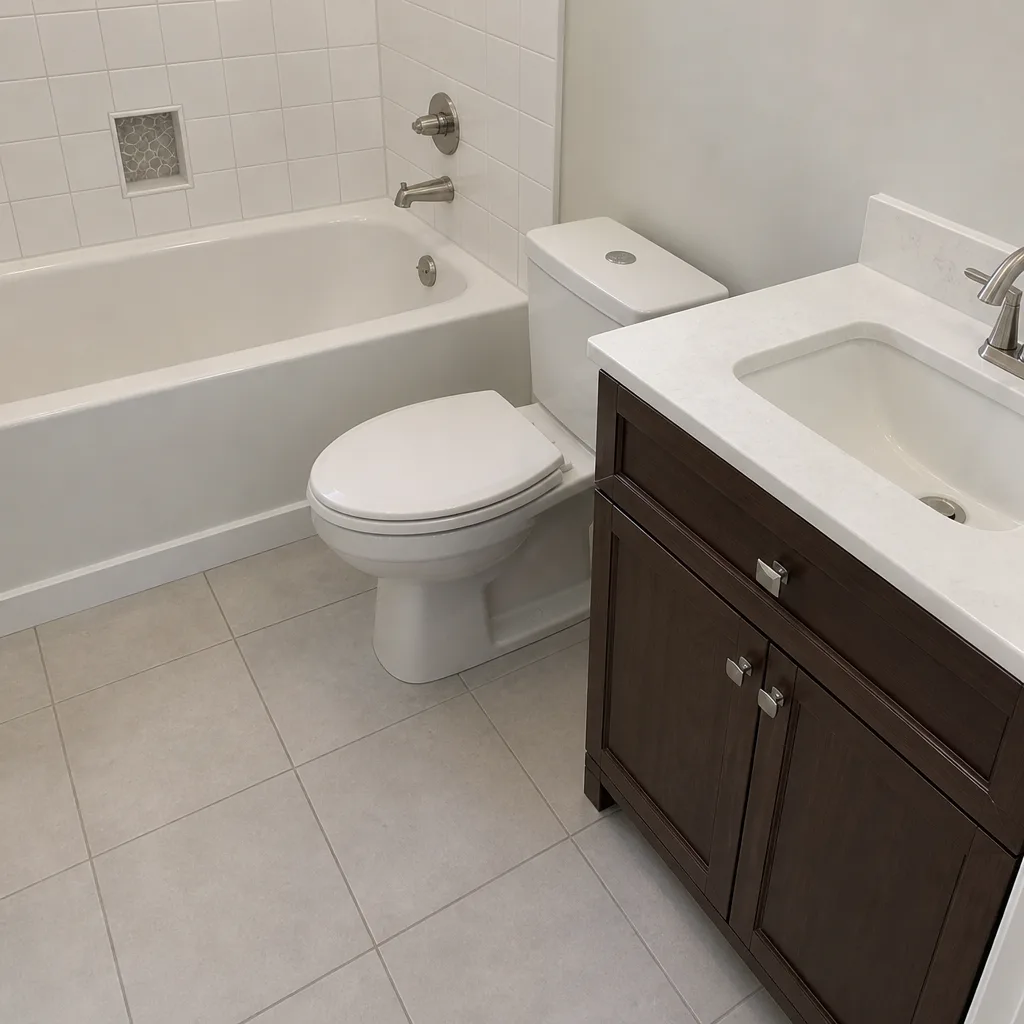 After
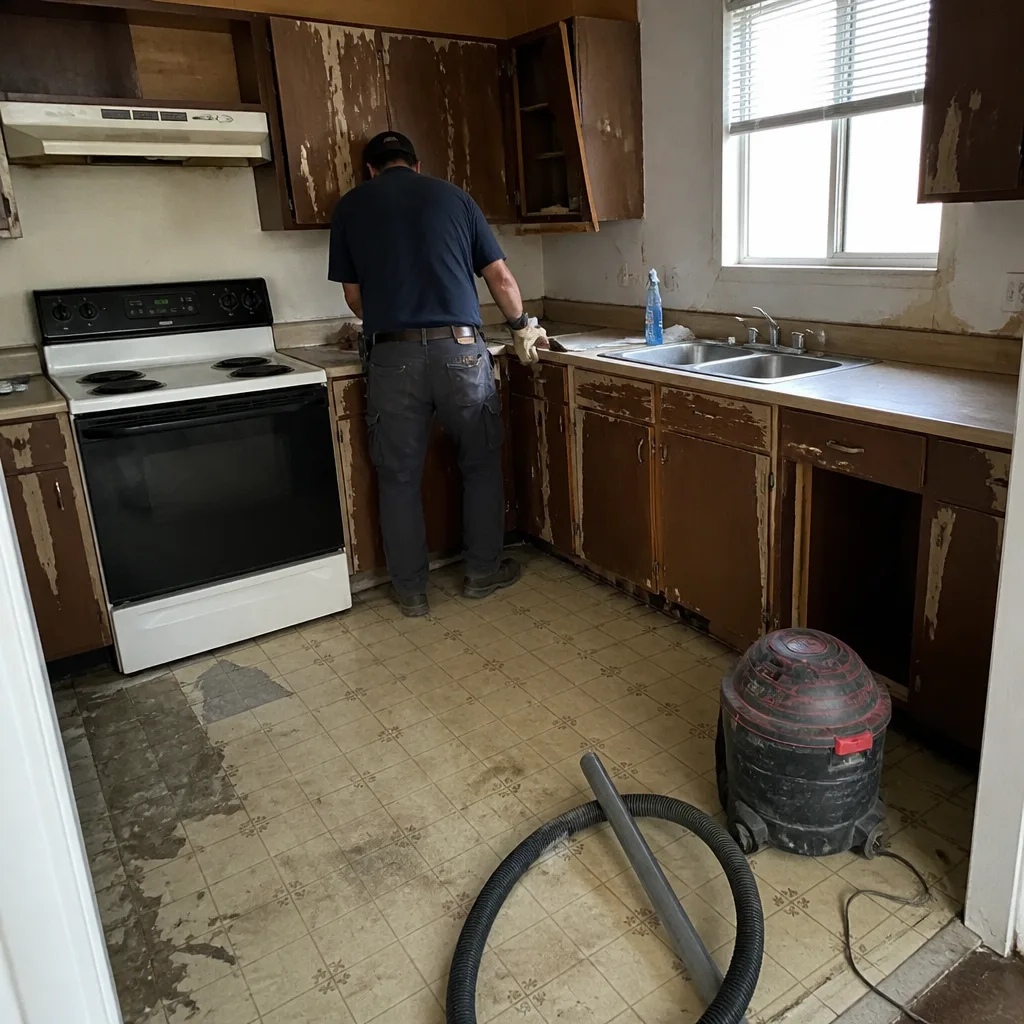 Before
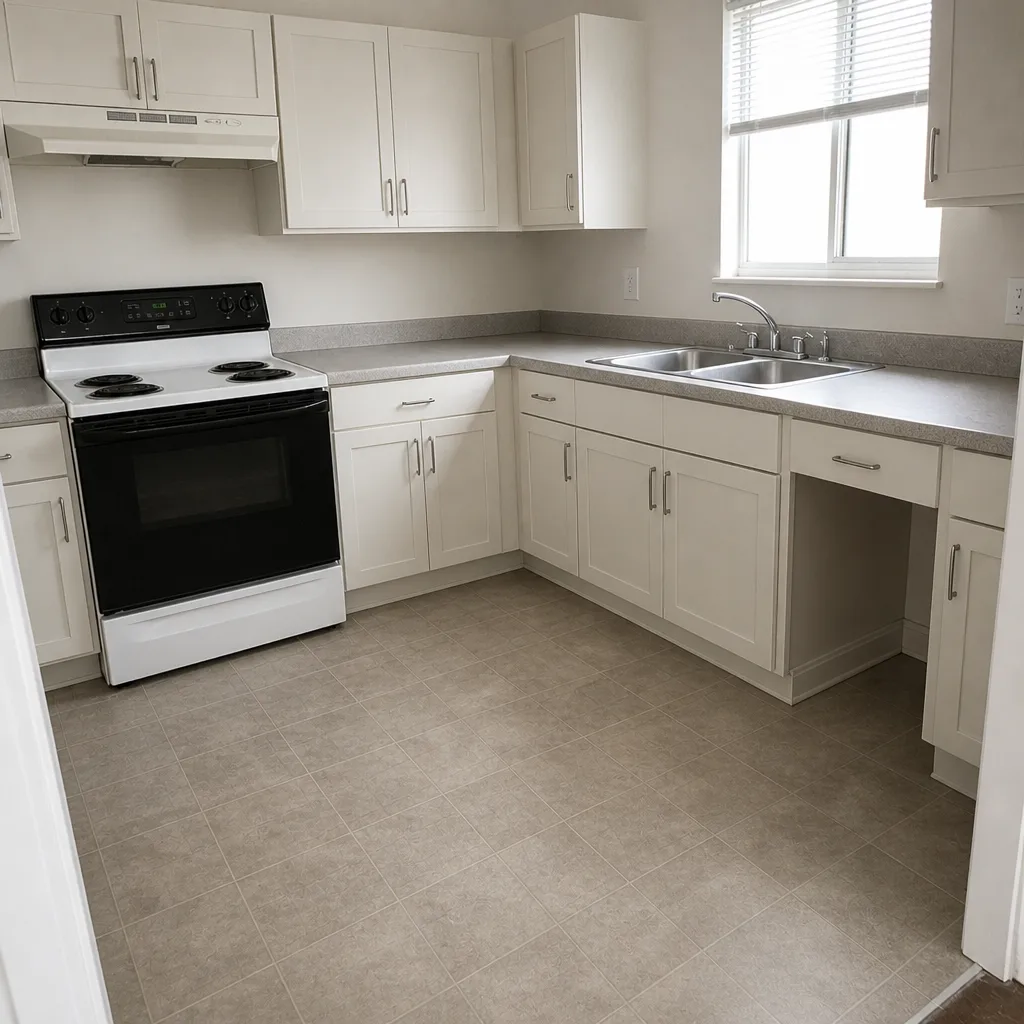 After
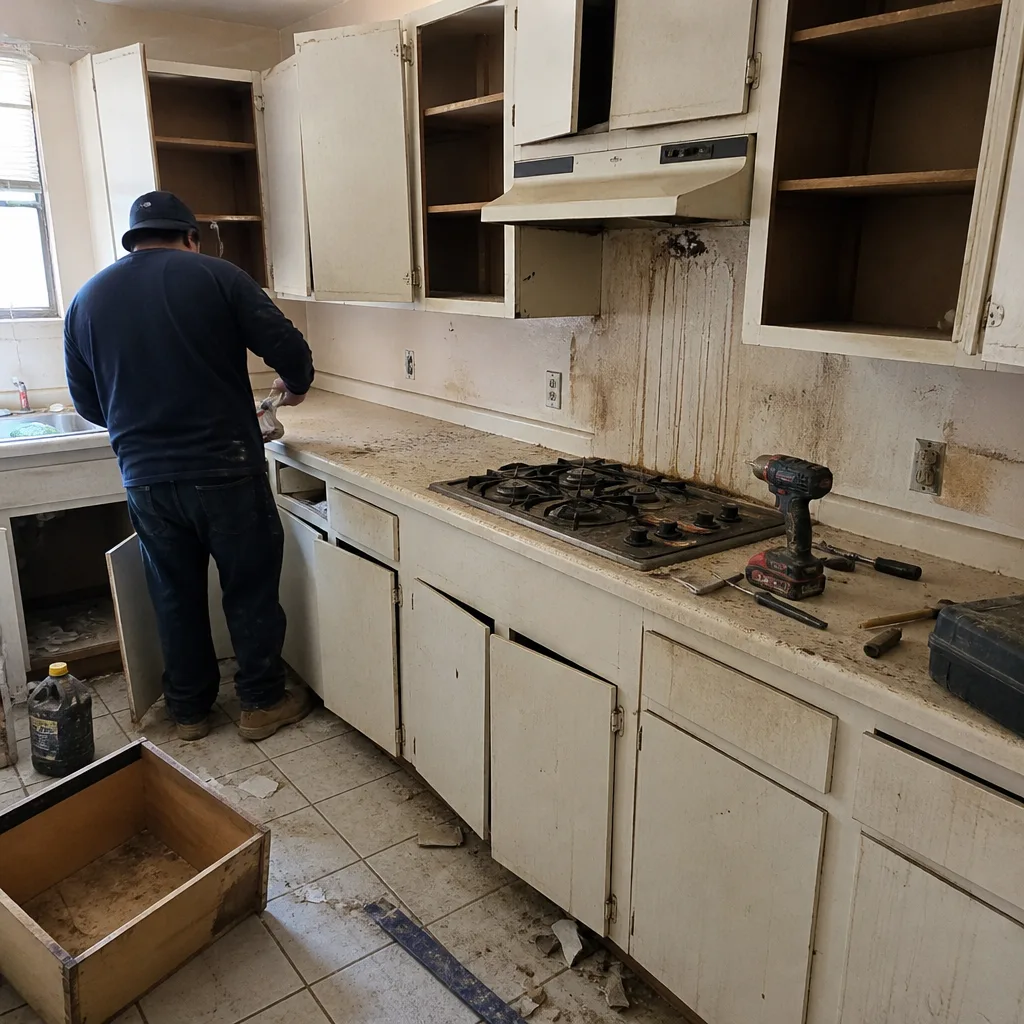 Before
 After
When to Call a Professional
Call a professional when the task touches a pipe, a wire, a load-bearing wall, a waterproofing membrane, or a permit line. That covers shower valves, drain relocations, any electrical work in a wet area, subfloor repair, tub-to-shower conversions, and every gray-zone task you’re not sure about. It also covers any project where you want the work documented for resale, insurable, and covered by a written workmanship guarantee. A licensed professional handles the permit, the inspection, and the liability in one quote. Groundwork Construction Co. of North Las Vegas offers free estimates in North Las Vegas – call (844) 797-5026. Our projects carry the 730-Day Done Right Promise, and our technicians have up to 12 years of experience on bathroom work. We answer the phone with a live person, 24 hours a day, if you have a question before you book.
Frequently Asked Questions
You need a permit for any work that alters plumbing, electrical, or structural framing, and cosmetic surface changes typically don’t require one. In Clark County, that means shower valve replacements, drain relocations, new electrical circuits, and waterproofing in wet areas all require permits pulled by a licensed contractor, while painting, hardware swaps, and faucet replacements on existing supply lines usually don’t. Call the North Las Vegas building department to confirm your specific scope before demolition. If you’d rather have the permit handled as part of a quoted project, call (844) 797-5026 for a free estimate.
Your claim can be denied or partially denied if the adjuster determines the loss traces to unpermitted, non-code-compliant workmanship. Standard homeowner policies typically exclude damage from faulty workmanship, and many carriers treat unpermitted modifications as a coverage gap. The specific outcome depends on your policy language and carrier, so read your exclusions before you start. The safest path is to keep plumbing and electrical work inside a licensed, permitted scope – and if you’re not sure what that includes, call (844) 797-5026 for a free estimate on the professional portion of your project.
You can tile a shower yourself, but you shouldn’t waterproof one yourself unless you’re confident in the membrane system. The tile is decorative; the waterproofing behind it is what protects your framing, and a single missed corner or pinhole becomes a slow leak that stays hidden for a year. We’ve opened walls in North Las Vegas where the tile work was flawless and the framing behind it was already compromised. If you want the tile work done right and warrantied, call (844) 797-5026 – estimates are free.
A mid-grade full bathroom remodel in North Las Vegas typically runs $14,000-$24,000, with high-end finishes pushing above that range. A DIY materials-only approach runs $6,000-$11,000 plus tools and 200-400 hours of your time, before permits, dumpster costs, and the risk of mistakes. The gap narrows more than homeowners expect once those hidden costs are included. Call (844) 797-5026 for an exact quote on your bathroom – estimates are free and we provide a written line-item scope.
Yes, it routinely does. Buyers’ agents pull permit history as a matter of course in North Las Vegas, and an unpermitted bathroom shows up on the disclosure form, the appraisal, or the inspection report – each of which is a negotiating lever for the buyer. Unpermitted work that saved $4,000 to do yourself can cost $8,000-$12,000 in price reduction at sale time, plus closing delays. Getting the permit upfront is the cheaper path. Call (844) 797-5026 for a free estimate on a permitted bathroom project.
No – our pricing is upfront, and the number you see is the number you pay. The one exception is scope you add after the contract is signed, which we price in writing before any work proceeds. That’s how we avoid the change-order surprises homeowners get burned by on other bathroom projects. To get a fixed written scope on your bathroom, call (844) 797-5026 for a free estimate and design consult.
The Bottom Line
The DIY question isn’t whether you’re capable – it’s whether the work has to be legal, insurable, and structurally sound to be worth doing. Paint, hardware, mirrors, faucets on existing lines, and regrouting are yours to own, and you’ll save real money on them. Anything that touches the plumbing behind a wall, the electrical circuit, the waterproofing membrane, or the subfloor belongs in a licensed, permitted, warrantied scope. In North Las Vegas, the permit is the asset – it’s what makes your bathroom a resale gain instead of a negotiating liability, and it’s what keeps your insurance coverage intact. Run the true cost math, not the materials-versus-labor math, and let the permit define the scope before demolition starts.
If you’d rather have the whole bathroom handled under one written scope, Groundwork Construction Co. of North Las Vegas offers a free project estimate and design consult, upfront pricing with no surprises, 0% financing for 18 months, and $1,000 off projects over $10,000. Every project carries the 730-Day Done Right Promise – if it’s not done right, we make it right. Call (844) 797-5026 and a live person will answer, any hour of any day. Built to last, backed in writing.
Written by the team at Groundwork Construction Co. of North Las Vegas.